Languages
Thursday, October 15, 2026



News and Views from the Global South
Crime & Justice
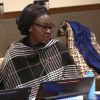
Child Exploitation on the Internet Threatens the Next Generation
On October 11, the United Nations (UN) and its affiliated organizations hosted a conference discussing the increasingly dangerous and exploitative environment that plagues the internet and what can be done to protect children from being exposed to it. Speakers at this conference detailed the developing technologies that threaten children, such as Artificial Intelligence (AI), which often facilitates sexual abuse, exploitation, and human trafficking. In a world that is centered around digitization and innovation, it is crucial to keep the internet a safe space for the most vulnerable population, children.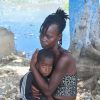
Haitians Blame Government After Massacre in Pont-Sondé
Last week, on October 3, a violent gang attack on the residents in the central Haitian city Pont-Sondé resulted in 115 deaths and spread fear among communities. This attack was described as one of the deadliest massacres in recent history in Haiti. Pervasive gang violence threatens to destabilize Haiti as the environment grows more dangerous by the day.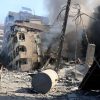
Death Toll Rises During Israel’s Siege in Lebanon
One week has passed since the beginning of Israel’s invasion of Lebanon. Over the past three weeks, Lebanon has seen a considerable uptick in hostilities from the Israeli armed forces. Routine bombardments have resulted in significant civilian casualties as well as the failure of several critical infrastructures. The United Nations warns that displacement continues to grow as shelters approach maximum capacity.
IPEF: Much Ado about Nothing
After 2.5 years, US President Joe Biden’s Indo-Pacific Framework for Prosperity (IPEF) is increasingly irrelevant due to its own limitations and broader US foreign policy shifts.
‘The Focus Should Be on Holding Social Media Companies Accountable, Not Punishing Individual Users’
CIVICUS discusses the recent Twitter/X ban in Brazil with Iná Jost, lawyer and head of research at InternetLab, an independent Brazilian think tank focused on human rights and digital technologies.

To Put a Stop to Siphoning off Money, Start with Data
The commonly used Bangla phrase for siphoning off money out of the country – “taka pachar” – is rather misleading. Because taka, the Bangladeshi currency, is never taken out of Bangladesh. It’s not useful anywhere else. What goes out is its equivalence in foreign currencies, especially, US dollars. The technical term for such criminal act is Illicit Financial Flows (IFFs). Mistakenly, sometimes IFFs are referred to as money laundering – a processing of criminal proceeds to disguise their illegal origin.
The UN Cybercrime Convention: A New Repressive Tool in Disguise?
The UN Office on Drugs and Crime hailed the recently agreed Cybercrime Convention as a ‘landmark step’ in cooperating to tackle online dangers. But human rights organisations aren’t so sure.
Dominican Republic Orders the Expulsion of Thousands of Haitian Migrants
Over the past few months, the escalation of gang violence and mass displacement in Haiti have been of great concern for humanitarian organizations. Severe levels of armed violence have resulted in significant instability, with food insecurity, sexual violence, civilian casualities, and restricted freedom of movement plaguing the nation. Displacement cases have risen sharply, to the extent that the Dominican Republic has ordered the return of thousands of Haitian migrants.
Prostitution an ‘Egregious Violation of Human Rights’—UN Special Rapporteur
Reem Alsalem, the UN Special Rapporteur on Violence Against Women and Girls, calls prostitution a “system of violence” that does not benefit society at all, especially the women and girls forced into this system.
BRICS+ Prioritising Expansion to Fight Western Hegemony
In an interview with Sky News Arabia on September 20, Russian Foreign Minister Sergey Lavrov expressed scepticism but was straight to the point about the strategic expansion of BRICS, an association comprising Brazil, Russia, India, China and South Africa. Under Russia's BRICS presidency which began in January 2024.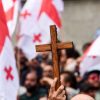
Georgia’s Dangerous Anti-LGBTQI+ Law
Georgia’s ruling party has put LGBTQI+ people firmly in the firing line ahead of next month’s election. On 17 September, parliament gave final approval to a highly discriminatory law that empowers the authorities to censor books and films with LGBTQI+ content, stop discussion of LGBTQI+ issues in schools, ban people from flying rainbow flags and prevent Pride events. The law excludes LGBTQI+ people from adopting children, bans gender affirmation surgery and refuses to recognise same-sex marriages of Georgians conducted abroad.
Dying for a Cause: Environmental Defenders in the Firing Line
In 2017, South African activist Nonhle Mbuthuma took a stand against the powerful oil giant Shell, halting their plans to explore the pristine Wild Coast. Despite facing death threats, she refused to back down. As a co-founder of the Amadiba Crisis Committee and a 2024 Goldman Prize winner, Mbuthuma continues to fight for her community’s rights and the environment. Her bravery reflects the countless risks land and environmental defenders face across the globe.
Flooding and Armed Conflict Aggravates Sudan’s Cholera Epidemic
Sudan has been plunged into a deadly cholera outbreak in the midst of the Sudanese Civil War. Sudan is currently home to an approximate 15 million people, many of which have had to bear the brunt of hostilities between warring parties, widespread food insecurity, mass displacement, and extreme weather anomalies. Flooding, in particular, has been very damaging, leading to the collapse of critical infrastructures that ensure sanitation. This has caused the cholera outbreak to become a national concern.
UN Moves De-Escalate Israel and Lebanon Conflict
Yesterday, Israel launched a series of bombardments across Southern Lebanon, killing over 500 people and injuring over 1,800, according to Lebanon’s Ministry of Public Health. This has been described as the deadliest day for the country since the 2006 Israel-Hezbollah War. Furthermore, this is only the latest of a series of conflicts between Israel and Lebanon since the eruption of the Israel-Hamas War in October of last year.
Violence, Displacement, and Hunger Plagues Somalia
Somalia is currently in the midst of a dire humanitarian crisis that threatens to destabilize the nation’s security. This crisis is a result of the Somali Civil War, which began in 1991. Altercations between clan-based operations have caused a host of issues over the years, including over 596 civilian casualties, according to the United Nations Assistance Mission in Somalia (UNSOM). Tensions have greatly intensified in 2024, with levels of internal displacement and food insecurity increasing rapidly.
Gang Violence and Mass Displacement Ravage Haiti
Amid the ongoing civil unrest in Haiti due to gang violence, levels of internal displacement have soared. Mass internal displacements in Haiti have led to a host of adverse consequences. This includes a disruption of schooling, increased levels of violence and exploitation, and limited access to essential services such as healthcare.
Humanitarian Crisis in Gaza Worsens While Polio Vaccine Campaign Succeeds
Today, the chief of the United Nations Relief and Works Agency for Palestine Refugees in the Near East (UNRWA), Philippe Lazzarini, confirmed that the first round of Gaza’s polio vaccination campaign had ended successfully, reaching 90 percent coverage. The second round of this campaign is set to begin by the end of September, delivering Gaza’s children with a critical second dose of the polio vaccine.
We Stand with the Girls and Women of Afghanistan
Today, we stand with solemn hearts as the world marks this week the three-year ban on girls’ secondary education in Afghanistan. Today and every day, we must stand up for the millions of Afghan girls and women living under the yoke of gender-apartheid: systematized and institutionalized oppression, exclusion, and marginalization based exclusively on their gender. However, standing in solemnity for their suffering is not enough. We must act to remove the oppression and injustice. Against all odds, we must continue to deliver results to provide the girls access to an education well beyond grade sixth.
Odious Debts: What Can Bangladesh Learn from Ecuador?
Bangladesh’s White Paper committee will review foreign loan deals signed by the fallen kleptocratic regime. We recommend that it identifies and declares the loans or portions of loans that did not benefit the nation as unpayable, because they were siphoned off the country by corrupt politically powerful elites, or worse used to buy deadly weapons and surveillance equipment to oppress people. Such loans are “odious” – they stink and are detestable.
15 Years After the Civil War Ended, Sri Lanka Faces Another Crucial Election
Thousands of Tamils are heading to Mullivaikal on the northeast coast of Sri Lanka, many of whom were here 15 years ago and still live in the region. They are there, May 18, to commemorate the massacre of civilians in a ‘no fire zone’ during the final stages of the civil war.
Severe Floods in Nigeria Magnify The Dire Humanitarian Crisis
On Monday, the Alau dam in Maiduguri, Borno State, collapsed, causing flash floods to ravage neighbouring regions in Nigeria. This comes after weeks of torrential rain, which caused severe structural damage to the dam. The floods have changed the lives of thousands and caused high levels of damage to infrastructures. The impacts of the recent floods compound with Nigeria’s pre-existing humanitarian crisis, which includes armed conflict, widespread malnutrition, and a failing economy.« Previous Page — Next Page »





Issues of crime and justice are as pertinent to development as they have ever been. The struggle for abolition of the death penalty is not over, and penal reform is desperately needed in many countries around the world. From violence to religious persecution, white-collar crime to police brutality, we keep you updated with reports from around the world. IPS correspondents focus on the causes of crime, attempts to prevent it, and the process of bringing those who commit crimes to justice. We also cover the campaign against capital punishment, and for legal and prison reforms that would give prisoners the right to life, and also to justice and decency.

The Week with IPS

NEXT STOP - SDGs
Tracking global progress towards a sustainable world
Tracking global progress towards a sustainable world
