Languages
Sunday, October 18, 2026



News and Views from the Global South
Crime & Justice

‘Safe Zone’ Al-Mawasi Bombed, Leaving Dozens Killed
On Tuesday, an airstrike was carried out in Al-Mawasi, on a displacement camp situated on the Gaza Strip. According to the Gaza Civil Defense Agency, 40 people were killed and over 60 were injured. Despite being designated as a “safe zone” by the Israel Defense Forces (IDF), this region has seen continual airstrikes and armed hostility since December 2023.
TOGO: ‘The International Community Must Send a Clear Message That Power Grabs Won’t Be Tolerated’
CIVICUS discusses the crackdown on civil society in Togo with a human rights defender who asked to stay anonymous for security reasons.
How Much Damage Can Be Done by a Few? The Tragedy in Gaza, Part 2
Hungarian-Swedish microbiologist George Klein, who in 1944 escaped from a train destined to Auschwitz, once wrote that his father jokingly used to say that he had caused World War I. While working as a medical doctor in Bosnia he had cured a young boy called Gavrilo Princip from a deadly disease. As an adult Gavrilo shot and killed Archduke Franz Ferdinand, presumptive heir to the throne of Austria-Hungary, whose death became the immediate cause of World War I. Can a single person, knowingly or unknowingly, change the course of history? We talk about “Putin’s war” and “Trump’s USA”. Are individuals so important? Lev Tolstoy wrote in War and Peace that it was absurd to attribute historical events to acts of individuals. The French revolution could quite easily have produced another person like Napoleon. He insisted that the French emperor knew as little of what was happening in the battle of Borodino as the meanest soldier serving under him.
INDIA: ‘Civil Society Organisations Are at the Forefront of the Fight Against Gender-based Violence’
CIVICUS discusses the recent wave of protests against gender-based violence (GBV) in India with Dr Kavitha Ravi, a member of the Indian Medical Association (IMA).

Recovering stolen assets: No weakening of resolve
The White Paper on the state of Bangladesh’s economy will include a review of “smuggled money”, according to the head of the committee, Debapriya Bhattacharya, entrusted to prepare the White Paper.
Latin American Rulers Embrace Harsh Prisons
Invoking the fight against terrorists and sending those who can be charged with this crime to new maximum security prisons are increasingly emerging in the toolbox of Latin American leaders who want to show an iron fist against criminals and opponents.
Lack of Accountability for War Crimes in Libya Raises Instability
The situation in Libya continues to grow more dire every year since the emergence of the al-Kaniyat militant group. From 2013 to 2022, al-Kaniyat had been responsible for a multitude of human rights violations, including mass killings, kidnappings, forced displacements, torture, and sexual violence. The lack of accountability for these injustices has spurred renewed conflict, which threatens to destabilize Libya years later.
Kenya’s Unanswered Questions About Enforced Disappearances
As the world marked International Day of the Disappeared, Kenya grapples with a shadowy and persistent crisis—enforced disappearances. This harrowing violation of human rights has left countless families in anguish, searching for their loved ones while battling a wall of government denial and indifference.
VIETNAM: ‘Human Rights Conditions Will Likely Worsen as the Country Descends into a Police State’
CIVICUS discusses recent leadership changes in Vietnam with David Tran, coordinator of the Alliance for Vietnam’s Democracy, a civil society platform that promotes democracy in Vietnam and the region through international cooperation and the strengthening of local civil society.
Bangladesh Students, Community Moves to Protect Minorities Following Fall of Hasina Government
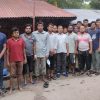
Immediately after the fall of the Sheikh Hasina government on August 5, 2024, following weeks of deadly demonstrations staged by students, people carried out attacks on the houses and temples of the Hindu community in Dacope of Khulna, about 225 kilometres from Dhaka. They particularly attacked and vandalized the houses of minorities believed to be involved in the politics of the ousted Awami League government.
Recovering Bangladesh’s Stolen Wealth
Bangladesh bleeds as over US$3 billion drains from Bangladesh annually through offshore accounts. According to a recent report, close to US$150 billion was siphoned off the country during 15 years of kleptocratic Hasina regime’s mis-rule. Nearly US$50 billion went out of the country in the first six years (2009-2015) of the Hasina regime.
Rohingya Refugees Must Not Be Forgotten
Seven years ago, a brutal campaign of violence, rape and terror against the Rohingya people ignited in Myanmar’s Rakhine State. Villages were burned to the ground, families were murdered, massive human rights violations were reported, and around 700,000 people – half of them children – fled their homes to seek refuge in Bangladesh.
Things Can Only Get Better for Bangladesh
The student movement in Bangladesh demanding reform of the quota system for public jobs was the straw that broke the camel’s back. The Awami League (AL) government led by Sheikh Hasina, in power continuously since 2008, collapsed on 5th August 2024. With Sheikh Hasina fleeing to India and leaving the country in disarray, her authoritarian rule of 15 years just melted away.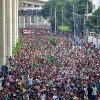
Does the Uprising in Bangladesh have Similarities with Arab Spring?
“I hope the outcome [of the recent revolution in Bangladesh] would be different. I hope the end result will not be the same,” says Shireen Huq, women’s rights and human rights activist and Founder of Naripokkho organization, to IPS about the many similarities with the Arab Spring.
Venezuela Struggles to Hold on to Hope
There was an unusual sense of hope going into Venezuela’s 28 July presidential election. Democracy seemed on the horizon. María Corina Machado, the opposition’s rallying figure, had inspired a rare level of enthusiasm, promising millions of exiles they’d soon be able to return to a new Venezuela.
Dealing with Bangladesh’s Odious Debt
Bangladesh has become increasingly indebted since 2009. The country’s external debt stock increased from US$23.3 billion in 2008 to US$100.6 billion in December 2023 (see figure below). Thanks to the country’s mega-projects led so-called development with borrowed money under the now deposed authoritarian regime of Sheikh Hasina.
Freedom of Press in Jeopardy With Journalists in Crossfire in Kenyan Protests
In the heart of Nairobi, as tear gas clouded the streets, the line between journalists and protesters blurred in the eyes of Kenyan law enforcement. A wave of anti-government protests, ignited by opposition to a proposed finance bill, has spiraled into violence, with journalists increasingly caught in the crossfire between police and protesters.
Rizwana Hasan Vows to Ensure Justice for Those Killed During Bangladesh’s Quota Reform Movement
Justice for all those who died and suffered injuries during the recent student-led quota reform movement in Bangladesh and reforms to the systems to ensure that this justice takes place are not negotiable, an adviser to the Bangladesh interim government, Syeda Rizwana Hasan, told IPS in an exclusive interview
The Demise of Democracy and Human Rights Violations in Bangladesh: International Financial Institutions’ Culpability
The International Monetary Fund (IMF), World Bank and Asian Development Bank (ADB) are complicit in the gross human rights violations and death of democracy in Bangladesh. They continued to supply financial blood line to the regime, well-documented for its corruptions, human rights violations – such as forced disappearances and tortures in custody – and riggings of votes, including politicization of state institutions in its slide into autocracy. This is despite their professed commitment to transparency, accountability and good governance (IMF, World Bank, ADB).
Paraguay: ‘Bureaucratic Criminalisation’, New Legislation Threatens NGOs and Democracy
In a move that has aroused national and international concern, the Paraguayan Senate has given preliminary approval to a controversial bill that imposes strict controls on NGOs in a case of ‘bureaucratic criminalisation’.
Government Indifferent to Invasion of Drug Traffickers in the Peruvian Amazon
The invasion of lands inhabited by Amazon indigenous communities is growing in Peru, due to drug trafficking mafias that are expanding coca crops to produce and export cocaine, while deforestation and insecurity for the native populations and their advocates are increasing« Previous Page — Next Page »





Issues of crime and justice are as pertinent to development as they have ever been. The struggle for abolition of the death penalty is not over, and penal reform is desperately needed in many countries around the world. From violence to religious persecution, white-collar crime to police brutality, we keep you updated with reports from around the world. IPS correspondents focus on the causes of crime, attempts to prevent it, and the process of bringing those who commit crimes to justice. We also cover the campaign against capital punishment, and for legal and prison reforms that would give prisoners the right to life, and also to justice and decency.

The Week with IPS

NEXT STOP - SDGs
Tracking global progress towards a sustainable world
Tracking global progress towards a sustainable world
