Languages
Friday, October 23, 2026



News and Views from the Global South
Crime & Justice

New Caledonia: Time to Talk about Decolonisation
The violence that rocked New Caledonia last month has subsided. French President Emmanuel Macron has recently announced the suspension of changes to voting rights in the Pacific island nation, annexed by his country in 1853. His attempt to introduce these changes sparked weeks of violence.
Climate Change, Ethnicity and Neglect Fuel Violence in Nigeria’s Kaduna State
Lami Kwasu, a farmer in the village of Kafanchan in Kaduna State, north-central Nigeria, was at home one evening in October 2020 when the sound of sporadic gunshots filled the air. Gunmen, suspected to be Fulani nomadic herders, had surrounded the village, shooting from different angles.
Haiti: Transitional Administration Faces Stern Test
There’s been recent change in violence-torn Haiti – but whether much-needed progress results remains to be seen. Acting prime minister Garry Conille was sworn in on 3 June. A former UN official who briefly served as prime minister over a decade ago, Conille was the compromise choice of the Transitional Presidential Council. The Council formed in April to temporarily assume the functions of the presidency following the resignation of de facto leader Ariel Henry.
UN Probe Finds Israel Guilty of ‘Extermination,’ Torture, and Other War Crimes in Gaza
A United Nations commission tasked with conducting an in-depth investigation of Israeli military actions in the occupied Palestinian territories has concluded that Israel's government is responsible for multiple war crimes and crimes against humanity in the Gaza Strip, including "extermination," torture, forcible transfer, and the use of starvation as a weapon of warfare.
Venezuela’s Opportunity for Democracy
Venezuela’s 28 July presidential election could offer a genuine chance of democratic transition. Despite an array of challenges, the opposition is coming into the campaign unified behind a single candidate. Many Venezuelans seem prepared to believe that voting could deliver change. But the authoritarian government is digging in its heels. The opposition reasonably fears the election could be suspended or the government could suppress the opposition vote. Large-scale fraud can’t be ruled out.
India’s Election: Cracks Start to Show in Authoritarian Rule
India’s Hindu nationalist strongman Narendra Modi has won his third prime ministerial term. But the result of the country’s April-to-June election fell short of the sweeping triumph that seemed within his grasp. Modi’s Bharatiya Janata Party (BJP) has shed seats compared to the 2019 election, losing its parliamentary majority. Modi remains prime minister thanks to coalition partners. It’s a long way from the 400-seat supermajority Modi proclaimed he wanted – which would have given him power to rewrite the constitution.
President Biden Needs to Do More than Propose a Ceasefire Plan That Israel Already Rejected a Month Ago
Throughout his long career, but especially these past heart-wrenching eight months, President Biden has consistently placed his ironclad loyalty to Israel over his fidelity and duty to the United States. The consequences this week have been catastrophic for the Palestinian people, made Israelis even less secure, and betrayed American national security and democratic integrity.
Chad: Dictatorship Continues by Other Means
On 6 May, people went to the polls in Chad, ostensibly to elect a president who’d usher in democratic civilian rule. Ten days later, the Constitutional Council confirmed there’d be no change: the elected president was the leader of the military-backed transitional government supposedly handing over power, Mahamat Idriss Déby.
Let the Dead Speak: Forgotten Workers
Immigration policies are among the most hotly debated topics in Europe. Xenophobia, combined with curbing immigration, have become the main reason to why ever-increasing large crowds of voters are supporting populist parties.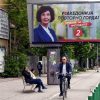
North Macedonia Turns Back the Clock
The old guard is back in North Macedonia, as the former ruling party – the Internal Macedonian Revolutionary Organization – Democratic Party for Macedonian National Unity (VMRO-DPMNE) – returns to parliamentary and presidential power.
The Pact for the Future Must Include the Unique Needs of Incarcerated and Formerly Incarcerated Persons
This month, non-governmental actors from across the world recently convened in Nairobi for the UN Civil Society Conference in Support of the Summit of the Future to demand that their issues are prioritized in the Pact for the Future – which is envisaged to turbocharge the sustainable development goals.
Panama’s Elections: Has Impunity Prevailed?
Regional experts called it Panama’s most important election since the 1989 US invasion that deposed de facto president General Manuel Noriega. Panamanians went to the polls amid high inflation and unemployment, with a stagnating economy. Endemic corruption was also high on their long list of concerns, along with access to water, education and a collapsing social security system.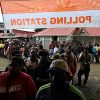
Solomon Islands: A Change More in Style than Substance
There’s change at the top in Solomon Islands – but civil society will be watching closely to see whether that means a government that’s grown hostile will start doing things differently.
Educating the Mind Without Educating the Heart is No Education at All
The words above, by the ancient Greek philosopher Aristotle, serve as a reminder that we still have a long way to go to in educating ourselves. In doing so, we will naturally ensure that the young generation can access an inclusive quality education and use their knowledge to build a world of justice, equity, peace and security.
Many African Nations Making Progress in the Rule of Law
The United Nations Office of Rule of Law and Security Institutions (OROLSI) supports the promotion of the rule of law, security, and peace in conflict-affected countries.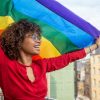
Civil Society Scores LGBTQI+ Rights Victory in Dominica
On 22 April, Dominica’s High Court struck down two sections of the country’s Sexual Offences Act that criminalised consensual same-sex relations, finding them unconstitutional. This made Dominica the sixth country in the Commonwealth Caribbean – and the fourth in the Eastern Caribbean – to decriminalise same-sex relations through the courts, and the first in 2024.
Press Freedom and Climate Journalism: United in Crisis
Journalism is in crisis, again. The challenges to press freedom are enormous and multi-faceted and they are deepening -- in “free” and open societies as well as autocracies. And there are no simple solutions. For individuals and entire media outlets the crisis is existential.
World Press Freedom Day 2024

Journalism is in crisis - again. The challenges to press freedom are enormous and multi-faceted.

Gaza Journalist Describes 33 Harrowing Days in Israeli Custody
Diaa Al-Kahlout, the veteran Gaza bureau chief for the Qatari-funded London-based newspaper Al-Araby Al-Jadeed, had been covering the Israel-Gaza war for two months when he became part of the news.
The Tragic Death of Palestinian Journalists
It is only fitting, against the backdrop of World Press Freedom Day, to recount the horror being inflicted on journalists and reporters around the world, which is increasing day by day. To tell the story of the mounting death of journalists in Gaza, it is essential to put into perspective the plight of journalists around the world.
The Deadliest Days for Journalists in War Zones
The seven- month-long war in Gaza is perhaps the only military conflict in contemporary history which has claimed the lives of over 100 journalists, including targeted killings.« Previous Page — Next Page »





Issues of crime and justice are as pertinent to development as they have ever been. The struggle for abolition of the death penalty is not over, and penal reform is desperately needed in many countries around the world. From violence to religious persecution, white-collar crime to police brutality, we keep you updated with reports from around the world. IPS correspondents focus on the causes of crime, attempts to prevent it, and the process of bringing those who commit crimes to justice. We also cover the campaign against capital punishment, and for legal and prison reforms that would give prisoners the right to life, and also to justice and decency.

The Week with IPS

NEXT STOP - SDGs
Tracking global progress towards a sustainable world
Tracking global progress towards a sustainable world
