Languages
Friday, November 27, 2026



News and Views from the Global South
Global
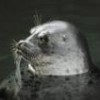
CLIMATE CHANGE: Seals in the Baltic Left without Ice
Ringed seals in the Baltic Sea are finding fewer and fewer ice caves in which to raise their young. Rising global temperatures are the problem, and in turn are depleting the main food source of the giant polar bear, say scientists.G20: Give or Take a Trillion or Two
The ease with which leaders spoke of trillions of dollars at the G20 summit in London Thursday was no doubt intended to signal to the world just how serious leaders are about getting the economy right again. That these fabulous figures may never add up is another matter.ENERGY: Oil Producers Look for Ways out of Crisis
With the price of crude oil down more than 50 percent from a year ago, and with U.S. President Barack Obama championing alternative forms of energy, oil producers are scrambling to find ways to protect their industry.ECONOMY: Despite Its Clout, China Feels Vulnerable to Shocks
Despite an impressive show of its increased economic and political stature at the just-finished G20 summit in London, China remains plagued by doubts about the sustainability of its economic miracle.CLIMATE CHANGE: Farming Could Be Friend or Foe
Don't forget about agriculture in the upcoming global negotiations to combat climate change, experts warn. Not only is farming most at risk in an increasingly variable and tempestuous climate, it is also a major emitter of greenhouse gases.POLITICS: In Reversal, U.S. to Engage With Human Rights Council
The Barack Obama administration’s decision this week to seek a seat on the world’s top human rights body has affirmed the hopes of many activist groups that the United States will take a far more multilateral approach to diplomacy than in the past.RIGHTS: Engaging Men in Gender Equality Efforts
How many men work in day care centres, looking after children? How much paternity leave are men entitled to? How many government programmes to combat domestic violence include violent men themselves as part of the treatment?
CLIMATE CHANGE: Going Beyond the Carbon Market
With an incisive report in hand about what awaits Latin America and the Caribbean in the future if action is not taken to fight climate change, economist John Nash defends the role of the World Bank and underscores the need to expand the so-called "clean development mechanism".
Q&A: "If I Were Chairman of the U.S. National Intelligence Council"
Appointed two months ago by the Director of National Intelligence Adm. Dennis Blair to chair the National Intelligence Council (NIC), the body charged with producing analyses on key issues on behalf of all 16 agencies of the U.S. intelligence community, ret. Amb. Charles "Chas" Freeman withdrew his name in mid-March after a sustained campaign against the appointment by right-wing leaders of the so-called "Israel Lobby" concerned about his past criticism of Israel’s relations with its Arab neighbours, and particularly its treatment of Palestinians in the Occupied Territories.POPULATION: Global Financial Crisis Threatens Family Planning
The spreading global financial crisis is threatening to undermine another one of the U.N.'s major development and health goals: family planning.
HEALTH: Using ARVs to Prevent as well as to Treat HIV
Researchers are now investigating if antiretroviral (ARV) drugs can play a role in not just treating HIV, but in preventing infection. Mitchell Warren, executive director of the AIDS Vaccine Advocacy Coalition (AVAC), called it "a pivotal moment in HIV/AIDS research".G20: One Size Does Not Fit All
There is on the face of it a fairness in the language hanging over the G20 summit that is quite seductive. "A global crisis requires a global solution," everyone who matters seems to be saying, at least towards the richer end of the G20 spectrum. Such talk is getting louder by the day as heads of state and government head for a meeting in London Thursday to address the global economic crisis.AFRICA: ‘‘G20 Should Use Crisis as Opportunity to Fix Inequity’’
The daunting task of making Africa the centre of attention awaits Ethiopia’s Prime Minister Meles Zenawi when the Group of 20 (G20) rich and emerging economies meet in London tomorrow.ECONOMY: Global Public Backs Major Reforms
The international economic system needs a broad overhaul, said a strong majority of 70 percent of respondents to a global poll.G20: Next Time, Perhaps…
If the draft declaration of the G20 meeting in London is anything to go by, the most specific outcome of this summit is that there will be another one later in the year.
Q&A: Sanitation Must Be Owned by Local Communities
The world's developing nations, particularly in Asia and Africa, are struggling to cope with two of the basic necessities of life: fresh water and adequate sanitation.G20: Japan Carries African Concerns To London
Japan, the world's second largest economy, is calling for global initiatives to reactivate financial flows to Africa, including government grants, concessional loans and lines of credit.ECONOMY: Zoellick Seeks New Trade Fund Amid Grim Outlook
For the first time since the Great Depression, global economic production will decline in 2009, according to the latest estimates by the World Bank, which also predicted a tough and uncertain 2010.CLIMATE CHANGE: G20 Leaders Wrangle Over Kyoto Successor
Senior legislators from the G20 bloc of the world’s biggest economies launched an international commission in Washington Monday to help lay the political groundwork for a global deal on climate change in Copenhagen this December.DEVELOPMENT: Global Coalition Backs New U.N. Gender Body
An international coalition of over 300 women's organisations and human rights groups, representing more than 50 countries, is lending its support to a proposal aimed at creating a strong new women's body at the United Nations.
POLITICS: Peacekeepers-for-Hire? Not so Fast, Critics Warn
Is the U.N. willing to emulate the U.S. model of engaging private defence and security firms in dealing with issues of war and peace?« Previous Page — Next Page »


The Week with IPS

NEXT STOP - SDGs
Tracking global progress towards a sustainable world
