Languages
Tuesday, October 6, 2026



News and Views from the Global South
Humanitarian Emergencies

Vulnerable Populations Will Suffer With UNAIDS Early Closure
“It’s like adding fuel to an already burning fire,” says Aditia Taslim. “We have not recovered from the impact of the US funding cuts earlier this year, and closing down UNAIDS prematurely will only make things worse, especially for key populations and other criminalized groups, including people who use drugs,” Taslim, who is Advocacy Lead at the International Network of People Who Use Drugs (INPUD), tells IPS.
The UN’s ‘International Days’ Range from the Sublime to the Ridiculous
The 193-member General Assembly, the UN’s highest policy-making body, routinely designates “International Days” and “World Days” on a wide range of subjects and events—from the sublime to the ridiculous—described as “a sudden shift from something grand and awe-inspiring to something silly and unimportant.
Authorities Urged to Take Lawful Measures to Stop Mass Abductions in Nigeria
On the morning of 17 November 2025, darkness cloaked Maga town in the Danko/Wasagu Local Government Area, Kebbi State, until gunfire shattered the silence. It was around 4 am when armed attackers stormed the Government Girls Comprehensive Secondary School, firing into the air to terrify residents before heading to the staff quarters. There, they killed two, including Hassan Yakubu, the school’s Chief Security Officer and then abducted 26 female students.
ICC Judges & Officials, Under US Sanctions, Live Under Rigid Isolation
The US sanctions on the International Criminal Court (ICC) have intensified the rigid isolation of judges and officials of the Court based in The Hague, Netherlands. According to an interview with the French judge Nicolas Guillou, published in Le Monde, ICC judges are also being refused access to American websites and credit cards.
COP30 Was Diplomacy in Action as Cooperation Deepens—Says Climate Talks Observer
As observers at the Conference of Parties closely monitored proceedings in Belém, many, such as Yamide Dagnet, approached the UN Climate Summit as an implementation COP. They are advocating for tangible signals to ignite crucial climate action before the climate crisis reaches irreversible levels.
Unpacking COP30’s Politically Charged Belém Package
Following tense, nightlong negotiations and bitter rows between more than 190 country delegations, a “politically charged Belém package" was finally forged at COP30—so named because of the highly contentious and difficult-to-negotiate issues within the climate talks.
The UN General Assembly, Over Burdened with Repetitive Resolutions, Aims at Revitalization
The 193-member General Assembly (GA), the UN’s highest policy-making body, has long been the repository for scores of long-winded outdated resolutions accumulated over several decades-- and lying in cold storage.
From COP28 to Belém – Climate Security is Health Security
Around the world, the climate crisis is fast becoming the biggest public-health threat of the century. Extreme heat now kills more Europeans than any other natural disaster. Floods in Asia displace millions and contaminate water supplies. Mosquito-borne diseases once confined to the tropics are appearing in southern Europe and the United States.
Explainer: Inside COP30’s 11th Hour Negotiations for Legacy-Building Belém Climate Deal
At a Conference of the Parties, where science intersects with politics, reaching agreements is often a tricky business. What is inside the last-minute negotiations as the COP presidency tries to get the parties to agreement at the final plenary?
Why Climate Finance Is Vital for the Implementation of NDCs in Africa
Funding cuts from the United States, the United Kingdom and Europe have left a funding gap in climate change programmes across Africa.
Faith Leaders Endorse Fossil Fuel Non-Proliferation Treaty at COP30
Decades ago, a little girl was born in a place called Cleveland, Ohio, in the heart of the United States of America. Born to a woman from the deep South, the place of Martin Luther King, her mother left her ancestral lands for the economic opportunities in the north.
UNRWA Continues Operations in Gaza Amid Ongoing Insecurity and Shortages of Essential Services
After nearly two years of conflict between Hamas and Israel, displaced Palestinians in Gaza have begun returning home as humanitarian organizations work to restore essential, life-saving services. Despite recent progress, the United Nations (UN) and its partners continue to face major obstacles in reaching the most vulnerable populations due to ongoing insecurity and heightened restrictions. With winter fast approaching—and expected to further worsen living conditions—sustained aid operations remain critical.
Africa Wants Health to Be at the Center of Adaptation Finance
With the COP30 Presidency prioritizing health at the United Nations climate summit in Belém, African leaders are calling for finance to be channeled towards improving the health systems of developing countries.
‘This People’s March for Climate is For My Son’s Future’
In the scorching heat and humidity, Canru Pataxo marched with his one-year-old son firmly held in his arms.
‘Just Transition Must Make Climate Work for People Living its Consequences’
An open letter by more than 1,000 organizations from 106 countries, including trade unions, Indigenous leaders, feminist and youth movements, Afro-descendants, peasant groups, environmental advocates, disability networks and community organizations, to all States Parties to the United Nations Framework Convention on Climate Change is calling for a people-centered Just Transition.
Belém’s Hunger, Poverty Declaration Places World’s Most Vulnerable Populations at Centre of Global Climate Policy
A young woman at COP30 speaks about retracing her father’s footsteps. At only 16, her father and her grandfather were among the first families displaced by an unfolding climatic crisis of erratic weather and worsening climate conditions that goes on to date from their ancestral village in Sundarbans. Nearly 60 years later, she is on a mission to reclaim her ancestral lands.
We’re All in the Same Storm, Different Boats, Says Young Activist With Disability
At the UN Climate Conference venue in Belém, young activist João Victor da Costa da Silva is trying to make his case heard by negotiators. The 16-year-old Da Silva has a specific request for the parties: the needs of young people with disabilities should be addressed through the lens of climate justice.
Brazil is Breathing Life into Climate Commitments—Human Rights Lawyer
Binaifer Nowrojee, a human rights lawyer and the president of the Open Society Foundations (OSF), has lauded the Brazilian government “for significant steps taken to breathe life into the climate commitments.”
Poor Countries Welcome Loss and Damage Fund’s Call for Requests, Warn It Falls Short of Needs
Least Developed Countries have hailed the debut call for proposals for the Loss and Damage Fund, which was launched on 11 November at the United Nations climate summit known as COP30 in Belem, Brazil.
Demonstrators Face-Off With Security as COP30 Activism Intensifies
In a departure from the past three COPs, in Egypt, Dubai and Azerbaijan, there have been increasingly intense demonstrations from activists at the COP30 venue in Belém, the capital of the northern Brazilian state of Pará.
Syria’s Fragile Transition Threatened by Severe Aid Shortfalls and Increasing Abductions, UN Warns
Eleven months after the fall of the Assad regime, Syria continues to grapple with severe instability as the country navigates a turbulent political transition. Rates of displacement have surged, and humanitarian organizations are struggling to support large numbers of refugees returning home. In recent weeks, the United Nations (UN) has documented numerous cases of enforced disappearances and abductions, calling for stronger accountability measures as the transition continues to unfold.« Previous Page — Next Page »





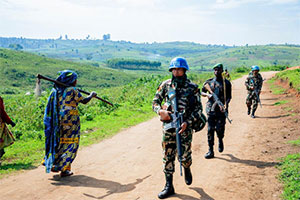 MONUSCO Peacekeepers and FARDC Soldiers Patrol Fataki Area. Credit: UN Photo/Jorkim Jotham Pituwa
Conflict, human rights violations, natural disasters, and famine have been at the forefront of concerns for humanitarian organizations. The escalation of humanitarian crises has led to over 239 million people in need of humanitarian assistance at the start of 2026, as estimated by OCHA’s Global Humanitarian Overview. The 2025 humanitarian appeal received only $12 billion, the lowest funding in over a decade, which has left 24 million fewer people reached in comparison to 2024. Conflict has remained the primary driver of crisis.
Humanitarian emergencies massively impact progress towards the Sustainable Development Goals (SDGs), adversely affecting economic development, inequality, education, planetary well-being, and poverty. Millions of people are faced with reduced access to essential services, including shelter, food, healthcare, and access to clean drinking water. UN Organizations such as UNHCR and the United Nations Children’s Fund (UNICEF) are committed to providing direct relief to affected communities when state governments cannot.
The United Nations 2024 Summit of the Future discussed measures that will be taken to reduce global inequality and promote peacekeeping efforts around the world. The recent UN Climate Change Conference (COP30) in Belém, Brazil, agreed to mobilize $1.3 trillion annually for climate action by 2035, operationalize the loss and damage fund, and triple adaptation finance. However, a fossil fuel transition commitment was not secured, despite climate change and the greenhouse effect being major contributors to humanitarian crises worldwide.
Countries across the world have also rallied to end humanitarian crises, as witnessed in conflicts such as Palestine and Ukraine. IPS is committed to providing relevant and in-depth reports of humanitarian emergencies around the world and their implications.

The Week with IPS

NEXT STOP - SDGs
Tracking global progress towards a sustainable world
Tracking global progress towards a sustainable world