Languages
Thursday, September 24, 2026



News and Views from the Global South
International Justice

UN 80 Restructuring: No Office or Agency will be Exempted from Staff Layoffs
When billionaire Elon Musk, a former short-lived advisor to President Donald Trump, was mandated with the task of decimating the federal bureaucracy and laying off thousands of staffers, he was famously pictured carrying a hacksaw to symbolize his cost-cutting agenda.
Time to Rethink Health Financing: It’s Not Just a Public Sector Concern
As G7 leaders of the world’s wealthiest nations wrapped up their summit in Kananaskis June 16, a critical issue was absent from the agenda: the future of global health financing.
The Fallout from Losing a UN Job
Ten years ago, I lost more than a job. When my post was abolished, there was no warning, no closure, no golden parachute—just a quiet erasure. Overnight, I went from a UN professional with decades of service to an invisible statistic in a system that eats its own.
Israel’s Attack on Iran and Its Potential Fallout
Israel’s attack on Iran’s nuclear facilities may be justified if one takes Netanyahu’s explanation at face value. I doubt, however, if he and Trump have fully considered the ominous regional ramifications of the attack and whether negotiations to limit Iran’s nuclear program would have led to much more positive results.
US Threatens UN Members Seeking a Two-State Solution to the Israeli-Palestine Conflict
The United States, a longstanding and unyielding Israeli ally, is threatening UN member states urging them to keep off an upcoming high-level meeting aimed at recognizing a two-state solution for the Israeli-Palestine conflict. The meeting, to be co-chaired by France, a permanent member of the UN Security Council, and Saudi Arabia, a strong political ally of the US, is scheduled to take place June 17-20.
Military Conflicts at Historic High as US Signals Retreat from World Stage
The world is experiencing a surge in violence not seen since the post-World War II era. 2024 marked a grim new record: the highest number of state-based armed conflicts in over seven decades.
Vanuatu Anticipates New Era With Climate Change Reparations
To the outside world, a sea level rise of 34 cm (or slightly longer than a child’s ruler) may not seem dramatic, but it’s an existential threat to the Pacific island state of Vanuatu.
Why Are We Failing to Protect Gaza?
During President Trump’s tour of Gulf monarchies last month, he mentioned Gaza only two times. The first time was in Doha, when he expressed his desire to make Gaza a “freedom zone.” Gaza’s 2.1 million residents, nearly half of whom are children, would like that, too.
If This Isn’t Genocide, What Is?
For over a year, I refused to ascribe Israel's war against Hamas and the reign of horror it is inflicting on the Palestinians in Gaza as genocide, but now I feel shaken to the core by what I am witnessing. If what I see is not genocide, then I do not know what is.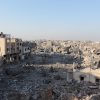
Palestinians Call Out Israel’s Mission To Destroy Their History and Cultural Heritage in Gaza
Israel’s ongoing war of annihilation in Gaza has wiped out hospitals, schools, homes, water, and food, reducing the Palestinian territory to a wasteland and leaving a death toll of more than 53,000 people. But an equally lethal campaign has been unleashed against the foundations of Palestinian society and identity.
The Largest Multi-Billion Dollar Deal in US History– & a Potential 51st American State?
When US President Donald Trump offered to declare neighboring Canada as America’s 51st state, the Canadians vehemently rejected the proposal. “We don’t want to be part of America,” was the rallying cry. And the short-lived offer was shot down in flames.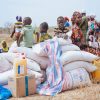
The True Cost of America’s Retreat: How USAID Cuts Threaten Millions of Lives
In January 2025, President Trump signed an executive order that upended humanitarian efforts globally, leaving millions of vulnerable people without lifesaving services. The administration's decision to slash American international aid by 83% is creating daily tragedies in the world's most fragile regions.
Agenda for Nuclear Non-Proliferation Review Conference Still Unclear
The Treaty on the Non-Proliferation of Nuclear Weapons must not be allowed to collapse under the weight of geopolitical cynicism, the preparatory committee at the UN heard.
Civilians Face Humanitarian Disaster in Great Lakes, Horn of Africa Conflicts
Political instability and conflicts in the Great Lakes, the Horn of Africa, Sudan, and South Sudan have led to massive displacements and civilian suffering, and because the whole region is in crisis, the civilian population has few places to find refuge.
U.S. Deported Bhutanese Refugees Cry–‘No Country To Call Home’
Sitting in his small hut in the Beldangi refugee camp in Jhapa district, Nepal, Narayan Kumar Subedi feels relieved that his son, Aasis Subedi, is safe. Aasis is one of four United States deportees who were the subject of Nepal's Supreme Court landmark ruling on April 24, which directed the government not to deport four Bhutanese refugees who entered Nepal in March of this year after being disowned by Bhutan. U.S. Immigration and Customs Enforcement (ICE) deported the four after they had lived in various parts of the United States for nearly a decade.
UN Needs to Protect its Vital, Yet Underfunded, Human Rights Work
Major-power cutbacks and delayed payments amidst conflict and insecurity are testing the very principles and frameworks upon which the international human rights infrastructure was built nearly 80 years ago.
A Nation Bleeds While the World Watches: The Tragedy in Sudan Must End
The ongoing civil war in Sudan is tragic, but the greater tragedy is that if the international community sits on its hands and does nothing to stop this horrific war and prevent further escalation of the conflict, it will come at an unfathomable price
Genocide Prevention & Responsibility to Protect
April marks Genocide Prevention and Awareness Month, a time to reflect on the history, causes and victims of past genocides and to mobilize the necessary resolve to confront risks facing populations around the world today who face the threat of genocide and other mass atrocity crimes not for anything they have done, but for who they are.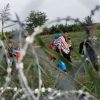
Migrant Smuggling: Europe Must Make a U-Turn
Europe must understand that the only reasonable and humane way to tackle migrant smuggling is to open regular routes for people to reach Europe in safety and dignity.
Civil Society’s Reform Vision Gains Urgency as the USA Abandons UN Institutions
Today’s multiple and connected crises – including conflicts, climate breakdown and democratic regression – are overwhelming the capabilities of the international institutions designed to address problems states can’t or won’t solve. Now US withdrawal from global bodies threatens to worsen a crisis in international cooperation.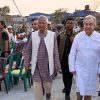
UN Chief’s Ramadan Solidarity Visit Revives Rohingya Refugees Hope
When United Nations Secretary-General António Guterres appeared before the Rohingya refugees wearing a traditional white panjabi, a costume of Muslims, to join an iftar party in Ukhiya refugee camp, thousands who had gathered waved to welcome him.« Previous Page — Next Page »


The Week with IPS

NEXT STOP - SDGs
Tracking global progress towards a sustainable world
Tracking global progress towards a sustainable world
