Languages
Thursday, November 19, 2026



News and Views from the Global South
Middle East & North Africa
POLITICS: Where Iran Fits in the Mideast Peace Puzzle
What is the relationship between the United States' policy towards Iran and its performance on Arab-Israeli peacemaking, including the crucial quest for peace between Israel and the Palestinians?FRANCE: 'Defying Rules on Arms Sales to Israel'
French arms sales to Israel are "in total contradiction" of European Union rules on the defence industry, the author of a new study has said.MIDEAST: Palestinians Honour Holocaust Victims
On a cool and overcast day, a procession of grim-faced people filed silently past pictures of heaps of skeletons piled high, of emaciated survivors with blank stares corralled behind barbed wire, barely clinging to life.MIDEAST: Israel Threatens to Outlaw Palestinian Memory
Israel is set to approve a radical new bill which threatens to legalise discrimination against its sizeable Arab minority for the first time.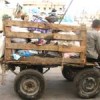
MIDEAST: Gaza Collects So Much Rubbish
Suliman Khodari begins his shift at 5am on one of Gaza City's busiest streets. With his horse-drawn cart, Suliman spends seven hours every morning hauling away the rubbish left by residents and shop owners of the neighbourhood. But he is not a scavenger.YEMEN: Qat Cultivation Draining Water Reserves
The tall green shrubs on Yehia Abdullah's farm in the Haraz mountains produce the bitter-tasting leaves that feed the nation's number one addiction. More than seven million Yemenis chew qat, the mildly narcotic leaf of the Catha edulis tree. Expanding cultivation of qat to meet growing national demand is rapidly depleting Yemen's limited groundwater resources, experts warn.
POLITICS-LEBANON: Family History Counts for Women in Race to Parliament
In Lebanon’s Jun. 7 parliamentary poll, women represent only two percent of the candidates, many of them with family names that have been appearing on ballots for generations.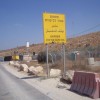
MIDEAST: Humanitarian Crisis Deepens in West Bank
"I heard voices, I turned around to look, and saw a group of Israeli settlers assaulting my brother Hammad," says Abdallah Wahadin, 82, a Palestinian farmer from Beit Ummar near the southern West Bank city of Hebron.MIDEAST: Israel Prepares for North Korean Fallout
The tremors of Monday's North Korean nuclear test have been felt all around the world, no more so in a country seemingly not directly affected by whether or not North Korea is a full-fledged nuclear power. In Israel, there is deep concern, an existential fear even - over the implications that Iran will be next in the nuclear line.MIDEAST: Egyptians Too Hit by Israeli Strikes
Residents along Egypt's border with the Gaza Strip are still awaiting compensation for property damaged by air strikes during Israel's recent onslaught against the Hamas-run enclave.MIDEAST: Palestinians Scoring Own Goals
While the U.S. appears to be optimistic about Israeli-Palestinian peace talks, inter-Palestinian rivalry, a recalcitrant Israeli government, and an international community with its own agenda could well scuttle a settlement.MIDEAST: Showdown Looming Over Settlements
A showdown over Israeli settlements in the occupied West bank is looming between Israel and the United States barely a week after the encounter at the White House between U.S. President Barack Obama and Israeli Prime Minister Benjamin Netanyahu. What's becoming increasingly clear is that the May 18 encounter was no friendly 'getting-to-know-you' meeting between a new President and a new Prime Minister of the Middle East's most enduring alliance.EGYPT: Financial Crunch Squeezes Suez
At the Suez Canal, one of Egypt's fiscal mainstays, the threat of Somali piracy pales in comparison with the potential knock-on effects of the global economic depression.POLITICS-US: Iran Hawks Push Obama on Deadline for Diplomacy
After an uneventful first meeting between U.S. President Barack Obama and Israeli Prime Minister Benjamin Netanyahu that seemed to produce no real breakthroughs, hawks in the U.S. and Israel are seizing upon what they claim is a significant concession by Obama: his setting a "timetable" for negotiations with Iran.KUWAIT: ‘Gender-Bender’ Election Raises Optimism
Despite the reappointment of the Kuwaiti ruler’s nephew as premier, the results of last week’s elections - the historic victories of women candidates, and the decline of Islamist representation in parliament - are being perceived as a vote for change in the Gulf state.MIDEAST: Israel Slow to Recognise New U.S. Face
A ballistic missile, an anti-missile defence system and the transfer of nuclear technology - three inter-related issues addressed on the same day this week highlight the radical re-adjustment in U.S. priorities as the Obama Administration demarcates a fresh strategic outlook for the Middle East.POLITICS: At East-West Crossroads, Turkey Presses Ambitious Agenda
Two soaring bridges link Asia and Europe in this historic city, which straddles the two continents.
Q&A: “Gaza Will Not Be Sidelined”
Six months after Israel's devastating air and ground assault on the Gaza Strip, Ambassador Riyad Mansour of the Palestinian Observer Mission to the United Nations says he will "keep up the pressure on all fronts until the perpetrators of these crimes are held accountable and reparations are made by Israel".POLITICS-US: UAE Torture Tape Complicates Nuclear Deal
A U.S. agreement to exchange nuclear information and materials with an Arab country in the Persian Gulf is facing opposition because of a video of torture conducted by a member of a ruling family from one of the United Arab Emirates (UAE).
Q&A: 'More Women Need to Judge'
Thuraya Judi Alwazir is one of few women judges sitting on the Palestinian Authority's Judicial Authority. Alwazir speaks here to IPS about her experiences in a largely male-dominated environment, on the rights of women in regard to honour killings and domestic violence, and on the death penalty as applied in the West Bank.MIDEAST: Power Struggle Killing Patients
The lives of hundreds of critically ill Gazans continue to be jeopardised by the power struggle between rival Palestinian factions Hamas and Fatah, and political blackmail by Israel.« Previous Page — Next Page »


The Week with IPS

NEXT STOP - SDGs
Tracking global progress towards a sustainable world
Tracking global progress towards a sustainable world
