Languages
Thursday, November 19, 2026



News and Views from the Global South

Ecobreves – VENEZUELA: The Triumphant Return of Sardines
The sardine returned to Venezuelan dinner tables at the beginning of Catholic Holy Week, when fish traditionally replaces meat, following the 21,000-ton catch along the northern coast.Ecobreves – CHILE: Skepticism Surrounds New Environment Ministry
Ecological groups have expressed skepticism about the creation of a Ministry of Environment by the new Chilean government of Michelle Bachelet, and doubt it represents a change in environmental policy.Ecobreves – CUBA: More Funds for Sabana-Camagüey Ecosystem
The Global Environment Facility (GEF) approved a budget of 4.1 billion dollars to continue a huge project to preserve the biodiversity of Cuba's north-central Sabana-Camagüey ecosystem, which stretches across five of the island nation's provinces.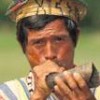
Indigenous Languages in Final Throes
Languages like Kiliwua in Mexico, Amanayé in Brazil, Záparo in Ecuador and Mashco Piro in Peru are on the verge of disappearing. Their extinction would be a tragedy for humanity, warn linguists.
Yes, Aspartame Is a Carcinogen”
The world's most widely consumed artificial sweetener could cause serious harm to human health, according to the latest study headed by Italian scientist Morando Soffritti. Tierramérica spoke with the renowned cancer researcher in Bologna.Norwegian Prize for Argentine Activist
Romina Picolotti, who recently won an international award for promoting the link between environment and human rights, sat down with Tierramérica for a Question-Answer session.Ecobreves – BRAZIL: Forestry Certification On the Rise
The proportion of environmentally certified forests in Brazil nearly doubled in the past two years, while worldwide it increased 70.25 percent, according to the Forest Stewardship Council (FSC)Ecobreves – ARGENTINA: Criticisms Raised Against Official Pro-Biotech Stance
The Rural Reflection Group (GRR) in Argentina has criticized its government for defending the dominant model for producing genetically modified soybeans and maintaining positions in line with the biotechnology corporations, during the biodiversity summit that ended Mar. 31 in the southern Brazilian city of Curitiba.Ecobreves – GUATEMALA: Eco-Corridor to Be Expanded
The Guatemalan capital's municipal government approved the "Metropolitan Ecological Corridor Conservation" project, to preserve the forests that surround the city.Ecobreves – HONDURAS: More African Palm Grown for Biodiesel
The Honduran government will promote the cultivation of 200,00 hectares of African palm over the next five years to produce the alternative fuel known as biodiesel.Ecobreves – BRAZIL: Satellites Reveal Misleading Data
Brazil is less urbanized than what official statistics indicate: the total urban area (with pavement, basic infrastructure services, telephone systems, homes and businesses) covers just 0.25 percent of the country, according to a study by the satellite monitoring center of the Brazilian agricultural research agency, Embrapa.
A Satellite for Solving the Polar Ice Mysteries
Is it true that the ice is melting at the North Pole but expanding at the South Pole? The European space mission of Cryosat 2 promises to answer this and other questions, and deepen scientific knowledge about climate change.
Indigenous Groups Denounce Exclusion from Biodiversity Talks
Indigenous groups had no voice in the negotiations in Curitiba, Brazil, about a binding global policy for the use of genetic resources. But they are already preparing to make sure they are heard in 2008.Ecobreves – A new campaign against GMOs
Environmentalists and other activists celebrated April 1 in eight Mexican cities the first World Day Against Transgenics, another name for genetically modified organisms (GMOs)Ecobreves – To the rescue of Venezuela's Lake Valencia
The Venezuelan government will compensate around 3,500 poor families who were affected by the expansion of Lake Valencia that occurred in 2005, but hundreds more complain about the lack of assistance.
Ecobreves – Combatting animal trafficking in Guatemala
El Salvador, Guatemala and Honduras will draft a transnational operations manual in the next four months for fighting the trafficking of animals in danger of extinction.
Suez Packs Its Bags and Won't Be Back
Following the withdrawal of its contract in Argentina, the French water company expects a friendlier departure from Bolivia. For some time to come, Latin America will not be among its favorite destinations.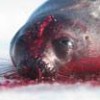
Annual Seal Hunt Begins in Canada
BSome 325,000 seals are in the sights of hunters in the Gulf of St. Lawrence. Canadian authorities and local residents say the bloody spectacle is justified.A Name as Means of Protection
An initiative to put together a global taxonomy index of species is under discussion at an international environmental meeting in the southern Brazilian city of Curitiba. The idea is a good one, say experts, but what is lacking is money.Ecobreves – BRAZIL: It's a Go for Space Mission
The Mar. 30 space flight of Marcos Pontes, Brazil's first astronaut, "will give visibility to our space program and will make citizens understand why it is necessary," Sergio Mauricio Brito Gaudenzi, president of the Brazilian Space Agency, told Tierramérica.Ecobreves – ARGENTINA: Sustainable Development for Wetlands
An environmental organization in Argentina presented a project for the sustainable development of a wetland in the eastern region, considered a priority area for the conservation of biodiversity.« Previous Page — Next Page »


Tierramérica is the main communications platform on sustainable development and the environment in Latin America and the Caribbean. It is produced by IPS Noticias, the agency’s Spanish-language service, which created it jointly with the United Nations Development Programme (UNDP) and the United Nations Environment Programme (UNEP), with later support from the World Bank. The weekly editions of Tierramérica are published in Spanish, Portuguese and English and are picked up and printed by dozens of media outlets in the region. Follow us on Facebook and Twitter.

From the Frontline of Environment
Supported by

Tierramérica en Español

Terramérica em Portuguese

