Languages
Sunday, October 11, 2026



News and Views from the Global South
Multimedia

SA hospital defies witchcraft fears and helps cerebral palsy children
 A hospital in one of South Africa’s poorest and most isolated areas is defying tradition by providing a have to children with cerebral palsy. Children with these ailments are often hidden in rural areas as local tradition says they are bewitched. Mia Malan voices this insert compiled by Darren Taylor.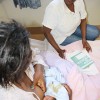
More teenagers are falling pregnant in rural South Africa
A health NGO says increasing numbers of teenagers, some as young as 13, are falling pregnant in an isolated part of South Africa’s Eastern Cape. The Philani organisation says it commonly helps 15-year-old girls in the area who have already had three children. Health workers attribute the situation in the Zidindi district, where most people are unemployed, to a variety of factors, including extreme poverty. This report was compiled by Darren Taylor and voiced by Mia Malan. 
AUDIO – High Oil Costs Drive Jamaica’s Clean Energy Agenda
Jamaica’s spend on oil imports is now topping its export earnings and environmentalists are worried that high electricity rates and petroleum prices are increasing the nation's vulnerability to external shocks and putting pressure on the local environment.
[podcast]http://traffic.libsyn.com/ipsaudio/1_Track_01.mp3[/podcast] 
Women farmers in Kenya have been supplying rare vegetables to market for the past decade, but the changing weather are putting the women under pressure.
Women farmers in Kenya have been supplying rare vegetables to market for the past decade, but the changing weather are putting the women under pressure. Martha Nyambura reports from Kasarani. 
Weather patterns have SADC farmers scratching their heads
Different countries in the SADC region have been hit with strange weather patterns this season and, while some are struggling to keep afloat, others are getting less rainfall than in previous years. Zuki Zimela reports on the phenomenon from Johannesburg. 
South Africa is in the late testing stages for a vaccine that can prevent TB in children.
South Africa is in the late testing stages for a vaccine that can prevent TB in children. The vaccine is to be used with current vaccines given to babies when they are immunised. 
Mauritian farmers get grants for rainwater.
The Mauritian Government is offering a grants to farmers and breeders willing to set up structures to collect rainwater in their fields. IPS reporter Nasseem Ackbarally says this is due to water shortages attributable to climate change. 
Drought puts Mauritius farmers under pressure
Watercress farmers in Mauritius are finding it difficult to keep their activity going after sixty years because of a lack of water. Nasseem Ackbarally reports that 30 families working on one of the biggest watercress farm in the island can no longer cultivate watercress because there is no water in their pond. 
PODCAST: Red Tape Mutes Community Radio in India
The advent of mobile phones has given a fillip to CR because even the cheapest handsets come embedded with FM capability. But K.S. Hariskrishnan reports that red tape is still hampering the establishment of new community radio stations.

PODCAST: Lessons in Democracy on South Sudan’s Airwaves
South Sudan is using radio to disseminate information on legislation and educate the public on civil topics. Charlton Doki reports that the community-based civic education programme, Let’s Talk, targets communities to help promote dialogue on South Sudan’s political transition to an independent and democratic country.
SA wants to educate citizens on flood warnings
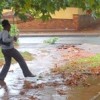
The Department of Water Affairs in South Africa wants its early warning system on flooding to work in rural areas and says education is the way to go. Zukiswa Zimela reports
[podcast]http://traffic.libsyn.com/ipsaudio/20120312_weatherwarning_zimela.mp3[/podcast] 
PODCAST: The Sound of Peace in Kenya’s Kibera Slum
Pamoja (Swahili for ‘Together’) community radio serves the Kibera community, the biggest slum in the country. Most of the programmes are geared towards peace making at the community and family levels

PODCAST: Campus Radio Turns Grassroots Voice
Kodao’s director, Raymund Villanueva, says it is still very difficult to overcome red tape and start a community radio station.

PODCAST: Papua New Guinea’s New Dawn With Community Radio
Podcast by Catherine Wilson on Bougainville’s New Dawn community radio station which broadcasts to to nearly 50,000 listeners in Papua New Guinea.

PODCAST: FM Radio Spells Change, Success for Mideast Women
Nisaa FM is an almost entirely female-run Palestinian radio station based in Ramallah, West Bank and the only radio station in the Middle East devoted solely to women’s issues. Jillian Kestler-D'Amours asks director Maysoun Odeh Gangat what the radio station aims to achieve.

PODCAST: JAMAICA – New Technologies Extend Life and “Mobility” of Radio
Radio remains Jamaica’s most effective and fastest growing communications medium. From four stations in the late 1990s, Jamaicans today are able to access more than 70 stations – 30 of them are owned and operated on the island.

More rain expected in Southern Africa
Southern Africa has had more than its average rainfall since November of 2011 and forecasters are predicting even more rain until the end of March. But, as Tinus de Jager reports, it seems as if this rain is not benefitting the smaller farmers of the region.

Rapid urbanisation in South Africa is affecting the water quality of the river systems.
Rapid urbanisation in South Africa is affecting the water quality of the river systems.

South Africa wants to promote the use of breast milk across the country and big strides have been made in the KwaZulu-Natal province in taking formula off the shelves in primary health care clinics.
South Africa wants to promote the use of breast milk across the country and big strides have been made in the KwaZulu-Natal province in taking formula off the shelves in primary health care clinics. Zukiswa Zimela looks at the pro's and con's of this step.
PODCAST: INDONESIA – Community Radio Helps Revive Forests
Radio Ruyuk hosts a talk show on various environmental issues. Kanis Dursin reports on how farmers and small traders use community radio to save Indonesian forests.
PODCAST: CHINA – Radio Keeps Tibetans Tuned In
MCRS, a government-approved community station, is one of a handful of localised radio stations providing China’s minorities with news and entertainment in their native languages. Presently, local state-run stations serve five out of 46 ethnic minorities and all programming is approved by the state.
« Previous Page — Next Page »





The Week with IPS

NEXT STOP - SDGs
Tracking global progress towards a sustainable world
Tracking global progress towards a sustainable world
