Languages
Thursday, October 15, 2026



News and Views from the Global South
Multimedia

Women must be more active in African government
 Women should take a more active role in ensuring peace and security on the African continent. Zukiswa Zimela reports from the fifth ordinary session of the Pan African Parliament in Midrand, South Africa.
Zambia needs to do more on gender equality
Zambia has signed numerous international treaties to help promote gender equality, among them the International Labour Organization (ILO) Convention on equal pay for work of equal value. But, as Brian Moonga reports, some gender activists feel much more needs to be done to reach gender parity.

Renewable energy will drive up SA’s energy costs
South Africa wants to move from its reliance on coal for the generation of electricity to renewable energy sources like wind power and solar electricity. Zukiswa Zimela compiled this audio report:
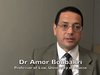
Dr Amor Boubakri – Professor of Law, University of Sousse
 DEATH PENALTY: On Popular Demand
By Sanjay Suri
LONDON, Sep 27, 2011 (IPS) - The image endures of the death penalty in force across the Arab world because it is considered somehow Islamic, and because most regimes are undeniably autocratic. But campaigners on the ground say the death penalty might just be in place because the people want it. Which would make it in essence a democratic institution.
ipsnews.net/news.asp?idnews=105252
DEATH PENALTY: On Popular Demand
By Sanjay Suri
LONDON, Sep 27, 2011 (IPS) - The image endures of the death penalty in force across the Arab world because it is considered somehow Islamic, and because most regimes are undeniably autocratic. But campaigners on the ground say the death penalty might just be in place because the people want it. Which would make it in essence a democratic institution.
ipsnews.net/news.asp?idnews=105252 
Tanya Awad Ghorra AUNOHR
DEATH PENALTY: On Popular Demand
By Sanjay Suri
LONDON, Sep 27, 2011 (IPS) - The image endures of the death penalty in force across the Arab world because it is considered somehow Islamic, and because most regimes are undeniably autocratic. But campaigners on the ground say the death penalty might just be in place because the people want it. Which would make it in essence a democratic institution.
ipsnews.net/news.asp?idnews=105252 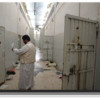
Some Were Merely Tortured
 Karlos Zurutuza reports for IPS from Abu Salim prison in Tripoli.

The Battle Over Canada’s Tar Sands: Citizens Speak Out
On Sep. 26, normally placid and polite Canadians shouted, waved banners and demanded the closure of the multi-billion-dollar tar sands oil extraction projects in northern Alberta to protect the global climate and the health of local people and environment.
New lab to identify disease in Africa
New diseases and older ones building resistance to treatment are putting strain on African states. The launch of a new laboratory in Nairobi should allow a more rapid response to outbreaks in the area. Martha Nyambura compiled this report.

Women need more backing for business
A lack of funding is stopping South Africa businesswomen from reaching their rightfull place in the commercial sector. Zukiswa Zimela interviews the awardwinning CEO of Sikelela, Nondumiso Mzizana.

Not in the Name of the Quran
Dr. Mohammad Al-Habash, director of the Islamic Studies Centre in Damascus speaks to IPS on the Death Penalty.
Read more: ipsnews.net/news.asp?idnews=105191 
SA needs to use water more than once
Experts say South Africa needs to focus on reusing its water or it will be forced to import the resource from beyond its borders. Zukiswa Zimela reports from Johannesburg.


Orasecom study forms a base for river monitoring
Research done across southern African countries is expected to help scientists keep their finger on the pulse of the Orange-Senqu river system. Zuki Zimela reports from Johannesburg. 
More Aids education is needed for young women
Throughout eastern and southern Africa, girls and women between the ages of 15 and 24 carry more than double the risk of getting HIV than men of the same age. Zuki Zimela reports on the sister-to-sister programme.

SA needs to do more to protect mothers
The number of women who are dying while giving birth is on the increase in South Africa. HIV and negligence in the healthcare system are being blamed. Zukiswa Zimela reports from Johannesburg.
Zim women stand up for their rights
Young women in Zimbabwe are taking steps to ensure that decisions around their bodies and sex become part of their human rights. Zukiswa Zimela reports
Women aim for representation in Mauritius government
A new study is showing that Mauritian women are making great strides toward representation in government. But Nasseem Ackbarally reports that there is a lot more to be done.
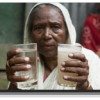
Bangladesh: Learning by Doing
Six year-old Moly scrubs and cleans her hand under a running water from a tap in her village here in Sirajgonj city, 110 kilometres north-west of the capital city Dhaka. The hands she proudly holds out are squeaky clean.
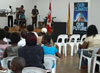
Zim women stand up for their rights
Young women in Zimbabwe are taking steps to ensure that decisions around their bodies and sex become part of their human rights. Zukiswa Zimela reports.
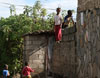
Flushing toilets bring hope to Zambian slum
Only about one in four Zambians has access to clean water and sanitation. But a new water scheme in a settlement near Lusaka is bringing hope to thousands of residents who still depend on pit latrines.
« Previous Page — Next Page »





The Week with IPS

NEXT STOP - SDGs
Tracking global progress towards a sustainable world
Tracking global progress towards a sustainable world
