Languages
Tuesday, October 13, 2026



News and Views from the Global South
Video
Women and gender recognised by UNFCCC
 Days before the start of COP17 in Durban, the UNFCCC has formally recognised the Women and Gender Constituency, giving them full constituency status when the talks start in Durban at the end of November. Tinus de Jager reports that there will be a strong push for a gender-specific focus at the climate-change talks in South Africa
Climate Change – A silent killer in coastal Bangladesh
Bangladesh, a deltaic country that drains major Asian rivers like the Ganges and the Brahamputra, is highly vulnerable to climate change and the effects are already being felt in the coastal regions in the shape of salinity, frequent floods and land erosion. Farmers and fisherman are already turning into climate refugees and, in a buiness as usual scenario, the next decades could see millions of people displaced according to projections by the United Nations Framework Convention for Climate Change. 
Young Entrepreneurs Gather in Benin
Young people from across the globe gathered in Benin’s economic capital city of Cotonou to share their success and experiences in the agricultural sector with each other.

Rabbit Farmer Inspires Youth
Young Beninese rabbit breeder, Samuel Agossou, inspired youth from across the globe when he shared his success story during the Global Youth Innovation Workshop held in Benin late last year.
The Green Climate Fund
The Green Climate Fund is meant to help developing countries with 100 billion dollars a year by 2020 to adapt to the effects of climate change. The creation of the GCF was approved during the COP16 in Cancun. Civil society and some developing nations noted that governments have made trillions of dollars available for the bank and financial sector and that the world's military budget is more than 10 times what is needed for the GFC. Up until now, countries have not been able to agree on a single mechanism to draw public funds.
Durban Platform
After two weeks and an additional 29 hours of intense and even bitter negotiations, the 193 nations participating in the United Nations climate talks agreed to a complex and technical set of documents called the "Durban Platform." The biggest development reached at dawn Sunday is an agreement to negotiate a new global treaty to reduce emissions by 2015. 
Global emissions from burning fossil fuels
Documents under negotiation in Durban, South Africa acknowledge the science-based emissions reduction target of 25 to 40 percent by 2020. Those reductions and that timeline are what is needed to stay below two degrees Celsius. The draft text says this would be the target to be agreed on at COP 18. The science shows that global emissions need to fall to 44 Gt by 2020 and continue to decline by two percent per year.

Thousands march to protest against climate change
Thousands of protesters marched in Durban on Saturday in an effort to make the need for the fight against climate change known to the world. Zukiswa Zimela of IPS followed the protest and compiled this sound-slide.

Mountain magic turning tragic
A mountainous country that boasts of eight of the 14 highest peaks in the world, including Mt Everest, Nepal is threatened by both deluge and drought with climate change shrinking its glaciers by 21 percent in 30 years. As rising temperature disturbs the balance of snow, ice and water in the Hindu Kush Himalayan region where it is located, millions of mountain people and 1.3 billion people living downstream in Asia's major river basins face the loss of livelihood, homes and lives due to flash floods and droughts.

Giant puppets welcome delegates to Durban
The COP17 negotiations in Durban, South Africa, have been described as the most colourful UN event yet after giant puppets and musicians welcomed delegates to the International Conference Centre in the port city.

Waste pickers can play a role in climate change mitigation
Waste pickers can play a role in climate change mitigation. IPS Africa led a team of reporters that produced ten days of outstanding coverage of the climate change negotiations that took place in Durban, South Africa over the past weeks. During the last four days of the official negotiations a twelve-page printed TerraViva supplement was included daily as part of The New Age newspaper, distributed inside the conference hall to the delegates and to its usual readership across KwaZulu Natal province.
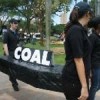
Civil society is calling for the introduction of green energy to replace coal
Civil society is calling for the introduction of green energy to replace coal.
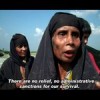
Climate Change – A silent killer in coastal Bangladesh
Bangladesh, a deltaic country that drains major Asian rivers like the Ganges and the Brahamputra, is highly vulnerable to climate change and the effects are already being felt in the coastal regions in the shape of salinity, frequent floods and land erosion. Farmers and fisherman are already turning into climate refugees and, in a buiness as usual scenario, the next decades could see millions of people displaced according to projections by the United Nations Framework Convention for Climate Change.

Women and gender recognised by UNFCCC
Days before the start of COP17 in Durban, the UNFCCC has formally recognised the Women and Gender Constituency, giving them full constituency status when the talks start in Durban at the end of November. Tinus de Jager reports that there will be a strong push for a gender-specific focus at the climate-change talks in South Africa 
The Bronx: Portrait of a borough – A documentary by Christian Papesch
The Bronx is one of the poorest Congressional Districts in the United States. In no other county of the 62 in the state of New York is the unemployment rate as high, and the average income as low, as in New York City's fourth-largest borough.
Ismael Betancourt Jr. who received his B.S. from Columbia University, his MBA from Harvard University Graduate School of Business and his MA in Political Science from the Graduate Center of the City University of New York, founded the Bronx Transformation Project last year. Its goal is to facilitate cooperation, trade, integration and development among and between the different cultural communities in and beyond the borders of Bronx.
For his documentary, “The Bronx“, IPS correspondent Christian Papesch visited Betancourt, his borough and its people. He met a teacher from Puerto Rico, an imam from West Africa and the Catholic editor of an Islamic newspaper. And he portrays a district that is multicultural, self-confident and far from being as pessimistic as its statistics may suggest. 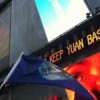
Occupy Times Square by Christian Papesch
Oct. 15 marked a "Global Day of Action" called by the Occupy Wall Street (OWS) movement. Organisers say protests took place in 15,000 cities worldwide. From Tel Aviv to Berlin, from Rome to Hong Kong, thousands of demonstrators demanded social justice and criticized banks and capitalism.
In New York City, where OWS has occupied Zucotti Park for a month now, tens of thousands participated in diverse marches that converged for a final rally at Times Square. IPS correspondent Christian Papesch caught the ambience as the occupation took over one of New York City's most famous tourist attractions: Times Square. 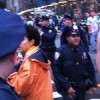
Wall Street stays occupied by Christian Papesch
NEW YORK CITY, October 14, 2011 (IPS) – The scheduled evacuation of Zucotti Park, where the Occupy Wall Street Movement (OWS) has been camped for almost one month now, was cancelled Friday, due to massive resistance by the protesters.
According to OWS, about 3,000 people gathered this morning in and around the park to prevent the police from closing down the occupation. In a letter sent to the movement this morning, New York City's Mayor Michael Bloomberg cancelled the evacuation that had been requested by the private company that owns the park because “(a)fter weeks of occupation, the conditions at the Park have deteriorated to unsanitary and unsafe levels.”
Occupy Wall Street had published the plans of the City Council and the police on their website and received major expressions of support from around the country, including a petition with more than 300,000 signatures. On Saturday, the protesters, who denounce corporate political influence and social injustice, announced an "international day of solidarity against the greed and corruption of the 1%."
Demonstrations are supposed to take place in over 951 cities in 82 countries. 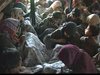

Occupy Wall Street – A Citizen’s Movement Spreads Like Wildfire
As the Occupy Wall Street movement gathers momentum, activists, union members and community groups continue to gather every day in downtown Manhattan, as well as in a growing number of cities across the United States.
On Oct. 5, more than 10,000 people marched in New York to express their anger at growing economic inequality, focused on the "one percent" who take home 24 percent of national income and own half of the country's stocks, bonds, and mutual funds, but owe only five percent of the nation's personal debt. 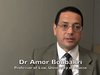
Dr Amor Boubakri – Professor of Law, University of Sousse
DEATH PENALTY: On Popular Demand
By Sanjay Suri
LONDON, Sep 27, 2011 (IPS) - The image endures of the death penalty in force across the Arab world because it is considered somehow Islamic, and because most regimes are undeniably autocratic. But campaigners on the ground say the death penalty might just be in place because the people want it. Which would make it in essence a democratic institution.
ipsnews.net/news.asp?idnews=105252 
Tanya Awad Ghorra AUNOHR
DEATH PENALTY: On Popular Demand
By Sanjay Suri
LONDON, Sep 27, 2011 (IPS) - The image endures of the death penalty in force across the Arab world because it is considered somehow Islamic, and because most regimes are undeniably autocratic. But campaigners on the ground say the death penalty might just be in place because the people want it. Which would make it in essence a democratic institution.
ipsnews.net/news.asp?idnews=105252 « Previous Page — Next Page »





The Week with IPS

NEXT STOP - SDGs
Tracking global progress towards a sustainable world
Tracking global progress towards a sustainable world
