Languages
Saturday, October 17, 2026



News and Views from the Global South
Education Cannot Wait. Future of Education is here

IPS Webinar: Gender Equality Crucial in ‘Building Back Better’ Post-COVID-19
While men are more likely to die from COVID-19, women are facing the full blow of the socio-economic fallout from the ongoing pandemic as well as seeing a reversal in equality gains made over the last two decades, says an all-women panel of international thought leaders, who met virtually during a discussion convened by IPS.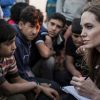
UNESCO, UNHCR & EDUCATION CANNOT WAIT Call for the Inclusion of Refugees in the Post-Covid-19 Education Effort
We must not leave young refugees by the wayside, urged UNESCO, the Office of the United Nations High Commissioner for Refugees (UNHCR) and Education Cannot Wait as they urged more support in favour of young refugees’ education during an online debate today, moderated by UNHCR Special Envoy Angelina Jolie, on how best to provide them with improved learning during and after the pandemic.
The Foundation to Build Back Better: Education
To realize the concept of ‘build back better,’ we need a foundation. That foundation is education. This is an incontestable truth.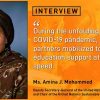
Education Cannot Wait Interviews Amina J. Mohammed, Deputy Secretary-general of the United Nations
Ms. Amina J. Mohammed is the Deputy Secretary-General of the United Nations and Chair of the United Nations Sustainable Development Group. Prior to her appointment, Ms. Mohammed served as Minister of Environment of the Federal Republic of Nigeria where she steered the country’s efforts on climate action and efforts to protect the natural environment. Ms. Mohammed first joined the United Nations in 2012 as Special Adviser to former Secretary-General Ban Ki-moon with the responsibility for post-2015 development planning. She led the process that resulted in global agreement around the 2030 Agenda for Sustainable Development and the creation of the Sustainable Development Goals.
UNESCO and Education Cannot Wait provide the Ministry of Education and Higher Education with online learning material for teachers and students
(UNESCO/Ministry of Education and Higher Education/ECW) - The COVID-19 pandemic has translated into a major education crisis. In Lebanon, 1.2 million children are affected by school closures and have seen their learning routines disrupted. While Lebanon has switched to distance teaching and learning to mitigate the effects of this disruption, challenges related to preparedness, infrastructure and capacity, as well as the digital gaps, have put additional strains on students, parents, teachers, and the educational authorities.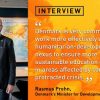
The Power of Education in Emergencies: Interview with Denmark’s Minister of Development Cooperation Rasmus Prehn
Denmark is Education Cannot Wait’s (ECW) third largest donor, with US$79.1 million in contributions to date. In this insightful interview with Denmark’s Minister for Development Cooperation, Rasmus Prehn, we explore the importance of girls’ education and gender equality, the humanitarian-development nexus, expanded engagement with the private sector, education in emergency response to the COVID-19 pandemic and more. A former high school teacher, with a master’s degree in social science, Minister Prehn has been a member of Danish Parliament since 2005, and was named Minister for Development Cooperation on June 27, 2019. Minister Prehn is the former chairman of the Danish Research, Education and Further Education Committee, a tireless advocate for education in emergencies, and a true champion for achievement of the Sustainable Development Goals, especially SDG4: inclusive and equitable, quality education for all.
The Fierce Urgency of Now
We are living in a crisis unprecedented since World War II: COVID-19. The pandemic brutally sweeps across the globe, where we already face a massive global learning crisis and multiple brutal humanitarian crises. How much more can those left furthest behind in forced displacement and armed conflicts take?
The Fierce Urgency of Now – ECW Allocates $15M in Emergency Funds
The Education Cannot Wait Global Fund (ECW) allocates a total of US$15 million in an initial series of emergency grants for the rapid delivery of holistic education services to protect and support vulnerable children and youth hit by the COVID-19 pandemic in 16 countries/emergency contexts. These girls and boys are already impacted by armed conflicts, forced displacement, natural disasters and protracted crises. An additional series of grants to support the response in other crisis-affected countries will be released shortly and reach partners in-country in the coming days.
Education Cannot Wait Interviews Henrietta H. Fore, Unicef Executive Director
Henrietta H. Fore became UNICEF’s seventh Executive Director on 1 January 2018. She has worked to champion economic development, education, health, humanitarian assistance and disaster relief in a public service, private sector and non-profit leadership career that spans more than four decades.
Her Education Is Our Foundation
Conflicts and disasters are about destruction. Discrimination and marginalization are about disempowerment. Combine the two and we get a glimpse of the brutal reality affecting millions of girls today. Standing amidst the ruins of their towns, displaced communities and torn-apart families, they are further shackled by exclusion, exploitation and lost opportunities because of their gender.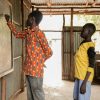
Education Cannot Wait and Porticus announce new partnership focused on measuring holistic learning outcomes for children and youth caught in protracted crises and emergencies
To improve learning outcomes for girls and boys caught in emergencies and protracted crises, Education Cannot Wait (ECW) is now partnering with the global philanthropic organization Porticus to develop, test and document fit-for-purpose solutions towards measuring the learning of children in crises-affected countries.
EDUCATION CANNOT WAIT INVESTS $48 MILLION IN CHAD AND ETHIOPIA
In just one week, Education Cannot Wait (ECW), with the Governments of Ethiopia and Chad and implementing partners, launched two new multi-year resilience programmes in Chad (7 February) and Ethiopia (14 February) with US$48 million in seed funding over three years to roll out crucial programme activities and catalyse additional resources.
Education Cannot Wait Interview with Rt. Hon. Gordon Brown
As the world marks the second International Day of Education on 24 January 2020, Education Cannot Wait’s Director, Yasmine Sherif, interviewed one of today’s most prominent and passionate advocates for the global movement to ensure education for all. In his role as UN Special Envoy for Global Education and as Chair of the ECW High-Level Steering Group, Rt. Hon. Gordon Brown has successfully galvanized financial and political support globally with the hope and opportunity of quality education for every child in this world.
World’s Spreading Humanitarian Crises Leave Millions of Children Without Schools or Education
As massive protests escalated worldwide last month, millions of children walked out of schools to demonstrate against the lackadaisical response – primarily from world leaders --to the ongoing climate emergency resulting in floods, droughts, typhoons, heat waves and wildfires devastating human lives.« Previous Page





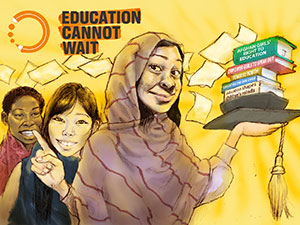
Education Cannot Wait has reached 5 million children and youth since its inception. Yet, the scale and the depth of the education emergency in crisis-affected countries needs to be matched by adeguate and scaled up financial investments to end the learning crisis for those left furthest behind, and to swiftly shift the course towards the SDGs. With 20 times more funding, the estimated 75 million children and youth can be reached. Indeed, financing stands between what is possible and what is not for these vulnerable girls and boys.
- Videos -
- Quote cards -


The Week with IPS

NEXT STOP - SDGs
Tracking global progress towards a sustainable world
Tracking global progress towards a sustainable world
