Languages
Monday, November 9, 2026



News and Views from the Global South

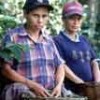
Desertion of Coffee Plantations Hurts Ecosystems
In El Salvador and Honduras, some 20,000 hectares of coffee plantations have disappeared. Their carbon-fixing function is crucial in mitigating climate change. In Nicaragua, the desertion of coffee agriculture has cost 122,000 jobs and created a food crisis in the department of Matagalpa.Ecobreves – PERU: Creating a 'Green' Ministry
The Peruvian Congress will establish an Environment Ministry and an Environmental Prosecutor's Office in August, announced lawmaker Fabiola Morales on Apr. 16.Ecobreves – GUATEMALA: Park Rangers Wanted in El Petén
The Protected Areas Council, CONAP, in Guatemala has just 45 park rangers to cover the 90 posts for monitoring the vast preserves in El Petén, the country's largest department and richest in natural resources.Greens United, but Their Color Has Faded
European environmentalists have created a regional Green Party with sights on EU parliamentary elections in June. But the Greens' political influence remains limited. Currently there are just two green parties -- in Germany and Latvia -- that form part of governing coalitions in Europe.Ecobreves – HONDURAS: Mining Activity Under Fire
Residents and authorities in 14 municipalities of western Honduras are demanding a reform of the mining law, saying it is an attack on the environment. They gave the government an ultimatum to remove the mining transnational Maverick from the Guiyasote ecological reserve.New Offensive Against Asbestos
Labor authorities in Brazil are seeking a ban on the carcinogenic mineral that is used in more than 3,000 products, but the private sector is expected to put up a fight. SAMA, the only asbestos producer in the country, exported 140,000 tons in 2003.Ecobreves – BRAZIL: Plans Against the Greenhouse Effect
Projects to fight global warming by reducing emissions of greenhouse gases will be the focus of the second Latin American Symposium on Carbon Fixation, Apr. 21-24 in Curitiba, capital of the southern Brazilian state of Paraná.
Galápagos on the Brink
The famed archipelago is suffering the effects of political clientelism, unregulated economic activity and the institutional weakness of Ecuador, says analyst Javier Ponce in this exclusive column for Tierramérica.Ecobreves – CUBA: Snail Farming
A project to artificially raise Zachrysia guanensis, a land snail, is under way in Cuba's Viñales National Park, 150 km from the capital.Ecobreves – VENEZUELA: Tuna Industry Looks Out for Dolphins
The tuna boats of Venezuela and Mexico, regional leaders in the sector, are looking out for the dolphins that swim alongside the schools of tuna, according to the Venezuelan Foundation for the Sustainable and Responsible Tuna Fishing (Fundatún).Ecobreves – CHILE: Promises to Cut Air Pollution Risks in Santiago
The Chilean government has promised through Santiago metropolitan region leader Marcelo Trivelli that next year there will be no more "environmental pre-emergencies" declared in this city of five million inhabitants.Ecobreves – CENTRAL AMERICA: Wetlands in Danger
The wetlands of the Gulf of Fonseca, shared by Honduras, Nicaragua and El Salvador, are threatened by the shrimp farming operations that use toxic chemicals to get rid of pests.Ecobreves – COSTA RICA: Opposition to Open Pit Mining
Environmental groups in Costa Rica aim to stop the Bellavista mining project in Miramar de Puntarenas, 100 km northeast of San José, because they say it will ruin the area's water sources.
Transgenic Corn Growing in Mesoamerica
Two thousand hectares of genetically modified corn are planted in Honduras with government approval. In the rest of the region -- birthplace of this grain -- there are reports that local varieties have been contaminated by transgenic corn.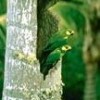
'Via Dolorosa' for Palm and Parrot
A campaign was launched in Colombia prior to the Christian Holy Week to prevent the depredation of a local tree and bird species, both of which are facing extinction. On Palm Sunday, thousands of the Catholic faithful continue to use the fronds of the wax palm, the tree in which the yellow-eared parrot makes its nest.Ecobreves – URUGUAY: Gasoline Additive MTBE Rejected
The Uruguayan research center for appropriate technologies, CEUTA, condemned that lead tetraethyl, previously used as an additive in some gasolines, has been replaced by MTBE, a known carcinogenic and contaminating substance that is banned in many countries.Ecobreves – PERU: Cyanide on the Loose
The Peruvian Ministry of Energy and Mining asked Congress to declare sodium cyanide a "controlled chemical input". Currently, it is marketed and transported without restrictions -- and last month killed five people.Ecobreves – MEXICO: Sheep Milk Recommended
Researchers at the Autonomous Metropolitan University of Mexico (UAM) say sheep milk should no longer be neglected, as it is an important source of protein, minerals and vitamins -- much richer than goat or cow milk.Ecobreves – GUATEMALA: Up With Avocados
Guatemala needs to foment wider production of avocados, a crop that is ignored despite its enormous potential, Cristian Smith, president of the Comité del Aguacate (Spanish for avocado), told Tierramérica.Ecobreves – COLOMBIA: Forestry Directory to Be Launched
Representatives of the private sector in the northeastern Colombian city of Medellin will distribute the first Directory of the Forestry Productive Chain, which includes a broad range of participants in the sector: industrialists, engineers, technicians, suppliers, financial institutions and research centers.Ecobreves – VENEZUELA: Kites Kill Flamingoes
Dozens of flamingoes were killed in recent weeks by children and adolescents in the Tucurere wildlife preserve in the northwestern Venezuelan state of Falcón, reports the Ministry of Environment.« Previous Page — Next Page »





Tierramérica is the main communications platform on sustainable development and the environment in Latin America and the Caribbean. It is produced by IPS Noticias, the agency’s Spanish-language service, which created it jointly with the United Nations Development Programme (UNDP) and the United Nations Environment Programme (UNEP), with later support from the World Bank. The weekly editions of Tierramérica are published in Spanish, Portuguese and English and are picked up and printed by dozens of media outlets in the region. Follow us on Facebook and Twitter.

From the Frontline of Environment
Supported by

Tierramérica en Español

Terramérica em Portuguese

