Languages
Monday, November 9, 2026



News and Views from the Global South

Ecobreves – COLOMBIA: Call to End Fumigation in Protected Areas
Senators and environmentalists have asked the Colombian government to annul a resolution, currently suspended, that would allow anti-drug fumigation in natural areas protected due to their biodiversity.Ecobreves – CHILE: The Last Robinson Crusoe Castor-Oil Seed
Three scientists are working against the clock in Chile to reproduce the Robinsonia berteroi seed, a type of castor-oil bean endemic to Robinson Crusoe Island. And there is just one specimen of this castor-oil plant left.Ecobreves – BRAZIL: T for Transgenic
As of Mar. 31, Brazil is requiring labels to identify those foods that contain more than one percent genetically modified ingredients. Failure to comply is to be penalized with fines and seizure of the product.Ecobreves – GUATEMALA: Maya Assembly Under Way
The first National Assembly of Representatives of the Maya People began on Mar. 29 in Guatemala and aims to establish ties between the Indians, the state and the international community.Natural Gas Crisis Shifts Focus of Chile's Energy Debate
Faced with cuts in natural gas supplies from Argentina, environmentalists in Chile call for diversification of energy sources, while officials consider moving up the operational start date for a controversial hydroelectric dam on the Bío-bío River.Feared Expansion of Hydroelectric Dam
NGOs maintain that increasing the levels of the reservoir of the Yacyretá dam on the Paraguay-Argentina border will have serious environmental consequences. The authorities assure that they will relocate the residents and various species of plants and animals from the affected area.
A Step Backwards for the Ozone Layer
Washington won an exemption allowing its farmers to use more methyl bromide, a pesticide banned by an international treaty because it depletes the atmospheric ozone layer. But the exemption lasts only one year.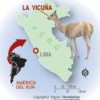
Peruvian Indians Save the Once-Endangered Vicuña
In the 1960s, there were just 25,000 of these camelids left. Now the vicuña population in Peru is growing eight percent a year and the species is no longer in danger of extinction, thanks to their protection in the hands of local indigenous communities.Law on Assisted Reproduction Divides Italy
A new Italian law, which bans experiments involving human embryos, is a violation of the rights of infertile couples and of scientific freedom, say critics. The fate of the 24,000 frozen embryos that exist in Italy is uncertain.Ecobreves – ARGENTINA: Latin American Environmental Observatory
Argentina's National Ecological Action Network (RENACE), an umbrella for more than 70 non-governmental organizations, in May will launch the Latin American Environmental Observatory to unite groups that are dealing with similar challenges.Ecobreves – NORTH AMERICA: Protection for Three Marine Species
Canada, Mexico and the United States will seek a common strategy to protect the humpbacked whale (Megaptera novaeangliae), the pink-footed shearwater (Puffinus creatopus) and the leatherback turtle (Dermochelys coriacea) as part of an ambitious plan to ensure the survival of migratory species.Ecobreves – COSTA RICA: National Parks in Crisis
Costa Rica's national parks are in an distressing state of abandon due to lack of money to hire the 300 park rangers necessary to protect areas' biodiversity from hunters, charged Carlos Manuel Rodríguez, the national environment minister.Ecobreves – PERU:: New Anti-Desertification Center Announced
Peru's National Human Resources Institute (INRENA) is working with Brazil to set up a Regional Anti-Desertification Center, which will include the other countries that share the tropical forests of the Amazon.Ecobreves – GUATEMALA: Anti-Rabies Campaign Under Way
The Guatemalan Ministry of Health launched a campaign on Mar. 20 to vaccinate 1.6 million dogs and 30,000 cats in rural areas to prevent rabies in the wake of a prolonged drought.Ecobreves – VENEZUELA: ChevronTexaco Supports School in Indigenous Area
An agricultural technical school attended by 400 children and adolescents in the Orinoco Delta, in eastern Venezuela, received 75,000 dollars from the U.S.-based oil giant ChevronTexaco for building repairs and equipmentEcobreves – CUBA: Drought Alert
More than 300,000 people suffer water shortages daily in Holguín, one of the six provinces in eastern Cuba hard hit by drought since the 1990s.Ecobreves – BRAZIL:: Engineers Seek Better Waves for Surfing
Increasing the height of ocean waves by 80 percent and improving their dynamic to benefit surfers is the goal of a project of the post-graduate engineering program at the Federal University of Rio de JaneiroEcobreves – CHILE: Advances in Cleaning Up Santiago
The Chilean government is creating a Transantiago Financial Administration System to reorganize public transportation and to build bikeways, among other measures intended to reduce pollution in the capital, home to five million people.Ecobreves – HONDURAS: Fighting Desertification and Drought
An initiative to mitigate the effects of drought and to prevent desertification in 10 of the 18 departments of Honduras began two weeks ago with public hearings and the identification of productive projects.Ecobreves – GUATEMALA: Protest Against Puebla-Panama Plan
Guatemalan Indians and peasant farmers planned to stage a protest against the Puebla-Panama Plan on Mar. 23, during a visit by Mexican President Vicente Fox, the promoter of the initiative.Ecobreves – COSTA RICA: Invaders Eradicated from Coco Island
Scientists from the World Conservation Union aim to remove invading species from Costa Rica's Coco Island, in the Pacific Ocean, so that they do not cause further harm to biodiversity.« Previous Page — Next Page »





Tierramérica is the main communications platform on sustainable development and the environment in Latin America and the Caribbean. It is produced by IPS Noticias, the agency’s Spanish-language service, which created it jointly with the United Nations Development Programme (UNDP) and the United Nations Environment Programme (UNEP), with later support from the World Bank. The weekly editions of Tierramérica are published in Spanish, Portuguese and English and are picked up and printed by dozens of media outlets in the region. Follow us on Facebook and Twitter.

From the Frontline of Environment
Supported by

Tierramérica en Español

Terramérica em Portuguese

