Languages
Monday, November 9, 2026



News and Views from the Global South

Ecobreves – VENEZUELA: Stolen Flamingoes
Hundreds of pink flamingo (Phoenicopterus ruber) chicks -- perhaps as many as 1,500 -- have been stolen during the past few weeks from Los Olivitos Marsh wildlife refuge, near the Caribbean and Maracaibo Lake, in northwest Venezuela. The authorities were tipped off by anonymous reports.Pacific Corridor Soon More Than Just Words
Two years after being announced, an initiative is being finalized to protect five Latin American archipelagos in the Pacific.
Ecobreves – UNITED STATES: Campaign to Save the Hubble
Scientists responsible for the Hubble space telescope are seeking a reversal of the decision by NASA (U.S. National Aeronautics and Space Administration) to cancel maintenance missions to prolong the useful life of the telescope-satellite by four to five years.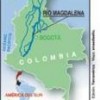
The Troubled Waters of the Magdalena
For the first time ever, there will be oil drilling along Colombia's nationally symbolic river, which is already suffering the effects of deforestation and contamination.Ecobreves – MEXICO: Dolphins Out of Place
The International Fund for Animals Welfare accused the Mexican authorities of dragging its feet in responding to reports of the import of 28 dolphins from the Salomon Islands and their shipment to an area where the introduction of non-native species is prohibited.
Can a Small Indigenous Community Be a Threat to a Nation?
The dispute between the Kichwa peoples of Sarayacu and the Ecuadorian government goes beyond petroleum exploitation: it challenges the notion of a united and homogeneous state.Ecobreves – ARGENTINA: Attorneys for the Environment
The Argentine Network of Lawyers for the Defense of the Environment will begin operating in March to facilitate, promote and strengthen access to justice and the development of effective strategies in environment-related cases.Controversy Surrounds 'Nano' Matter
Canadian scientists warn that a moratorium on nanotechnology could create a disparity much like the digital divide that separates rich countries from poor.Ecobreves – GUATEMALA: Protection for the Reefs
Environmental authorities from Guatemala and Belize installed a plant on the Sarstún River aimed at protecting the portion of the Mesoamerican Reef System (SAM) that corresponds to those two countries.Fight Against Slavery
2004 is the International Year to Commemorate the Struggle Against Slavery and its Abolition. A half-century since its international prohibition, new forms of slavery persist around the world today.Ecobreves – HONDURAS: Reforestation to Save Unique Ecosystem
Local residents and officials have begun planting 52,000 trees in order to save the ecosystem surrounding Lake Yojoa, a tourist destination and home to 10 percent of flora and fauna species found in Honduras.
Death Looms Over Indian Divers
Thousands of Miskito Indians have been physically disabled as a result of the dangers of lobster diving. The Honduran government is considering new fishing regulations for this lucrative export.Ecobreves – NICARAGUA: Titanium Discovered
A layer of chromium and titanium has been found in a Caribbean region of Nicaragua, holding some 200,000 tons, according to the calculations of the National Geological Resources Administration (ADGEO).Ecobreves – CUBA: Recovering Ecosystem Hurt by Copper Mining
Cuban experts are working a project to recuperate an ecosystem damaged by several centuries of copper exploitation in Santiago de Cuba, 900 km east of Havana.
Sea Turtles Face Deadly Beaches
Thousands of sea turtles continue to be hacked or beaten to death in Latin America. The seven species that lay their eggs on the region's beaches all face extinction.A Nation Runs on Natural Gas
Brazil is beginning construction of a 5,000-km pipeline to transport natural gas imported from Bolivia. By the end of the decade, this fossil fuel will cover 15 percent of the country's energy consumption.
A Passport to the Universe
The Papalote Children's Museum in Mexico will inaugurate the world's largest digital dome on Feb. 3, with an interactive spectacle that will transport audiences to the farthest reaches of the cosmos, 15 billion light-years away.World Economic Forum
Amidst criticisms from civil society groups, more than a thousand executives from the world's biggest corporations, national leaders and economists gathered in Davos, Switzerland for the annual meeting of the World Economic Forum, a defender of the current globalization process. Just days early, in Mumbai, India, some 100,000 people gathered to assert that "another world is possible."Ecobreves – GUATEMALA: Dam Threatens Dozens of Families
The inundation caused by a dam in Guatemala has already claimed the life of one local resident, and threatens 58 families, who fear floods in the village of Los Cerritos, 125 km south of the capital.Ecobreves – HONDURAS: Effort for Air Quality Control
The municipal government has installed four air quality control boxes throughout the Honduran capital, the city with highest rates of air pollution in Central America.Ecobreves – BRAZIL: Forest Fires Here Hurt the Environment Elsewhere
The gases and particulates generated by forest fires in the Brazilian Amazon cause climate changes more than 4,000 km away, says Paulo Eduardo Artaxo Neto, physics professor at the University of Sao Paulo.« Previous Page — Next Page »





Tierramérica is the main communications platform on sustainable development and the environment in Latin America and the Caribbean. It is produced by IPS Noticias, the agency’s Spanish-language service, which created it jointly with the United Nations Development Programme (UNDP) and the United Nations Environment Programme (UNEP), with later support from the World Bank. The weekly editions of Tierramérica are published in Spanish, Portuguese and English and are picked up and printed by dozens of media outlets in the region. Follow us on Facebook and Twitter.

From the Frontline of Environment
Supported by

Tierramérica en Español

Terramérica em Portuguese

