Languages
Monday, November 9, 2026



News and Views from the Global South

Ecobreves – VENEZUELA: Lack of Oxygen Killing Fish
Three tons of sardines, sable fish and crustaceans were found dead in mid-February along the shores of Carenero Bay, on the Venezuelan Caribbean coast.
Fund Launched for Preserving Plant Genetics
More than forty million dollars are at hand to fund plant genebanks this year. But activists doubt that the fund will ensure equal North-South access to biodiversity.Ecobreves – PERU: Lead Poisoning in El Callao
Four impoverished districts in the port city of El Callao have high levels of lead contamination, which the World Health Organizations considers one of the greatest urban environmental dangers, because it affects the neurological development of children.Ecobreves – MEXICO: Shrimp Waste Turned Fish Food
Researchers from the Metropolitan Autonomous University of Mexico found a formula to turn the waste from shrimp production, a source of contamination, into a valuable source of nutrition for fish.
A Long Trek to Mars
The directors of the European space program explain to Tierramérica the challenges that must be surmounted in the next 30 years in order to send humans to the "red planet".Fishing Divides Europe
The European Union's fishing policy reform is intended for the northern seas, ignoring the unique characteristics of the fishing sector in southern European seas, say critics.Argentina Measures Climate Change Impacts
A 1.14-million-dollar project announced for assessing Argentina's vulnerability to the effects of global warming.COP7 of the Convention on Biological Diversity
More than 2,000 experts in biodiversity and sustainable development are participating in the 7th Conference of Parties (COP7) to the Convention on Biological Diversity, in Kuala Lumpur, Feb. 9-20. The central theme of the two-week debate is how to reduce biodiversity loss at all levels.Ecobreves – HONDURAS: Indians Out to Protect Sea Turtles
Indigenous Miskito communities are promoting the creation of a hatchery preserve in northeast Honduras to protect green (Chelonia mydas), loggerhead (Caretta caretta) and leatherback (Dermochelys cariacea) sea turtles, all in danger of extinction.Ecobreves – ARGENTINA: Vicuña-Friendly Wool
Argentine scientists and shepherds have shown they can obtain the valuable wool from the wild vicuña (Lama vicugna) using methods that do not harm these cousins of the llama.Ecobreves – GUATEMALA: Network of Environmental Investigators
Strengthening and coordinating the networks of regional environmental investigators is one of the recommendations for fighting environmental crimes that emerged out of the first World Summit of Attorneys General, Prosecutors and Justice Ministers, held in Antigua, Guatemala Feb. 2-5.Ecobreves – NICARAGUA: Better Forestry Practices
The World Wildlife Fund is promoting voluntary certification programs in Nicaragua for lumber processors and furniture factories committed to sustainable development of forests.Ecobreves – VENEZUELA: Stolen Flamingoes
Hundreds of pink flamingo (Phoenicopterus ruber) chicks -- perhaps as many as 1,500 -- have been stolen during the past few weeks from Los Olivitos Marsh wildlife refuge, near the Caribbean and Maracaibo Lake, in northwest Venezuela. The authorities were tipped off by anonymous reports.Ecobreves – HONDURAS: Ban on Building Near Dams
The Honduran Environmental Prosecutor and the Secretariat of Natural Resources are to issue a new regulation on Feb. 13 that bans construction near the dams and reservoirs that supply water to the capital.Ecobreves – CUBA: Wind Blows, Fields Watered
Cuba has introduced wind energy into its farm irrigation systems. This renewable energy source has long been used to pump water for most of the country's cattle and dairy farms.Ecobreves – CHILE: New Environmental Chief
Paulina Saball, a social worker with a background in urban development, was named by Chile's President Ricardo Lagos to head the National Environmental Commission (CONAMA) after the contentious resignation of her predecessor, Gianni López.Ecobreves – BRAZIL: Alert Against Bird Flu
The Brazilian government is preparing preventive measures against avian flu, a disease that has spread among birds in a dozen Asian countries, and is considered unlikely to reach this South American country.
Brazil's Clean Energy Effort Rides Ocean Waves
Surfers are not the only ones who will be enjoying the massive power of the Atlantic Ocean's waves on the Brazilian coast. For the first time in the Americas, ocean waves are to be used to generate electricity -- enough for 200 families in Ceará state.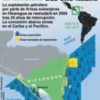
Advance of Oil Companies Alarms Indians
Foreign companies are restarting oil exploration in Nicaragua, a process that was interrupted in 1979. Indigenous communities along the Caribbean coast are worried about the potential for environmental damage.
Can We Afford to Wait for Hydrogen Energy?
This clean energy source is at the center of a new utopia, but it will take decades before hydrogen is consolidated as a true energy alternative.Weapons of Mass Destruction
The discovery on Feb. 2 of the toxin ricin in the mailroom at the offices of the U.S. Senate majority leader has reawakened fears about the scope of bioterrorism.« Previous Page — Next Page »





Tierramérica is the main communications platform on sustainable development and the environment in Latin America and the Caribbean. It is produced by IPS Noticias, the agency’s Spanish-language service, which created it jointly with the United Nations Development Programme (UNDP) and the United Nations Environment Programme (UNEP), with later support from the World Bank. The weekly editions of Tierramérica are published in Spanish, Portuguese and English and are picked up and printed by dozens of media outlets in the region. Follow us on Facebook and Twitter.

From the Frontline of Environment
Supported by

Tierramérica en Español

Terramérica em Portuguese

