Languages
Tuesday, November 10, 2026



News and Views from the Global South

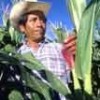
A Setback for Food Research and Security
An estimated 345,000 hectares in Central American are planted with varieties or hybrids created by the International Maize and Wheat Improvement Center, which recently closed its regional office.Ecobreves – GUATEMALA: Green Literacy Campaign
A literacy campaign geared towards environmental conservation, with a primer titled "Madre Tierra" (Mother Earth), will get underway next year, says Francisco Moscoso, director of the National Literacy Committee (CONALFA).
The Telescope
Since Galileo Galilei developed the telescope in 1610, ongoing efforts to perfect this technological tool have been key to advancing knowledge of the Solar System and of the cosmos. For many, the giant steps modern science has made as a result feed the fantasy of conquering outer space.Ecobreves – BRAZIL: Biodiesel to Fuel Buses and Trucks
The Brazilian state of Rio de Janeiro hopes to supply its entire fleet of buses, trucks and other vehicles with biodiesel obtained from processing of urban sewage.Ecobreves – CUBA: The Almiquí Lives
The chance capture of an almiquí (Solenodon cubanus) in the Alejandro de Humboldt National Park confirms that the species indeed survives in Cuba, but continues to be threatened with extinction.Ecobreves – PERU: Another Year of Leaded Gas
Peru's Transport Ministry extended authorization to produce 84-octane gasoline with lead -- the most consumed fuel in the country -- until the end of 2004.Ecobreves – MEXICO:: Youths Draft Environment Report
Young Mexicans will present to the GEO Youth Report to their country's authorities in June 2004, summarizing their experiences, demands and reflections related to the natural environment.Ecobreves – HONDURAS: Schoolbooks to Protect Natural Marine Wealth
TEGUCIGALPA - The protection of marine and coastal resources will be included in Honduran textbooks for biology and geography classes in primary and secondary schools next year, reports the Education Ministry.Ecobreves – EL SALVADOR: Subsidizing the Forests
The Salvadoran Ministry of Agriculture and Livestock will begin the process this month to select a firm to handle the administration of subsidies for new forestry plantings.Ecobreves – GUATEMALA: Cerro La May to Be Protected
Environmental officials in Guatemala have begun studies aimed at declaring the northern cloud forest Cerro La May, covering more than 100 square km, a protected area, reports the governmental National Conservation Fund.
The Underwater Wonders Revealed by Kaiko
Japanese scientists explain the discoveries made possible by the deep-sea submarine, disappeared in May, including the identification of bacteria that could help in the battle against cancer.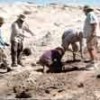
Journey in Search of Dinosaurs
Tourists and hobbyists pay for the chance to dig up Triassic-era fossils, and in the process help preserve the stark, spectral natural park in Ischigualasto, northwest Argentina.
Olancho: A Land Where Forests Fall
Led by a Salvadoran Catholic priest, residents of Olancho, Honduras, reaffirm their conviction that they will fight to the end to save their forests from destruction.
Bats
The bat is not a blind flying rodent, like many people seem to believe. It is a mammal of the Chiroptera order and serves many essential functions in nature: the bat pollinates plants, distributes seeds and controls insect populations.Ecobreves – PANAMA: National Park Law Postponed
Conservationists and scientists alike bemoan the Panama Legislative Assembly's decision to omit from its agenda a bill to create the Coiba National Park, which would protect the country's biological wealth along the Pacific coast.Ozone Linked to Lung Cancer
A scientific team led by Brazil is investigating the effects of a gas emitted by vehicles, revealing a potential new nightmare for mega-cities.
The Lesson of the 'Monster of Los Muermos'
The remains of a sperm whale turned a Chilean beach into a pilgrimage site for the curious and for scientists. The mystery surrounding the carcass calls attention to the lack of environmental education, say scientists.
Protecting Underwater History
Panama is the first country in the world to ratify the UNESCO Convention on the Protection of Underwater Cultural Heritage.
Birds of Prey
With their powerful hooked beaks they tear the meat from the kill, which they capture thanks to incredibly keen eyesight. These attributes apply to vultures, eagles and hawks, as well as other species known as birds of prey, or raptors.Ecobreves – MEXICO: Greens Grow
The Green Ecologist Party of Mexico (PVEM) has established its place as the country's fourth political force after the Jul. 6 legislative elections, winning 50 percent more votes than it did in 2000. But environmental groups say they don't expect major changes from the party, which is seen as inconsistent.Ecobreves – COLOMBIA: Displaced Women in Organic Business
Thirty women who have been displaced from their lands as a result of the Colombian civil war are in business, producing and selling organic fertilizer in the northern city of Valledupar, an effort they hope will give them the wherewithal to rebuild their lives.« Previous Page — Next Page »





Tierramérica is the main communications platform on sustainable development and the environment in Latin America and the Caribbean. It is produced by IPS Noticias, the agency’s Spanish-language service, which created it jointly with the United Nations Development Programme (UNDP) and the United Nations Environment Programme (UNEP), with later support from the World Bank. The weekly editions of Tierramérica are published in Spanish, Portuguese and English and are picked up and printed by dozens of media outlets in the region. Follow us on Facebook and Twitter.

From the Frontline of Environment
Supported by

Tierramérica en Español

Terramérica em Portuguese

