Languages
Tuesday, November 10, 2026



News and Views from the Global South


“I fear the world that my grandchildren will inherit”
War can no longer resolve any problems and it leaves in its wake the destruction of the Earth, says Chilean author Isabel Allende. "I take comfort in knowing that the children of today have greater ecological awareness," she said in an exclusive interview with Tierramérica in the U.S. city of San Francisco, where she presented her latest book "My Invented Country".A Bid to Save Honduran Hummingbird
A legislative bill to declare the northwestern area of Aguán Valley in Honduras a protected area is feeding hopes for the survival of the brilliantly colored emerald hummingbird, a species unique to this Central American nation.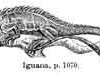
Iguanas
Iguanas have a look that seems to hark back to a life in the very distant past of this planet. These reptiles are found primarily in the Americas, and in modern times have become a sort of cult object, and in some cases the source of concern for the very survival of certain species within the extensive family.Ecobreves – ARGENTINA: Logging Threatens Las Yungas Jungle
A large portion of Las Yungas jungle in northwest Argentina could disappear over the next five years if plans are approved for a company that wants to clear 1,400 hectares in order to expand its sugarcane plantation, warn environmentalists.Ecobreves – COLOMBIA: Youth Sustainable Development Summit
Youth experiences, actions and projects for improving the status of the environment will be presented at the First Global Summit on Youth Initiatives for Sustainable Development, to be held Aug. 26-30 in the Colombian Caribbean city of Cartagena.Ecobreves – ARGENTINA: Paraná River Could Overflow
The environmental Protect Argentina Foundation warns that floods like those that brought tragedy recently to the northeastern city of Santa Fe will be more frequent in that region and will hit other cities, which must begin to take preventive measures.Ecobreves – PERU: A Powerful Documentary
The documentary film "Choropampa: The Price of Gold" prompted the health commission of the Peruvian Congress to approve a bill this week that regulates the transport of dangerous mining materials and waste, and entrusts control to local governments.Ecobreves – BRAZIL: More Genome, Less Fertilizer
Deciphering the genetic map of the Gluconacetobacter diazotrophicus bacteria, which helps sugar cane to grow and to fix nitrogen from the air, would allow Brazilian farmers to save on nitrogen-based fertilizer and reduce agro-chemical contamination in soils and rivers.Ecobreves – HONDURAS: Towns Defend Olancho Forests
The residents and mayors of four municipalities in the northeastern Honduran department of Olancho have joined forces to prevent the pillaging of their forests, which have suffered unregulated and illegal logging.Ecobreves – AMERICAS: Continent-wide Early Warning Plan
Some 80 experts from Latin America and the Caribbean, Canada and the United States are meeting in Antigua, Guatemala, this week to draw up a hemispheric stance on early warning systems for natural disasters, and will present their resolution to an international meeting in October in Germany.Ecobreves – NICARAGUA: New Archeological Dig
Spanish and Nicaraguan archeologists will begin excavation in February 2004 of the Cascal de Flor de Pino, where the ancient ruins of a previously unknown civilization were found on Nicaragua's Atlantic coast.
Fear Is the Most Toxic of Gases'
Personalities from across the Americas share their visions as part of World Environment Day, celebrated annually on June 5. In an exclusive for Tierramérica, they respond to the question: What is the local or global environmental problem that worries you most?
World Environment Day 2003
World Environment Day 2003 is dedicated to a crucial element for the survival of civilization and nature alike: water. The message for this awareness-raising event is that we must do everything possible to conserve this natural resource and to improve its distribution among the world's people.Energy in a Castor Bean
The castor-oil plant, ricinus communis, is the best source for creating "biodiesel", say Brazilian experts.Sick Citizens Take Argentine Tannery to Court
The Arlei company is accused of dumping toxic chemicals in the province of Santa Fe. The tannery's executives decline to comment.Guatemalan Marsh in Distress
The Manchón Guamuchal marsh, Guatemala's largest, suffers degradation from human activities and contamination from the dumping of chemicals and garbage, say environmentalists.
U.S. Environmental Policy
The environmental policy of the United States is relevant to the entire world, both because of the ecological impact of that country's huge economy and high level of consumption, and its role as the world superpower.Ecobreves – CUBA: Six Hurricanes on the Horizon
Cuba is expecting a dozen tropical storms to pass the island this year, six of which could turn into hurricanes and cause costly damage. To prevent disaster and reduce the risk to human life, the authorities conducted the exercise dubbed Meteoro 2003.Ecobreves – UNITED STATES: Disappointment in EPA Chief's Resignation
With the resignation of Christine Whitman from the U.S. Environmental Protection Agency, "the environment has lost a friend," Jonathan Lash, president of the non-governmental World Resources Institute, commented in an interview with Tierramérica.Ecobreves – VENEZUELA: 120 Caymans Released
Last week, 120 young Orinoco caymans (Crocodylus intermedius) were released in the plains of Venezuela's Aguaro-Guariquito national park, 300 km south of CaracasEcobreves – CHILE:: At Recycling's Cutting Edge
Ecologists applaud the municipality of Ñuñoa, one of the 33 communities of the Santiago metropolitan area, for launching an unprecedented waste-recycling program.« Previous Page — Next Page »





Tierramérica is the main communications platform on sustainable development and the environment in Latin America and the Caribbean. It is produced by IPS Noticias, the agency’s Spanish-language service, which created it jointly with the United Nations Development Programme (UNDP) and the United Nations Environment Programme (UNEP), with later support from the World Bank. The weekly editions of Tierramérica are published in Spanish, Portuguese and English and are picked up and printed by dozens of media outlets in the region. Follow us on Facebook and Twitter.

From the Frontline of Environment
Supported by

Tierramérica en Español

Terramérica em Portuguese

