Languages
Wednesday, November 11, 2026



News and Views from the Global South


Hydrogen
One hears the word "hydrogen" today and thinks of the future. Research being conducted around the world explores the possibility of using this simple element to generate energy. Hydrogen is abundant and its utilization as an energy source, many say, would not be harmful to the environment like non-renewable fuels are.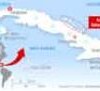
Caribbean Fish on the Decline
Several saltwater fish species are growing scarce in Cuban waters, where in the past it was not unusual to snag a porgy or a mero weighing as much as 15 kilos.
Birds in Danger
Birds are present around the globe, represented by some 9,700 known species, and are an important part of the Earth's biodiversity. The bad news is that approximately 12 percent are in danger of extinction.Ecobreves – CUBA: Promoting Renewable Energy
Cuba seeks to boost the use of renewable energy sources, hand in hand with its programs for industrial re-conversion to reduce reliance on petroleum-based electrical plants.Ecobreves – VENEZUELA: 15,000 Turtles Released
More than 15,000 young turtles, of the 'arrau' or South American river turtle (Podocnemis expansa) species, were released Apr 26 along the banks of the middle Orinoco River in Venezuela as part of a preservation program of the governmental wildlife service Profauna.Ecobreves – BRAZIL: Poverty Spurs Recycling
Brazil remains the leader in recycling metal containers, reclaiming 87 percent of all beer and soft drink cans used in 2002, reports the Brazilian Aluminum Association. The recyclable waste collection sector provides income for 150,000 people.Ecobreves – CHILE: Schools Seek Environmental Certification
A hundred primary and secondary schools in Chile are applying to obtain environmental certification through a government project launched Apr 22, in honor of Earth Day.
Alarm Sounds for Disappearing Birds
The planet is suffering the worst wave of species extinction since the dinosaurs disappeared 65 million years ago, warns a bird expert. Some 649 species of our feathered friends are in imminent danger of disappearing forever.Water Divides, But Can It Unite?
Israel is building a wall that has revived a long-time focus of the Middle East conflict: water use.
A Black Week for Sea Turtles
The culinary traditions of Holy Week in predominantly Catholic Mexico are a threat to the survival of this millennia-old species.A Crime Against the Culture of Humanity
The worst predictions about the consequences of the war on the immense cultural legacy that Iraq has possessed throughout more than 7,000 years of history have unfortunately proved correct.Ecobreves – ARGENTINA: Health Impacts of Polluted Riachuelo
Argentina's Ombudsman Eduardo Mondino has asked the Health Ministry to conduct a study to determine whether the contaminated Riachuelo, a river marking the capital's southern boundary, causes illness among the population living along its banks.US-IRAQ: THE POST WAR DILEMMA
Is it still possible to reintegrate the world's hyper-power into a truly multilateral, multipolar arrangement? asks Boutros Boutros-Ghali, Secretary-General of the United Nations from 1992-1996.Ecobreves – COLOMBIA: Debate on Wetlands
Experts from numerous countries are to meet in the Colombian capital May 28-30 to assess experiences in wetlands recovery, particularly such areas that are degraded by human activities in urban areas.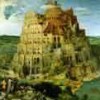
Mesopotamia
In Mesopotamia, which means "land between rivers", the earliest human civilizations flourished. Thousands of years later, that territory is known as Iraq, a place where the echoes of war threaten the last vestiges of a millenniums-old history.Ecobreves – PERU: Proviso for Gas Plant
Under pressure from environmental groups, the Peruvian government decided to set conditions for the construction of a gas fractionation plant along the Ica coast, near the Paracas National Reserve, in the south.Ecobreves – GUATEMALA: Citizens to Participate in Environmental Council
- The recently created Consultive Council on Environment in Guatemala will include the participation of 16 entities, governmental and non-governmental alike, with the aim of regulating environmental policies and natural resources, conservation and sustainable development strategies.Ecobreves – NICARAGUA: Festival for the Great Green Macaw
Hundreds of people from Nicaragua and Costa Rica will take part in the binational Festival for the 'lapa verde', the great green macaw, an event in the Nicaraguan town of El Castillo, Apr 25-27, aimed at raising awareness about this endangered bird species.Ecobreves – BRAZIL: Giant Cross-Border Forest Reserve
The Tumucumaque Mountains National Park, the world’s largest tropical forest conservation area, covers 38,000 square km in northern Brazil, and will soon add another 30,000 in neighboring French Guiana.'Better Off against the Soviets'
"The worst thing about the Iraq war is that it sets the precedent for unilateral action by Washington and makes clear that there is nothing to stand in its way," says Venezuelan commentator Ignacio Avalos Gutiérrez. To avoid this sort of unilateral action in the future it is essential to rebuild the United Nations, he adds.Ecobreves – CHILE: ‘Where Muck Goes’
The popular children’s show “31 Minutes”, of the state-run Televisión Nacional de Chile, is hosted by puppets and includes a segment on the environment, the first broadcast of which will track “where muck goes”.« Previous Page — Next Page »





Tierramérica is the main communications platform on sustainable development and the environment in Latin America and the Caribbean. It is produced by IPS Noticias, the agency’s Spanish-language service, which created it jointly with the United Nations Development Programme (UNDP) and the United Nations Environment Programme (UNEP), with later support from the World Bank. The weekly editions of Tierramérica are published in Spanish, Portuguese and English and are picked up and printed by dozens of media outlets in the region. Follow us on Facebook and Twitter.

From the Frontline of Environment
Supported by

Tierramérica en Español

Terramérica em Portuguese

