Languages
Wednesday, November 11, 2026



News and Views from the Global South

Ecobreves – COLOMBIA: 'Green' Exports Grow
The demand for Colombian organic products expanded last year 20 percent, says a report from the Foreign Trade Ministry.
Santiago Doesn't Know What to Do with Its Garbage
Of the 246 garbage dumps operating in Chile, just 11 have environmental impact evaluation systems.Ecobreves – MEXICO: Forests in Danger
Mexico's Federal Environmental Protection Prosecutor will attempt this year to implement protection this year for eight of the 100 areas in the country undergoing intense deforestation, and will boost forestry inspections 38 percent, in an attempt to halt the annual average loss of 1.1 million hectares of woodlands.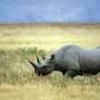
The Rhinoceros
The disquieting silhouette of the rhinoceros has been seen on this planet since time immemorial, evolving over tens of millions of years, but is now in danger of disappearing forever because of human activities.Ecobreves – PERU: Urban Sprawl Threatens Nature Reserve
Urban expansion in the northeastern Peruvian city of Iquitos, the largest of the Peruvian Amazon, threatens the survival of the nearby Alpahuayo Mishana reserve, one of the 200 white sand forests in the world.Ecobreves – ARGENTINA: The Number of Homeless Multiplies
The number of people sleeping on the streets in Buenos Aires has nearly tripled in just three months due to Argentina's economic crisis, the lack of jobs, and restrictions on circulating cash, which make even coins for handouts scarce.Ecobreves – CHILE: New Santiago Forest
The Chilean government began the Santiago Forest project in April, a 180-hectare area in the nation's capital that will be home to native flora and fauna and serve as a recreation and environmental education area.Region's Giants Run Risk of Blackouts
Brazil, Mexico and Venezuela are the region's energy giants, but they could face electricity rationing if they do not implement sustainable options immediately. The sector requires huge investments, more rainfall for hydroelectric production and sustainable plans for the future.Ecobreves – VENEZUELA: A Turtle Saved
A giant sea turtle, of the endangered species Dermochelys coriacea, was treated and returned to the ocean by specialists from the Venezuelan Environment Ministry after it was found injured earlier this month on the beach in the state of Vargas.
Voice of Youth to Be Heard at Johannesburg Summit
The future will be a nightmare if humanity does not take action soon. This is the warning Latin American youth will take to the Rio+10 Summit in August. A society is needed that is committed to the Earth, says the document of the Geo Youth project.Ecobreves – COSTA RICA:: Sales of 'Environmental Services' Questioned
The government's program for selling environmental services threatens Costa Rica's biodiversity and undermines its conservationist purposes, warns the Costa Rican Federation for Environmental Conservation (FECON), the country's leading environmental network.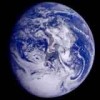
Planet Earth
The Earth is the third planet from the Sun. For the innumerable living inhabitants of this sphere, including more than six billion humans, it is the equivalent of a source of life.Ecobreves – CUBA: Organic Sugar Production Grows
Cuba will place 5,000 to 7,000 tons of organic sugar on the international market this year. The product comes from sugarcane grown in soils treated with natural nutrients and without chemical pesticides.
Nuclear Reactor Heats Up Debate in Argentina
Some see it as an extraordinary technological achievement, while others claim it is a step towards engaging in the dangerous business of atomic waste.Ecobreves – ECUADOR: Tagaeri Peoples at War for Survival
Workers of the petroleum and logging companies in the Ecuadorian Amazon fear new attacks by the Tagaeri, an indigenous group they blame for the deaths last month of two Colombian logging employees in the eastern province of Pastaza.
La biodiversidad
La diversidad biológica, también conocida como biodiversidad, es la mayor riqueza del planeta. Hace miles de millones de años comenzó un proceso evolutivo generador de la variedad de la vida en la Tierra, cuya conservación constituye uno de los mayores desafíos de la humanidad.Ecobreves – COLOMBIA: Return of the 'Chachafruto'
The "chachafruto", or "balú", is a tree that produces a bean that is once again an essential part of the diet among the indigenous communities of southwest Colombia, the fruit of a 10-year project coordinated by the state-run National University.Ecobreves – REGIONAL: Call for Protection of Children
Experts from Canada, United States and Mexico are urging the North American Commission for Environmental Cooperation (CEC) to draw up policies for protecting children from environmental threats, even if these are not yet sufficiently documented.Ecobreves – PERU:: Preventing Earthquake and Climate Disasters
Peru's Geology, Mining and Metallurgy Institute carried out studies of 18 watersheds and three geological basins in an effort to diminish the impact of natural disasters in the country's central mountain region and along the southern coast.
Time to Look for Another Planet
NGOs complain that there were more setbacks than progress at the third preparatory meeting for the Rio+10 Summit, which concluded last week in New York.Ecobreves – ARGENTINA: Dengue Alert
Health authorities in Argentina are attempting to control the propagation of the dengue-transmitting mosquito, the Aedes aegypti, in the northern provinces of Formosa, Misiones, Jujuy and Salta, where conditions are ripe for an epidemic of the tropical disease.« Previous Page — Next Page »





Tierramérica is the main communications platform on sustainable development and the environment in Latin America and the Caribbean. It is produced by IPS Noticias, the agency’s Spanish-language service, which created it jointly with the United Nations Development Programme (UNDP) and the United Nations Environment Programme (UNEP), with later support from the World Bank. The weekly editions of Tierramérica are published in Spanish, Portuguese and English and are picked up and printed by dozens of media outlets in the region. Follow us on Facebook and Twitter.

From the Frontline of Environment
Supported by

Tierramérica en Español

Terramérica em Portuguese

