Languages
Wednesday, November 11, 2026



News and Views from the Global South

Ecobreves – CHILE: Ancient Species Lost
Approximately 10,000 hectares of old-growth forest were destroyed by fires in southern Chile in recent weeks.
NGOs Demand Oversight for Multinationals
The "Rio+10" Summit in August must establish clear environmental and social limits for the economic globalization process, said civil society organizations at the second preparatory round for the world conference.Ecobreves – BRAZIL: Save the Bees
Bees without stingers are abundant in the Amazon. They play an important role in preserving the forests and biodiversity because they are responsible for pollinating numerous plant species. But they are quickly disappearing because the local human populations destroy their hives to extract the honey.Ecobreves – PERU: Unique Fate for Used Batteries
The municipality of Surca, a residential district of the Peruvian capital, is promoting a battery collection program as a source of material to be used as filler in urban construction projects.Ecobreves – GLOBAL: Sustainability Convention Targets Corporations
Non-governmental organizations (NGOs) participating in a preparatory meeting for the Sustainable Development Summit (Rio+10) proposed a convention on corporate responsibility to society and the environment.Ecobreves – ARGENTINA: Masked Forebears
The environmental organization Greenpeace sent the lawmakers of the Argentine capital a calendar illustrated with statues found throughout Buenos Aires. The unique twist is that in the photos the faces of the historic figures are covered with gas masks.
Environmentalists Advance a Step in Porto Alegre
The citizens' movement is preparing proposals and demands for the "Rio+10" summit, setting an agenda in which sustainability also encompasses social equality, according to environmental activist Sara Larraín, who spoke with Tierramérica at the second World Social Forum.Uruguay Eyes a New ‘Museum of the Sea’
A project to salvage the remains of some 200 shipwrecks would be a major step towards preserving Uruguay’s underwater cultural heritage, considered a key element for reconstructing history.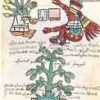
Food of the Gods
The cacao tree is an illustrious native of the Americas whose fame has been sustained by the massive consumption of a product much desired around the world: chocolate. But many people are unaware that this delicious food originates from a tropical tree, producer of an extraordinary fruit.Ecobreves – COSTA RICA: New Boost for Organic Crops
The Costa Rican government plans to support organic farming, a healthier and more eco-friendly practice than agriculture based on chemical fertilizers and pesticidesEcobreves – CUBA: Biological Pest Control
A factory donated by China, which will begin to produce bio-pesticides by the end of the year, will enable Cuba to step up its biological pest control efforts.Ecobreves – VENEZUELA: Biodiversity Threatened by Exotic Plant Species
Of the 1,410 exotic species of plants counted by the Environment Ministry, 139 species affect Venezuela’s farms and natural habitat.
Brazil Works on Creating Weather-Resistant Coffee Bushes
By the end of the year, biotechnology experts in Brazil hope to have a complete map of 200,000 genes of the coffee plant – information that will be of great value in reducing the crop’s vulnerability to global warming.
“Contact Zoo” for Special Needs Children in Caracas
A two-hectare area on the outskirts of the Venezuela capital holds the first contact zoo in Latin America set up especially for mentally disabled children like those with Down’s syndrome.NGOs Say “Look Towards the Future”
Environmentalists and representatives of non-governmental organisations (NGOs) from over 40 countries called for the coming Rio + 10 conference not only to assess past progress, but to agree on an agenda for the future, and to promote the inclusion of environmental issues in all global trade agreements.
Air in Motion
The wind blows continuously in every corner of the globe, showing its different faces: from barely perceptible breezes to mighty hurricanes. In every case, however, we are talking about the same phenomenon, which has one single definition: "air in motion."Ecobreves – CHILE: Courts Give Green-Light to Continued Construction of Dam
The Endesa power company was given the go-ahead to continue work on the Ralco dam when the Supreme Court of Justice threw out an appeal filed by two indigenous activists opposed to the hydroelectric project.
War Declared on Dengue
This tropical disease, for which there is still no vaccine, is seeing an upsurge in Latin America this year. Experts link it to the effects of climate change.Using Vegetable Oil to Propel Cars
In their search for a more eco-friendly fuel, Brazilian researchers are exploring the potential of biodiesel, which utilizes inputs like used vegetable oil from fast-food restaurants. The formula would reduce the emission of gases that cause the greenhouse effect.
Food Insecurity
Hunger is one of the worst miseries, and in spite of all the technological and social advances that humanity has achieved, more than 800 million people on the planet suffer its effects today.Ecobreves – GLOBAL: Environment Ministers Prepare for Meet
Environment ministers from around the world will meet Feb 13-15 in the Caribbean city of Cartagena, Colombia, to fine-tune their preparations for the World Summit on Sustainable Development (Rio+10), to take place in South Africa in August.« Previous Page — Next Page »





Tierramérica is the main communications platform on sustainable development and the environment in Latin America and the Caribbean. It is produced by IPS Noticias, the agency’s Spanish-language service, which created it jointly with the United Nations Development Programme (UNDP) and the United Nations Environment Programme (UNEP), with later support from the World Bank. The weekly editions of Tierramérica are published in Spanish, Portuguese and English and are picked up and printed by dozens of media outlets in the region. Follow us on Facebook and Twitter.

From the Frontline of Environment
Supported by

Tierramérica en Español

Terramérica em Portuguese

