Languages
Tuesday, October 27, 2026



News and Views from the Global South
Africa

Definitely Not on Track to save Life on Planet
Alongside climate finance, COP29 currently being held in Baku, Azerbaijan, was expected to serve as an important platform for nations to demonstrate their intention to submit stronger national climate commitments, strengthen adaptation efforts, and show tangible progress and action on previous pledges.
Money Talks: Why COP29 New Collective Quantified Goal on Climate Finance Matters
The industrial revolution set the ball rolling towards global warming. Today, developing nations are on the frontlines of a climatic carnage and its snowballing effects. Developed nations bear a financial responsibility to provide climate finance to developing nations, as financing the transition to a low-carbon economy is an urgent, critical matter.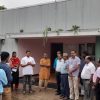
The Soil Mechanic: A Farmer’s Tale to Save Soil and Lives
In the heart of southern India lies an inspiring tale of determination, resilience, and an unyielding commitment to sustainable farming. This is the story of Anand Ethirajalu, who turned his childhood curiosity about food adulteration into a life mission to transform agriculture and protect human lives.
‘The International Community Must Stop Turning a Blind Eye to the Suffering of Sudanese Women’
CIVICUS discusses Sudan’s civil war and its impact on women with Sulaima Elkhalifa, a Sudanese human rights defender and expert on gender-based violence.

Breakthroughs, Setbacks in COP29’s First Week of Ambitious Pursuit of Climate Consensus
It has been a high-profile packed agenda in Baku, Azerbaijan, marked by milestone events designed to complete the first enhanced transparency framework and the new collective quantified goal on finance, among other top priority matters.
Climate Finance Loans a Disaster for Climate-Burdened African Communities
African environmental activists at the ongoing climate summit (COP29) in Baku have called on climate financiers to stop suffocating poor countries with unbearable loans in the name of financing climate adaptation and mitigation on the continent.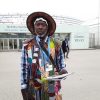
Africa’s Demands: Continent’s COP29 Irreducible Minimums Amid Release of First Draft Text
As expected, climate finance has taken center stage in Baku COP29 in a bid to renew the global focus on finance as a means to transform climate ambitions into tangible, sustainable action.
French-Speaking African Nations Bartering Natural Resources for Russian Arms
At the first ministerial conference of the Russia-Africa Partnership Forum in the southern coastal city of Sochi, seeking to deepen political and business ties with African countries, Russian President Vladimir Putin in his message and Foreign Minister Sergey Lavrov in his powerful speech underlined Russia's security support to fight terrorism and extremism across Africa.
Progress as Draft Decision Text for COP29 Presidency’s Top Negotiating Priority Released
Three days into the landmark COP29 conference, the co-chairs of the New Collective Quantified Goal (NCQG) have arrived at a workable basis for discussion on the summit’s top priority goal—a new climate finance goal. The COP29 Presidency says the draft will, moving forward, “guide conversations around potential landing zones and help identify concerns.”
Blinded by Circumstance: Trachoma’s Stranglehold on Kenya’s Rural Pastoralists
Draped in the vibrant red of his Maasai shuka, 52-year-old Rumosiroi Ole Mpoke sits cross-legged on a worn cowhide mat outside his hut, his face etched with a sorrow deeper than the lines of age. His once-sharp eyes, now clouded by trachoma, can barely make out the shadows of the cattle he once tended with pride.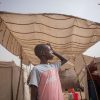
Sudan Faces Esclations in Famine, Humanitarian Law Violations
After 19 months of conflict, the ongoing Sudanese Civil War continues to deteriorate living conditions for millions of Sudanese people. Intensive conflicts between the Rapid Support Forces (RSF) and the Sudanese Armed Forces (SAF) have greatly exacerbated nationwide levels of famine. Numerous civilians have been caught in the crossfire, leading to a rising death toll. Sexual violence and rape have been used as weapons of war, with thousands of cases going unreported due to a pervasive state of fear. Sudan has seen record numbers in displacement, becoming one of the biggest displacement crises in the world.
Hustle Culture Emerges in Benin in Face of High Graduate Unemployment
At just 11 years old, with a heavy heart, Louis peered up at his parents and said goodbye. He was leaving his small village in northern Benin to live with his uncle in Parakou, where the schools were better. Ever since, Louis has continued to make sacrifices to pursue a strong education and a better life.
As Forests Felled Wood Shortage Hits Villagers in Zimbabwe
Linet Makwera (28) has a baby strapped on her back as she totters barefoot, picking tiny pieces of wood on both sides of a dusty and narrow road, peering fearfully at people passing by along the road in Chimanimani’s Mutambara area in Gonzoma village located in Zimbabwe’s Manicaland Province, east of the country.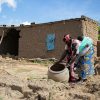
Armed Violence and Floods Aggravate Humanitarian Crisis in Chad
Chad is currently in the midst of a dire humanitarian crisis due to persisting armed conflict, mass displacement, widespread hunger, natural disasters, and an overall lack of essential services. Due to security challenges from the Boko Haram militant group, millions of Chadians have faced decreased mobility as well as human rights violations including imprisonment, beatings, kidnappings, and killings.
Africa’s Most Important Election is Underway
Africa has had a terrible record dealing with extreme poverty. The late Adebayo Adedeji, the legendary head of the United Nations Economic Commission for Africa (ECA), campaigned vigorously but unsuccessfully in the 1980s against the IMF and World Bank-imposed structural adjustment programmes, contending that these contributed to poverty’s increase.
COP16 Delivers on Indigenous Peoples, Digital Sequencing, But Fails on Finance
The curtains fell on the 16th Conference of the Parties of UN Biodiversity (COP16) on Sunday without any formal closing. In a voice message, David Ainsworth, the Communications Director of the UNCBD, confirmed that the COP was suspended due to a lack of quorum in the plenary and would be resumed sometime later. However, before being suspended, the parties managed to adopt a historic decision to open the door for Indigenous Peoples (IPS) and local communities (LCs) to influence the global plan to halt the destruction of biodiversity.
Transforming Africa with the Power of Education
Africa has the youngest population in the world today. Around 40% of the population is 15 or younger. They have a non-negotiable right to an inclusive and continued quality education, just like young people everywhere across the globe.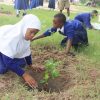
Tanzanian Students Drive Climate Action Through Tree Planting
At Gabimori primary school, located at Nyamagaro ward in Tanzania’s northern Rorya district, a 15-year-old Florence Sadiki kneels among polyethylene bags, carefully examining the seedlings she and her classmates have nurtured from tiny sprouts “We’ve planted many trees to make our school look better and to help fight climate change,” she says.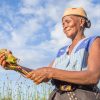
A Triple Planetary Crisis Scarring Africa’s Landscapes
Some of the creeping impacts of this triple crisis are possibly the most debilitating: Africa is the most severely impacted region by desertification and land degradation, with approximately 45% of its land area affected. In the Horn of Africa and the Sahel alone, it imposes food shortages on more than 23 million people. Just last month, more than 700,000 people were affected by floods in Central and West Africa, and tens of millions in southern Africa are facing drought.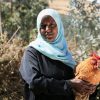
Chickens as Well as Cheetahs: Biodiversity Conservation Must Also Include Livestock
As the UN’s COP16 biodiversity conference continues, the temptation is to focus on the wild flora and fauna under threat. But there is another, less obvious yet just as critical biodiversity crisis unfolding around the world that also deserves attention.
Sudanese Civil War Exacerbates Economies in Neighbouring Countries
Critical levels of nationwide hunger in Sudan has only increased to critical levels since the start of the Sudanese civil war in April 2023. Escalated hostilities between the Sudanese Armed Forces (SAF) and the Rapid Support Forces (RSF) have led to limited mobility and repeated blockages of humanitarian aid. This, coupled with the volatile floods and droughts, have decimated crop fields which has only exacerbated famine levels greatly. All of these factors have left nearly 25 million people in Sudan in need of humanitarian assistance in 2024.« Previous Page — Next Page » *#*

The Week with IPS

NEXT STOP - SDGs
Tracking global progress towards a sustainable world
Tracking global progress towards a sustainable world
