Languages
Thursday, November 26, 2026



News and Views from the Global South
Africa
RIGHTS: African Maids Face Abuse in Lebanon
Driven by poverty and conflict in their home countries, women from Africa travel to Lebanon only to find themselves hungry, abused, raped and subjected to conditions akin to slavery.ENVIRONMENT: Parliaments Said to be "Weak" in Fighting Desertification
Legislatures have been taken to task over their track record in addressing desertification, this at the eighth session of the Conference of the Parties to the United Nations Convention to Combat Desertification (COP8), currently underway in the Spanish capital, Madrid.AFRICA: EPAs Clashing With Everything-But-Arms Trade Scheme?
The proposed economic partnership agreements (EPAs), which are due to come into force beginning next year, may undermine the benefits of another European Union trade initiative, called Everything-But-Arms, for the sugar industry.ENVIRONMENT-COTE D’IVOIRE: Soya By Way of War
When the failed coup of September 2002 led to a prolonged period of isolation for northern Côte d'Ivoire, farmers in this rebel-held region counted the cost.TRADE-UGANDA: Coffee Producers Are the Biggest Losers
Coffee producers in Uganda suffer from an unfair trade relationship with Europe, even though their beans produce some of the best quality coffee in the world, says the Ugandan coffee industry's governing body.ENVIRONMENT-AFRICA: Game Parks Offering Protection in Name Only?
The sharp decline of Africa's abundant wildlife is now happening inside the continent's protected areas, a new analysis indicates. Africa's world renowned parks are destined to become isolated pockets of wilderness with few large animals left, as is the case in Europe, conclude the authors of an article in the current edition of the 'African Journal of Ecology'.POLITICS-MOROCCO: Quotas Overpowered by Machismo
When Morocco held legislative polls a decade ago, just two women were elected to the lower house of parliament in this North African country. Legal reforms enacted since have ensured that women will fare better when the latest parliamentary ballot gets underway Friday. But for activists, there is still a long way to go in bringing gender parity to the Chamber of Representatives.FINANCE: Darfur Groups Ask U.S. Funds to Drop Chinese Oil Majors
Activists have launched a bid to shame some of the world's largest mutual fund companies into dumping Chinese oil majors they accuse of complicity in what the U.S. government calls genocide in western Sudan's Darfur region.POLITICS-KENYA: “I Almost Have No Fare to Come Back to Nairobi”
Posters, campaign appearances, radio spots and television adverts: all are essential for winning office in Kenya's general elections, set for December, and all cost money that parliamentary candidates are responsible for raising in this East African country.
RIGHTS: Keep Watch from Space
The use of satellite images earlier this year to document human rights violations and support humanitarian assistance in Darfur has strengthened interest in wider use of satellite technology for humanitarian purposes.ENVIRONMENT: 21st Century May Belong to the Shrub
As atmospheric carbon dioxide levels continue to climb shrubs and other woody plants will likely dominate grasslands, altering pastoral lifestyles around the world, a U.S. study has found.SOUTHERN AFRICA: Plans to Dam the Cunene River Are Shelved Again
Political interests and specialist lobby groups appear once again to have stalled plans to dam the Cunene River where it forms the border between Angola and Namibia. After years of negotiations, several expensive feasibility studies and considerable political rhetoric, the proposed Epupa Dam on the Cunene River is not even close to the beginning of a construction phase.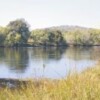
ENVIRONMENT-ZAMBIA: Efforts to Halt the Strangulation of Kafue
The World Wide Fund for Nature (WWF), an international conservation organisation, has launched an initiative to protect Zambia's Kafue River from pollution: the 'Save the Kafue River Campaign'. At present, the river provides potable water to over 40 percent of people in the Southern African country.POLITICS: U.N. Chief Visits Darfur Amid Ongoing Attacks
Hopes for restoration of peace in the Sudanese region of Darfur appear to remain as distant as ever, although international efforts to resolve the four-year-long bloody conflict have recently intensified and U.N. Secretary-General Ban Ki-moon is now getting personally involved.HEALTH-GHANA: Boreholes That Proved a Lifeline Have Come at a Cost
Ask people to list the causes of tooth discolouration and they may mention tobacco chewing, or one too many cups of coffee a day. Pose the question in Ghana's northern Nayorigo village, however, and someone might answer: desertification.POLITICS-MALAWI: Budget Held Hostage to Squabbling Parliamentarians
Malawi's national budget, scheduled to pass in June, is in limbo following a parliamentary impasse - and there are fears that government services may be halted through lack of funding.
MOZAMBIQUE: Water Supplies Still a Pipe Dream at Certain Health Facilities
A swelling crowd of people has gathered at the rural health centre at Monte Xiluvo in Nhamatanda district, in the central Mozambican province of Sofala. Most are mothers with young children who try to protect themselves from the gusty winds as they wait for their consultation with Caetano Mendosa, the nurse responsible for the centre.TRADE: African Countries Stand Up to EU
Concern over getting too little in return for what they are being asked to give up has led some African nations to say "no" to some proposals for new trade relations with Europe next year.TRADE-CAMEROON: New Study to Bridge Finance Gap of Small Business
Caught in a limbo between larger firms with access to traditional banking-sector finance and micro-credit initiatives designed to help the small enterprises of the very poor, African businesses in the middle have historically been on the wrong side of both extremes when it comes to accessing finance.FRANCE: L'Affaire Libyenne Shows a New Policy
When the government of Libyan leader Muammar Gaddafi freed five Bulgarian nurses and a Palestinian doctor after eight years in prison last month, it marked not only the latest twist in Gaddafi's idiosyncratic rule, but was seen as the opening salvo of French President Nicolas Sarkozy's new diplomatic modus operandi in Africa and beyond.TRADE-SENEGAL: Finding Opportunities Through Cheap Chinese Goods
Allées du Centenaire, a neighbourhood in the heart of Senegal’s capital Dakar, may be lacking the trademark red lanterns but in the eyes of locals it is fast becoming the city’s unofficial Chinatown.« Previous Page — Next Page » *#*

The Week with IPS

NEXT STOP - SDGs
Tracking global progress towards a sustainable world
