Languages
Thursday, November 26, 2026



News and Views from the Global South
Africa
TRADE-MAURITIUS: Meeting EU Sanitary and Phyto-Sanitary Norms
Mauritian producers and exporters are slowly adapting to the sanitary and phyto-sanitary norms imposed by the European Union (EU) on fruit, vegetables and fish.HEALTH: Commonwealth Event Debates Why AIDS Wears “the Face of a Woman”
The issue of women continuing to be at higher risk of HIV infection than men has received considerable attention at a gathering of women's affairs ministers from Commonwealth countries underway in Uganda's capital, Kampala.ENVIRONMENT-SOUTH AFRICA: Land Returned in St Lucia World Heritage Site
A section of the world heritage site the Greater St Lucia Wetland Park, Africa's largest estuary, has been returned to its rightful owners, who have in turn undertaken to manage the land in accordance with the country's environmental laws.RIGHTS-SOUTH AFRICA: Back to the Land of Our Parents
‘‘Today we are here to say never again shall our people lose their land rights because they are black,'' said Lulama Xingwana, South Africa's minister of agriculture and land affairs.POLITICS-AFRICA: Continental Government by 2015?
Debate on the prospects for continent-wide government in Africa is heating up ahead of the African Union (AU) summit that is scheduled to begin Jun. 25 in the Ghanaian capital of Accra.MEDIA-SENEGAL: Radio Station Mired in Technicalities
For a while it appeared as if Madiambal Diagne might have found a way around the Senegalese government's apparent determination to keep him away from the airwaves.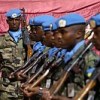
SUDAN: U.N. Seeks African Troops for New Hybrid Force
The United Nations is saddled with the arduous task of raising a 17,000 to 20,000-strong peacekeeping force for the politically troubled Darfur region in Sudan following a long-awaited agreement for the creation of a joint U.N.-African Union (AU) mission for that country.Q&A: “I Said to Myself, Why Not Create an NGO Focused on the Dignity of Women?”
Later this year, Salamatou Traoré - a leading health worker in Niger - will be awarded a five thousand dollar grant from the United Nations Population Fund (UNFPA) in recognition of her work to assist women who suffer from fistulas. She is one of three persons being honoured by the agency for their efforts to uplift women.Q&A: “People Often Cannot Avoid Putting at Risk the Natural Resource Base Upon Which They Depend”
With the World Day to Combat Desertification set to take place shortly (Jun. 17), efforts are gearing up to highlight the threats posed by land degradation in much of Africa - as well as initiatives to safeguard against desertification.G8-AFRICA: Shortfall on Help in AIDS Fight ‘Devastating’
Although the Group of Eight industrialised nations agreed at their summit in Heiligendamm, Germany, to allocate 60 billion dollars to fight AIDS, malaria and tuberculosis in Africa, health activists say the treatment targets are much lower than originally pledged, which is "devastating news", especially for the millions of people with HIV/AIDS.ENVIRONMENT-RWANDA: Unhappy Ending of a Welcome Return
The return in 1996 of over a million Rwandans who had fled their country in the wake of genocide two years earlier, fearing persecution at the hands of Tutsi rebels who took control of Rwanda, was greeted with relief in many quarters.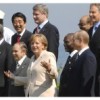
G8: Much Talk, Too Few Results
This year's summit of the G8 heads of government will likely be remembered as a "how not to" organise such an event, for the contrast between the expectations it raised and its negligible accomplishments, and for its enormous security costs.AFRICA: G8 Has Yet to Deliver on Aid Promises – World Bank
The industrialised nations of the Group of Eight are failing on the promises made in their previous summits to help Africa's economic development and to push for poverty alleviation for those struggling to survive on less than a dollar per day, say World Bank experts and development activists.TRADE-EU: Africans Speak Out Against EPAs as Unwelcome
When European campaigners suggest that a free trade deal could harm the poor, they typically encounter a frosty reaction from civil servants in Brussels. Still, no one tries to muzzle them.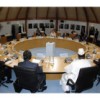
G8: Summit Falls Short on Africa Aid, Hedge Fund Regulation
The Group of Eight industrialised countries (G8) agreed to allocate 60 billion dollars in new aid to Africa in "the coming years", to beef up the fight against HIV/AIDS, malaria and tuberculosis, and to improve primary education across the continent.DEVELOPMENT: The ‘Good Guys’ Chastise the G8 ‘Villains’
"You shouldn't have any doubts, the good guys are us," says Patrick, 20, dressed in jeans, t-shirt, and a sport jacket, with a flamboyant pink Mohawk haircut, as he reads a pamphlet on development aid for Africa.ECONOMY-KENYA: Branson Flying More and Cutting Carbon Emissions
With the introduction of Virgin Atlantic flights on the London/Nairobi route company chief Sir Richard Branson is not only tapping into a lucrative tourism market, he is also offering export opportunities to local farmers.EDUCATION-AFRICA: Will eLearning Make Teachers Redundant?
Does electronic learning (eLearning) threaten to displace the teacher?MAURITANIA: Exiles’ Lawsuit Shines Light on Past Abuses
A group of Mauritanian exiles living in New York has come forward to challenge their country's justice system and the alleged abuses of the former ruler of the Islamic Republic of Mauritania, Maaouya Ould Sidi Áhmed Taya.
G8: Cacophony on Global Warming
The summit of the heads of government of the eight most industrialised countries opened Wednesday in this Baltic seaside resort, surrounded by impressive security measures, and dominated by a total cacophony on the group's efforts to curb climate change.G8: Poverty Reduction and Climate Change Inextricably Linked, Say Activists
In the final hours before this week's Group of Eight (G8) summit gets underway in Germany, activists have underscored the need for progress with both climate change and poverty alleviation - key items on the meeting's agenda - for there to be real improvement in Africa's living conditions.« Previous Page — Next Page » *#*

The Week with IPS

NEXT STOP - SDGs
Tracking global progress towards a sustainable world
