Languages
Sunday, October 11, 2026



News and Views from the Global South
Global

To Fix the Rupture, Trade is not Enough
Will trade be enough to navigate the current waves of chaos and disorder that are underpinning the ongoing rifts among competing powerful and hegemon nations and the rest?
Support Science in Halting Global Biodiversity Crisis—King Charles
British Monarch King Charles says science is the solution to protecting nature and halting global biodiversity loss, which is threatening humanity’s survival.
Explainer: Why Nature Is Everyone’s Business
Our food, fuel, and fortunes come from nature, but as these resources are turned into profits, the balance between exploiting and replenishing the planet is ever more precarious. Global businesses impact nature through mining, manufacturing, processing and retail operations. At the same time, nature impacts business operations because there is a loss of biodiversity and extreme weather events such as droughts, floods, and high temperatures.
The Delicate Balance of International Migration
The delicate balance of international migration relies on the high demand for labor and the enforcement of stricter immigration controls. This equilibrium is especially crucial when considering the international migration of students and skilled workers.
Is it the Budgetary Crisis – Or Leadership Crisis – Facing the United Nations – Or Both?
In the month of February 2025, one year ago, United Nations Secretary-General Antonio Guterres commenced his briefing of the media by announcing that “I want to start by expressing my deep concern about information received in the last 48 hours by UN agencies — as well as many humanitarian and development NGOs — regarding severe cuts in funding by the United States.” He went on to warn that ““The consequences will be especially devastating for vulnerable people around the world.”
High Seas Treaty Will Transform Our Fragile Ocean for the Better
“The ocean’s health is humanity’s health”, said UN Secretary-General Antonio Guterres, in September 2025. He was commenting after the High Seas Treaty (BBNJ) [1] finally achieved ratification, going on to call for “a swift, full implementation” from all partners. As of January 17, 2026, the treaty has come into force, meaning the time for implementation is now. What is the High Seas Treaty?
Group of 77—Representing 134 Nations, Plus China—Protest Funding Cuts for South-South Cooperation
A sharp cut in funding for “South-South Cooperation” (UNOSSC) has triggered a strong protest from the 134-member Group of 77 (G-77), described as the largest intergovernmental organization of developing countries within the United Nations.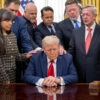
Do Resources Define the Parameters of Faith-based Engagement and Diplomacy Today?
Several events, meetings, consultations, initiatives, etc. taking place among faith-inspired, ‘faith-based’ and a variety of other similar efforts, over the past year, in the United States especially, concern me.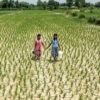
U.S. Exit from Paris Agreement Deepens Climate Vulnerability for the Rest of the World
On January 27, the United States officially withdrew from the Paris Agreement, an international treaty adopted in 2015 aiming to reduce global warming and strengthen countries’ resilience to climate impacts. Following a year of regulatory rollbacks and sustained efforts by the Trump administration to dismantle federal climate policy, this move is expected to trigger wide ranging ripple effects—undermining international efforts to curb climate change, accelerating environmental degradation and biodiversity loss, and increasing risks to human health, safety, and long-term development.
Business Growth and Innovation Can Boost India’s Productivity
India’s productivity growth over the past two decades has been impressive, reflecting rapid expansion in high-value services, gradual efficiency-enhancing reforms, and scale advantages from a large domestic market.
The UN is Being Undermined by the ‘Law of the Jungle’
UN Secretary-General Antonio Guterres was dead on target when he told the Security Council last week that the rule of law worldwide is being replaced by the law of the jungle. “We see flagrant violations of international law and brazen disregard for the UN Charter. From Gaza to Ukraine, and around the world, the rule of law is being treated as an à la carte menu,” he pointed out, as mass killings continue.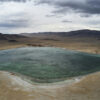
Melting Reserves of Power: Mongolia’s Glaciers and the Future of Energy and Food Security
The International Year of Glaciers’ Preservation in 2025 was a timely reminder that the stability of Mongolia’s economy rests on fragile mountain systems that are melting faster than ever recorded. The loss reverberates across the country’s energy and agricultural systems, two development pillars that draw from the same finite resource: water.
Global South Demonstrates How Countries Can Deal with an Aggressive United States
The United States’ attack on Venezuela marks a key watershed in the world order. We still cannot predict how this violation of another state’s sovereignty will ultimately play out.
Binalakshmi Nepram: Engineering Peace, Creating History
It was Christmas eve: some two decades ago. Binalakshmi Nepram was a witness to the killing of a 27-year-old. In utter disbelief, she saw a group of three men dragging the victim from his workshop. Within minutes, he was shot dead.
As Korea Ages, Fiscal Reforms Can Help Safeguard Government Finances
Korea’s population is aging faster than almost any other country. That’s because people live longer than in most other countries, while the birth rate is one of the lowest in the world.
Another of Trump’s Quixotic Imperial Designs
At a press conference at the World Economic Forum in Davos last week, Trump unveiled his newly formed Board of Peace to end the Israel-Hamas war. During a press conference in the White House, he explained that he created the board because “The UN should have settled every one of the wars that I settled. I never went to them. I never even thought to go to them.”
Is the US Board of Peace Aimed at Undermining the UN?
Judging by the mixed signals coming out of the White House, is the Board of Peace, a creation of President Donald Trump, eventually aimed at replacing the UN Security Council or the United Nations itself? At a ceremony in Davos, Switzerland last week, Trump formally ratified the Charter of the Board — establishing it as “an official international organization”.
The World’s Ongoing Conflicts Underline Nuclear and Non-Nuclear States
The two current ongoing conflicts, which have claimed the lives of hundreds and thousands of people, are between nuclear and non-nuclear states: Russia vs Ukraine and Israel vs Palestine, while some of the potential nuclear vs non-nuclear conflicts include China vs Taiwan, North Korea vs South Korea and the United States vs Iran (Venezuela, Mexico, Colombia, Cuba and Denmark).
Big Nature-Based Finance Turnaround Needed to Restore, Protect Ecosystems
The world is pouring trillions of dollars each year into activities that destroy nature while investing only a fraction of that amount in protecting and restoring the ecosystems on which economies depend, according to a new United Nations report released on January 22.
World’s Oceans Hit Record Heat in 2025, at Great Economic and Social Costs
In 2025, global ocean temperatures rose to some of the highest levels ever recorded, signaling a continued accumulation of heat within the Earth’s climate system and raising deep concern among climate scientists. The economic toll of ocean-related impacts—including collapsing fisheries, widespread coral reef degradation, and mounting damage to coastal infrastructure—is now estimated to be nearly double the global cost of carbon emissions, placing immense strain on economies and endangering millions of lives.
Steering Nepal’s Economy Amid Global Challenges
Nepal has a unique opportunity for transformation. The recent youth-led protests underscored aspirations for greater transparency, governance and a more equal distribution of economic opportunities and resources. This yearning resonated in Nepal and beyond.« Previous Page — Next Page »





The Week with IPS

NEXT STOP - SDGs
Tracking global progress towards a sustainable world
Tracking global progress towards a sustainable world
