Languages
Friday, November 27, 2026



News and Views from the Global South
Global

CLIMATE CHANGE: Science Proves Warming of Antarctica
The Antarctic holds the world’s largest amount of fresh water in its icy grip, and it is most certainly warming as a result of greenhouse gases, say new scientific studies.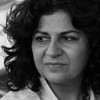
RIGHTS: Women Leaders Reject "State of Living Death"
United in their fight against discrimination and inequality, three women from crisis-struck countries received the 2008 Gruber International Women's Rights Prize - Yanar Mohammed from Iraq, Sapana Pradhan Malla from Nepal, and Nadera Shalhoub-Kervorkian, a Palestinian woman living in the state of Israel.
DEVELOPMENT: UNFPA Battles “Norm” of Gender Inequality
Despite a slew of U.N. conventions and international agreements against discrimination of women, gender inequality is widespread and remains deeply rooted in many cultures, according to the U.N. Population Fund (UNFPA).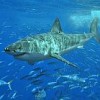
BIODIVERSITY: Ten-Year Probe Reveals Oceans in Peril
A thousand points of light are being shone into the dark ocean depths as scientists from 82 countries work to complete the decade-long global research effort called the Census of Marine Life.DEVELOPMENT: Two Summits to Focus on Financial Crisis
As the financial meltdown continues to spread to the far corners of the globe, over 30 world leaders are scheduled to participate in two key international conferences aimed at seeking short- and long-term solutions to the economic crisis worldwide.U.S.: First, Close Guantanamo, Say Rights Groups
President-elect Barack Obama should make the closure of the Guantanamo Bay detention facility a top priority when he takes office Jan. 20, U.S. and international human rights groups said Monday.BIODIVERSITY: The Real Price of Farmed Salmon
Salmon aquaculture is devastating the world's oceans and an international coalition of scientists, Canadian First Nations and tourism operators have called for a global moratorium.U.S.: Obama Foreign Policy May Not Require a Clean Break
While much of the world and many of his U.S. supporters are expecting a sharp break with his predecessor's foreign policy after President-elect Barack Obama takes office Jan. 20, they may be surprised by the degree of continuity between the two administrations.ECONOMY: Emerging G20 Consensus on Solutions to Crisis
For now, a consensus seems to prevail in the Group of 20 (G20) major industrialised and emerging nations, whose finance ministers and central bank presidents ended their 10th annual meeting Sunday, which took on a high profile due to the global financial crisis.ECONOMY: G20 in New North-South Battle
Brazilian President Luiz Inacio Lula da Silva called for "a pact between governments to create a new global financial architecture," while stressing the need to open up the global financial bodies controlled by the industrialised world to emerging economies.POLITICS: World Leaders Seek Culture of Peace
When more than a dozen world leaders meet in New York next week to discuss "the culture of peace", the primary focus will be the growing misperception of religion, specifically Islam, and the increase in racism, xenophobia and intolerance worldwide.ECONOMY: Another G20 Takes Centre Stage
The Group of 20 (G20) that will meet this Saturday and Sunday in Brazil could have a more defining role in shaping a new global order than any of the alliances forged in past international negotiations - like the other G20 formed by developing countries in the Doha Round of multilateral trade talks.ECONOMY: Turning the Pages Back to Marx and Keynes
Among the few things whose sales are picking up in these recessionary times are the works of Karl Marx and John Maynard Keynes. Both, in their own way, argue a central role for the state in managing the economy.CHINA: In No Mood For Criticism From New US Gov’t
While China appears to have succumbed to the euphoria unleashed by the election of Barack Obama as U.S. President, analysts warn of an assertive approach by Beijing to the new dispensation.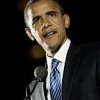
U.S.: Obama to Seek Global Re-engagement, But How Much?
While a President Barack Hussein Obama will present a strikingly different face of the United States to the rest of the world, how different his actual foreign policy will be remains unclear.POLITICS: U.N. Hopes for “New Multilateralism” Under Obama
With the election of Democratic Senator Barack Obama as the next president of the United States, many observers and diplomats believe the United Nations can look forward to stronger cooperation with Washington - after eight years of often contentious relations with the George W. Bush administration.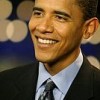
POLITICS-US: Yes, He Could – Obama Handily Takes White House
In a historic victory, Democratic Sen. Barack Obama has been elected the 44th president of the United States.DISARMAMENT: Arab Nations Insist on WMDs in UN Arms Register
When the General Assembly decided to create a United Nations Register of Conventional Arms back in December 1991, one of the primary reasons was to promote transparency in one of the most secretive aspects of governmental operations: arms trade and domestic military holdings.ECONOMY-BRAZIL: Crisis Delays Threat of ‘Venezuelan Disease’
The global financial crisis has corrected the extreme overvaluation of Brazil's local currency, caused by the policies of its Central Bank, thus temporarily chasing away fears of "Dutch disease", which in the developing world could well be called "Venezuelan disease".HEALTH: Suicide Crisis Absent from National Agendas
With a million people dying by suicide every year and two suicide deaths per minute, it remains a major preventable cause of death worldwide, mental health experts say.RIGHTS: Security Council Could Produce Insecurity
International institutions like the World Trade Organisation or the International Monetary Fund are slowly adapting to the growing economic impact of emerging countries. Even the informal club par excellence, the G8, is bound to open its doors for developing countries. There is one powerful institution though, that seems unable to adapt to the changing realities: the Security Council of the United Nations.« Previous Page — Next Page »


The Week with IPS

NEXT STOP - SDGs
Tracking global progress towards a sustainable world
