Languages
Friday, November 27, 2026



News and Views from the Global South
Global
FINANCE: Watchdogs Criticise World Bank, IMF Mega Projects
The World Bank and International Monetary Fund (IMF) came under fire last week for failing to adequately promote transparency in extractive industry operations in resource-rich countries where the two institutions work.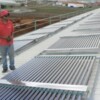
ECONOMY-MAURITIUS: Textile Manufacturing Goes Green and Clean
‘‘The cost of production is high in Mauritius as we are far away from our main markets. Our island is so small that at times our clients do forget us. We no longer benefit from any trade preferences. We don’t have any natural resources but we have plenty of sunshine and wind and we have decided to use these resources.’’HAITI: Activists Urge World Bank to Erase Crippling Debt
On a recent visit to the hurricane-ravaged island of Haiti, World Bank President Robert Zoellick declared that 500 million dollars of Haiti's 1.7-billion-dollar foreign debt had been cancelled, and the rest would be soon be written off as well.BIODIVERSITY: Unraveling the Mysteries of Salmon Migration
Tiny juvenile salmon have been electronically tracked for the first time from their natal rivers in the Rocky Mountains 2,500 kilometres north to Alaska.
ECONOMY: Global Crisis Should Spell End of Laissez-Faire Doctrine
The real question to ask about the global financial crisis is whether ‘‘it will go deep enough for the big economies to realise that the market should be controlled more. The philosophy of laissez-faire simply does not work’’.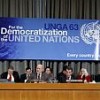
FINANCE: Revolt Against “Elite Clubs” Grows at U.N.
U.N. member states and economists challenged the neo-liberal policies of market deregulation that have long been promoted by powerful global financial institutions like the World Bank and International Monetary Fund (IMF), and called Thursday for a new, more inclusive global financial architecture.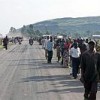
DR CONGO: Aid Agencies Fear Humanitarian Disaster in North Kivu
The situation in the strategic city of Goma in eastern Democratic Republic of Congo (DRC) was relatively calm Thursday after a night of fierce shooting and widespread looting, the Office of the U.N. High Commissioner for Refugees (UNHCR) reported.DISARMAMENT: “The Carnage Must Stop”
An international coalition of human rights and humanitarian aid organisations is calling for the world community to create a treaty that would prohibit the illicit business in guns and other small weapons around the world.RIGHTS: Landmark U.N. Resolution on Equality Stuck on Paper
Civil society groups are urging the U.N. to fully implement a U.N. Security Council resolution calling for greater women's participation in conflict prevention, resolution and peace-building.FINANCE: NGOs Call for Radical Reforms as IMF Offers New Loans
Two weeks before U.S. President George W. Bush hosts an economic summit to address the six-week-old financial crisis that has wreaked havoc on the world's capital and stock markets, a coalition of nearly 600 non-governmental organisations (NGOs) from 88 countries is calling for a "fundamental and far-reaching transformation on the international financial and economic system."INDIA: End 50-Year Crackdown in Manipur, Rights Groups Urge
In the world's largest democracy, people are shot to death on mere suspicion. For half a century, the population of Manipur State in northeast India has suffered from a law that gives the Indian army extraordinary powers, rights groups say.TRADE: A Democratised WTO in Pause Mode
The breakdown of the July talks on a trade agreement, for the third time in a row, is testimony that the World Trade Organisation(WTO) has changed.POVERTY: Governments Still Don’t Do Enough
More than 116 million people in 131 countries across the world participated in the global "Stand Up and Take Action" campaign that became the biggest mass mobilisation on a single issue. Activists criticised the fact that the gap between the rich and the poor continues to increase, while governments refused to make poverty alleviation a priority.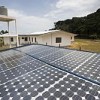
ENVIRONMENT: Massive Shift to Clean Energy Could Start Tomorrow
An aggressive shift towards renewable power generation and energy effiency could save the world from the most devastating impacts of climate change, and at the same time create a multi-billion-dollar industry and save trillions of dollars in future fuel costs, experts say.DEVELOPMENT: Bretton Woods II: New Lifeline for Ailing Giants
Europe, by way of the hyperactive French President Nicolas Sarkozy, demands a Bretton Woods II, that is, a major shake-up of the International Monetary Fund (IMF) and the World Bank. This is as much a rescue operation for two organisations that have lost muscle as a call for a new financial architecture.ECONOMY: Spain Fights Exclusion from Crisis Summit
The Spanish government is taking strong diplomatic actions, calling on its fellow members of the European Union, Latin American leaders, Asian nations and even the United States presidential candidates, with the aim of not being left out of the financial anti-crisis summit scheduled for Nov. 15 in Washington.DEVELOPMENT: Democracy Comes to World Institutions, Slowly
Power and democracy don't go together well in global governance. The most powerful global institutions are the least democratic, but things are changing. Slowly.HEALTH: Progress Towards WHO Pact on Tobacco Smuggling
A draft protocol to eliminate all forms of illicit trade in tobacco products, such as contraband, illegal manufacturing and counterfeit cigarettes, has been outlined at the World Health Organisation (WHO).ECONOMY: Civil Society Has Something to Say
Governments cannot deal with the current financial crisis on their own, and need the support of the people they govern, which is "best translated by the opinions of the civil society movement," said Werner H. Schleiffer, executive coordinator of CONGO, the global umbrella of NGOs with consultative status with the United Nations.DEVELOPMENT: Poor Hit by Recession and Tax Havens
With signs of a recession preoccupying policy-makers in industrialised countries, prospects for the success of an international conference on providing finance to the world's poor do not appear high.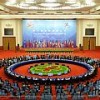
ECONOMY: Asia, EU Leaders Moot Deep Global Reforms
A two-day meeting of European and Asian leaders in Beijing has produced a joint statement pledging a coordinated response to the global financial crisis, but concrete action is seen dependant on the entry of Asia’s emerging economies into global policy-setting institutions.« Previous Page — Next Page »


The Week with IPS

NEXT STOP - SDGs
Tracking global progress towards a sustainable world
