Languages
Friday, August 28, 2026



News and Views from the Global South
Newsbriefs
OPED: Breakfast with Margaret Thatcher
The life and times of former British Prime Minister Margaret Thatcher who died two weeks ago, evoke many strong sentiments among her supporters and detractors. I was not one of her fans. As someone with social-democratic leanings, I detested her tough conservative policies. Nicknamed the "Iron Lady", her leadership style was harsh and uncompromising. Her socio-economic policies known as “Thatcherism” emphasized deregulation of the economy, less government, lower taxes, privatization of state-owned companies, more freedom for business and consumers, and weakening the power and influence of trade unions.The Club of Rome Calls for Emergency Actions on Climate Change
Leading experts on climate change and energy gathered at the UN this week to stress the need for urgent action and procedural reform to allow major changes to the world’s energy systems.Governance, Local Capacities and Education: the Key Drivers of Environmental Sustainability
Environmental sustainability is not ancillary to development but a guiding principle of sustainability and human well-being. However, environmental sustainability is still often approached as something that results in trade-offs with human and economic development objectives.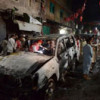
Meeting Terror With Defiance Ahead of Election
Bacha Khan Markaz, a two-storey building in the northern Pakistani city of Peshawar, is abuzz with activity. Located deep in the Khyber Pakhtunkhwa (KP) province, whose northwestern tip borders Afghanistan, the building serves as the headquarters for the Awami National Party (ANP), which is gearing up for general elections on May 11.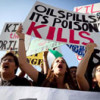
Keystone Opponents Deepen Criticism of Proposed Pipeline
Two new reports, put out by a cross-section of U.S. environmental and public interest groups, are attacking central rationales for the construction of a major new Canada-U.S. oil pipeline proposal, which has emerged as an emblematic cause for green groups who have angrily denounced a U.S. government approvals process.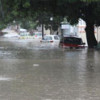
Mauritians Unprepared for Effects of Climate Change
Mauritius may be one of the best-prepared countries in the world when it comes to cyclones, but recent heavy rains and flooding due to climate change have brought the country’s readiness for coping with increased rainfall into question.G-Global, looking for a more inclusive global economy
The need to restructure global economic governance in a more inclusive and effective way was stressed at a conference sponsored by the Permanent Mission of Kazakhstan, at the U.N.Headquarters in New York.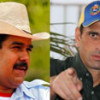
Tension Surrounds Start of Venezuela’s Post-Chávez Era
The political polarisation in Venezuela became even more marked as the country emerged from Sunday’s elections basically divided in half, between two sectors that are antagonistic and reluctant to try to understand each other.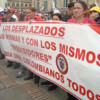
Agriculture Still the Cinderella of Colombia
Wearing a dusty hat and a smile that lights up his face, the septuagenarian José Alicapa does not shrink from the overwhelming bustle of the Colombian capital, which he reached after a 13-hour bus drive from the western province in Caldas.Kyrgyzstan Officials Taking Cultural Right Turn
(EurasiaNet) - Authorities at Kyrgyzstan’s Ministry of Culture want to ban a play that discusses domestic abuse and sexual violence because it “promotes scenes that destroy moral and ethical standards and national traditions of the peoples of Kyrgyzstan.”Towards a Death Penalty-Free World?
Despite setbacks, the global trend towards abolition of the death penalty is continuing, the London-based human rights organisation, Amnesty International, said in its 2012 report on the death penalty.
In Haiti, April Showers Don’t Always Bring Flowers
In Haiti, a simple spring shower that would barely be noticed in most countries can cause devastating floods, due to the severe deforestation and erosion that impedes the absorption of rain.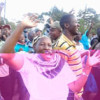
Bringing Kenya’s Government to the People
Like many Kenyans, Eunice Kemboi arrived at the Moi International Sports Centre in Nairobi on Tuesday Apr. 9 to witness the transition of power as Uhuru Kenyatta, an International Criminal Court suspect, was sworn in as the country’s new president.Uruguay – Second Country in Latin America to Adopt Gay Marriage
Activists in Uruguay hope the passage of the “Equal Marriage Law” Wednesday will help bring about recognition that society is heterogeneous.
Climate Change Drives Spread of Invasive Plants in Cuba
Botanist Ramona Oviedo has spent decades combing the countryside in Cuba to study and curb the spread of invasive plant species, a serious problem that has been aggravated by climate change.Ecuador Seeks to Reform Inter-American Rights Commission
Ecuador’s attempt to introduce institutional changes in the Inter-American Commission on Human Rights has been frustrated for now. Quito is seeking allies to create parallel regional mechanisms, but the risks of losing at this game are high, according to experts and users of the regional justice system.Providing an Enabling Environment to Empower Civil Society
The annual CIVICUS State of Civil Society Report aims to offer an annual and comprehensive review of the state and health of civil society, from a civil society-led and owned perspective. This year’s report, expected to be published in April 2013, will focus on the question of the enabling environment for civil society.
Water Shortage Hits Pacific Women
The Solomon Islands, a developing island nation in the south-west Pacific Islands, has one of the highest urbanisation rates in the region, and the basic service infrastructure is struggling to cater for the influx of people from the provinces to the capital, Honiara. Thirty-five percent of the city’s population, who live in informal settlements, are facing the health consequences of a dire shortage of clean water and sanitation.Turkey Fostering Social Responsibility Through Disaster Response
In October of 2011, an earthquake with a magnitude of 7.2 struck the city of Van in eastern Turkey. Hundreds of people died and many more were injured as relief workers and local authorities rushed to the scene. Turkcell, a communications and technology company used its innovative mechanisms to manage and produce uninterrupted communication service between victims who had cell phones and were trapped during the earthquake and rescue workers.
Women Take the Stage Against Taliban
The Taliban may have placed a ban on theatre, but women in Pakistan’s northern provinces won’t allow the threat of the militants’ reprisals to keep them off the stage.
Troops May Join Mexico’s Fight Against Hunger
The Mexican government is considering using the armed forces, which face serious human rights accusations from their involvement in the war on drugs, to collect socioeconomic data from the low-income households that will benefit from the National Crusade Against Hunger.« Previous Page — Next Page »


The Week with IPS

NEXT STOP - SDGs
Tracking global progress towards a sustainable world
Tracking global progress towards a sustainable world
