Languages
Thursday, November 12, 2026



News and Views from the Global South

Ecobreves – MEXICO: Forests Celebrated, But Cutting Continues
As the annual Fiesta del Bosque (Festival of the Forest) takes place in Mexico, as it has every July since 1951, environmental groups are demanding a reforestation policy that would reverse the loss of hundreds of thousands of tree-covered hectares.Ecobreves – GUATEMALA: GUATEMALAWater Without Chlorine
Water for human consumption is not chlorinated in 45 percent of the 331 municipal districts of Guatemala, according to a study by the National Association of Municipalities (ANAM).Ecobreves – HONDURAS: Green Municipality
Residents of the western Honduran municipality of Tomalá opted one year ago not to burn any more forest to create farmland, and to protect the area's micro-watersheds.
Energy Debate in Turbulent Waters
Brazil is once again putting priority on hydroelectric dams, a strategy ecologists criticize because of its potentially high environmental and social costs. But officials promise strict prior evaluations.Learning to Live with Drought
In May, not one province in Cuba saw more than 60 percent of the historic average of rainfall. The government is taking emergency measures.Ecobreves – HONDURAS: 'March for Life' a Success
More than 30,000 people took part in the ''March for Life'' across Honduras, arriving in the capital from all parts of the country on Jun. 30 to demand measures to protect the environment, defying a ban by the government.
Low Scores for Technological Development
Latin America's development looks gloomy if countries fail to increase investment in science and technology, an area where the region spends an average of just 0.5 percent of gross domestic product (GDP).
All-Terrain Contamination
European cities are debating the possibility of banning all-terrain vehicles from circulating on urban streets.Ecobreves – BRAZIL: Amazon in the Eco-Spotlight
The world's knowledge of the Amazon and its role in the global climate will expand Jul. 27-29 as a result of the 3rd conference of the Large-scale Biosphere Atmosphere (LBA) Experiment in the Amazon, the biggest international cooperation program for environmental studies.Ecobreves – CUBA: Saving the Beach Where Columbus Stepped
Cuban scientists were able to halt coastal erosion in parts of Bariay Key, in the eastern province of Holguín, whose sands were the first that Christopher Columbus stepped on when he reached the island more than 500 years ago.Ecobreves – VENEZUELA: Fisherfolk Take Water in Own Hands
On the arid Venezuelan peninsula of Paraguaná, 288 residents of La Sabaneta fishing community decided to take the matter of potable water into their own hands, organizing a cooperative that will install several kilometers of water pipeline.Ecobreves – PERU:: Regulating Hospital Waste Management
Peru will begin special processing of dangerous waste coming from hospitals, the treatment of which had not been included in the national Solid Waste Act of 2000.
Climate Change Worse for the South
Crop yields will decline, temperate zones will disappear and the number of people suffering hunger will increase, according to the United Nations Food and Agriculture Organization (FAO). The developing South will bear the brunt of the impacts of climate change, expert Prabhu Pingali told Tierramérica.'Narco' Land for Agrarian Reform
More than 100,000 hectares of land seized from drug traffickers in Colombia will be used for sustainable farming initiatives. Thousands of families displaced by the decades of civil war violence stand to benefit.Andean Coffee Growers to Protect Biodiversity
Coffee farmers in the Venezuelan Andes are to receive loans for developing projects that halt deforestation and protect endangered species.
Ecobreves – ARGENTINA: Gas from Garbage
An environmental group in Argentina has designed a tank known as a ''biodigestor'', which produces gas for fuel from organic waste, to benefit remote communities of farmers and fisherfolk.Ecobreves – COLOMBIA: Preventing Fires
The Colombian government is drafting a plan to curb environmental losses from forest fires, using equipment worth 86,500 dollars donated by the United States to the Ministry of Housing, Environment and Territorial Development.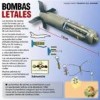
Clusters of Death
A global campaign is aimed at halting the use of cluster bombs, which scatter hundreds of ''bomblets'' and are responsible for the deaths of thousands of civilians worldwide, most recently in Iraq. The 57 nations that stockpile these munitions reject a moratorium.
Renewable Energy Not Always Sustainable
Latin America obtains more than 20 percent of its energy from ostensibly renewable sources. But much of it comes from hydroelectric dams, which can harm ecosystems.Ecobreves – BRAZIL: Herds of Turtles
Turtle ranching, in some cases for meat exports, is on the rise in the northwestern Brazilian state of Amazonas, where there are 69 entrepreneurs working with the green light from the Brazilian Institute for Environment (IBAMA), a government agency.Mistreated for the Three-Ring Show
Circus animals suffer mistreatment in Italy. Activists are demanding a ban, but the circus owners refuse.« Previous Page — Next Page »





Tierramérica is the main communications platform on sustainable development and the environment in Latin America and the Caribbean. It is produced by IPS Noticias, the agency’s Spanish-language service, which created it jointly with the United Nations Development Programme (UNDP) and the United Nations Environment Programme (UNEP), with later support from the World Bank. The weekly editions of Tierramérica are published in Spanish, Portuguese and English and are picked up and printed by dozens of media outlets in the region. Follow us on Facebook and Twitter.

From the Frontline of Environment
Supported by

Tierramérica en Español

Terramérica em Portuguese

