Languages
Saturday, October 24, 2026



News and Views from the Global South
Other Voices
News and Views from our Content Partners
Education Cannot Wait Interviews Leonardo Garnier, Special Adviser of the UN Secretary-General for the Transforming Education Summit
ECW: Congratulations on your appointment by United Nations Secretary-General António Guterres as the Special Adviser for the Transforming Education Summit. What do you hope to achieve through the Summit and why is it so critical that the world comes together to address the global education crisis around this September’s UN General Assembly?

Sri Lanka: Economic Meltdown Sparks Mass Protests
Economic crisis has provoked a great wave of protests in Sri Lanka. People are demanding the resignation of the president, blamed for high-handed and unaccountable decision making, exemplified by his introduction of an agricultural fertiliser ban in 2021 that has resulted in a food crisis. People don’t just want the president’s removal: they want a change in the political balance of power so that future presidents are subjected to proper checks and balances. Hope comes from the wide-reaching and diverse protest movement that has put aside past differences to demand change.
Politics in Pakistan: The Captain’s Crisis!
The ship has weather’d every rack, the prize we sought is won,
The port is near, the bells I hear, the people all exulting,
While follow eyes the steady keel, the vessel grim and daring….”
Walt Whitman

World Press Freedom Day 2022
 Reporters Without Borders (RSF) issues an annual report evaluating press freedom globally.
This year’s index focused on 180 countries across the world.
Reporters Without Borders (RSF) issues an annual report evaluating press freedom globally.
This year’s index focused on 180 countries across the world.
Pakistan’s Historic Court Ruling: ‘Rome Has Spoken, the Case Is Finished!’
Pakistan’s impossibly debonair and incredibly urbane cricketing star turned politician, Imran Khan, is a man of a myriad parts. Where English is spoken and cricket is played, he remains a hero. Time was when leading his team in many a Test match he caused blood to rapidly pulsate through Pakistani veins. In a nation buffeted by the vicissitudes of misfortune and thirsting for pride, he had fulfilled his people’s dream by winning them the ultimate prize in cricket, the World Cup. But then he switched games and went into politics. The fates, with him for a while, eventually withdrew their favour. He gambled with a tactic that was no more than a political stunt. Alas it failed, and the Courts in his country refused him relief. But this essay is not so much about him. It about the Courts that finally caused his fall. It is also about the role the judicial organ of the State has played along the inscrutable path of Pakistan’s constitutional and political destiny.
Education Cannot Wait in Moldova with Strategic Partners Scaling-up its Ukraine Crisis Regional Education Response to US$6.5 Million for Crisis-affected Children and Youth
Expanding on Education Cannot Wait’s (ECW) US$5 million Ukraine First Emergency Response grant announced in March, ECW today announced a new, initial US$1.5 million allocation to support the education in emergencies response for the Ukraine refugee crisis in Moldova while on mission with strategic partners USAID, FCDO/UK and Theirworld. This new allocation brings ECW’s total Ukraine crisis education response to US$6.5 million to date. The new grant will be delivered in partnership with the Government of Moldova to ensure refugee children and youth can access safe and protective learning opportunities. Investments will also benefit children in the host communities. The development of the grant will be facilitated through the coordination mechanism established for the education response.
A Guardian of Pacific Culture: The Pacific Community at 75
The Pacific Community turned 75 on the 6th of February 2022. As we mark 75 years of the Pacific Community’s Service to the region, on the 6th of each month we will feature a key moment in history for the organisation.
ECW Interviews Norway’s Minister of International Development Anne Beathe Tvinnereim
ECW: The International Disability Alliance (IDA), Government of Norway and Government of Ghana hosted the second Global Disability Summit in February. At the summit you called on partners to commit to ensuring children with disabilities can access their inherent human rights, including the right to education. How can we transform the delivery of education in emergencies to ensure no child is left behind?
Sanctioning Tchaikovsky: Taking the War a Tad Too Far?
One of my great joys, if present in America on Independence Day, has been being out at the fireworks on the Fourth of July with my daughter, son-in-law, and my two grandchildren. The glorious denouement of the event has often been a final spray of brightly lit colours against the azure sky, with delighted crowds cheering along with the resounding crescendo of the volley of cannon-fire, the flamboyant finale of Pyotr Tchaikovsky’s 1812 Overture! Can those happy moments of such experience be at the risk of being altered or even eliminated from our lifestyle?
Autism Awareness Day 2022
Autism Spectrum Disorder (ASD) refers to a broad range of conditions.
Each person with autism has a distinct set of strengths and challenges.
Sometimes, they show as challenges with social skills.
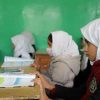
Statement: Education Cannot Wait Director Calls for Immediate Return to Education for Girls in Afghanistan
Despite the assurance that they are “committed to the right to education of all citizens,” Afghanistan’s de facto authorities announced this week that they will not allow girls to attend secondary school until further notice.
NATO On Knife-Edge As War Expands: Can China Be The Peace Maker?
Coral Bell, the great Australian political thought-leader had lucidly described in the 1970s how a “crisis-slide” could become unstoppable as it morphs into a catastrophe: “Gradually, imperceptibly but inevitably there is a build-up of events”, she writes, “rain falls in ever increasing volumes …becomes progressively more irresistible… until the dam breaks”. Ideally, the crisis management process should have been put in place as soon as the relevant observer notices the rains grow heavy, she argues; the disaster of the bursting dam was owed to the delay. A simple but profound metaphor, so apt for crises in international relations, also underscoring the challenge of the choice of appropriate timing for leaders.
LexisNexis Rule of Law Foundation Finds 67% of Global Public Disapprove of Russian Military Invasion of Ukraine
LexisNexis Legal & Professional®, a leading global provider of information and analytics, today released global data and public sentiments regarding the Ukrainian invasion. The ongoing feedback is being collected via the LexisNexis Rule of Law Monitor, which continuously surveys the world’s population on issues related to the Rule of Law.
The Pains of Ukraine: The Future towards a Tripolar World?
Change is a uniquely predictable phenomenon in nature. Also, by logical extension, in politics. Ions ago the observation of Heraclitus of Ephesus that the world is in constant flux, and one never steps into the same river twice is an incontrovertible axiom. Hence the idea that any existing global order, or a political system on the international matrix with a certain hierarchical power arrangement can sustain perennially, would be an erroneous one. When I was a student of Cold War and Global strategy in the mid-seventies the concept of 'paradigm shift' propounded by the American physicist and philosopher Thomas Kuhn in his tome "The structure of Scientific Revolutions" enormously interested me. Simply put, Kuhn argued that the shift occurs when any dominant paradigm under which science operates (his main concern was physics though this also applies to the social sciences) confronts new phenomena that renders it incompatible. To me the thesis remains relevant. A case in point is the place of the United States of America in the global scheme of things. After the collapse of the Soviet Union in the early 1990s , the existing bipolarity in the world order of US-Soviet dominance ended. The US emerged as the only 'hyperpower 'an expression used by the French Foreign Minister Hubert Vedrine in 1999,'and held absolute unchallenged sway in a unipolar world.
International Women’s Day 2022
One of our greatest challenges is advancing gender equality in the face of the climate crisis.
They constitute the majority of the world’s poor.
« Previous Page — Next Page »





The Week with IPS

NEXT STOP - SDGs
Tracking global progress towards a sustainable world
Tracking global progress towards a sustainable world
