Languages
Thursday, October 22, 2026



News and Views from the Global South
Other Voices
News and Views from our Content Partners

Pelosi’s Trip to Taiwan, And Its Aftermath: Management of Missteps
Coral Bell, one of the finest strategic thinks of contemporary times had famously, but somewhat optimistically, advocated that peace-treaties be written without first fighting the wars. Her image of a 'crisis slide' saw the process beginning when adversaries are persuaded that there is no way out other than going to war. Thereafter it becomes an inexorable descent to the abyss of a military conflict. This simple but incontrovertible logic was extrapolated from her perception of global politics through the lens of a 'classical realist'. So, can it be argued that China and the United States are slowly but surely approaching this dangerous watershed point? Rapidly evolving events following Speaker Nancy Pelosi's recent trip to Taiwan sadly point to this possibility.
It Takes a Village to Raise and Support a Child in a Humanitarian Crisis
As we come together to celebrate people helping people on this year’s World Humanitarian Day, we honor the courageous and remarkable humanitarians delivering on the frontlines to help us achieve our goals for peace, universal human rights, and education for all.
An Unexpected Treasure
When University of Arizona political economy professor, William Mishler needed Kiribati census and household income data for a project he was working on with Millennium Challenge Corporation (MCC) he turned to the Pacific Data Hub (PDH) to access the microdata he needed.
Education Cannot Wait Proud to Participate in Global Citizen Festival 2022: Calling on World Leaders and Donors to Empower Girls and End Extreme Poverty Now
Education Cannot Wait (ECW) - the United Nations global fund for education in emergencies and protracted crises - is proud to support and participate in the 2022 Global Citizen Festival. Participants will call on world leaders at the UN General Assembly - and ahead of the G20 and COP27 in November - to step up and invest $600 million into the future of women and girls, close the annual $10 billion climate financing shortfall, deliver $500 million to help African farmers respond to the global food crisis, and provide relief from crushing debts to End Extreme Poverty Now.
Managing sea cucumber fisheries in the Pacific region: a one-day training to educate key stakeholders in New Caledonia
Holothurians, also known as sea cucumbers, are an important source of income for coastal communities in the Pacific. Their exploitation has grown over the past decades, targeting international markets. In some parts of the world, they are considered a delicacy where they can fetch very high prices consequently, they are being overfished in some areas of the Pacific region.
‘Positive Sei’ Bringing Hope to Homes on the Airwaves
Tonga was still picking up the pieces after the Hunga volcanic eruption and tsunami waves when the pandemic reached its shores.
Webinar: Lessons in Development from the Global South: 50 Years of BRAC

This virtual event was hosted by BRAC, the Permanent Mission of Bangladesh to the UN, and the Permanent Mission of Rwanda to the UN on the sidelines of the 2022 UN High Level Political Forum.
Education Cannot Wait Interviews USAID Deputy Administrator Isobel Coleman
Isobel Coleman was sworn in as Deputy Administrator for Policy and Programming at the United States Agency for International Development (USAID) in November 2021.

Decisions Based on Narrow Set of Market Values of Nature Underpin the Global Biodiversity Crisis
The way nature is valued in political and economic decisions is both a key driver of the global biodiversity crisis and a vital opportunity to address it, according to a four-year methodological assessment by 82 top scientists and experts from every region of the world.
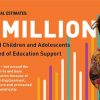
Education Cannot Wait: 222 Million Crisis-Impacted Children in Urgent Need of Educational Support According to New Study
The United Nations global fund for education in emergencies and protracted crises, Education Cannot Wait (ECW), released a shocking new report today that indicates the number of crisis-impacted school-aged children requiring educational support has grown from an estimated 75 million in 2016 to 222 million today.
The Ukraine Stalemate: Dangers of Sleepwalking into Nuclear Armageddon
Despite the fact that the post Second World War period witnessed the growth and proliferation of a plethora horrendous weapons of mass destruction such as nuclear bombs, human intellectual ingenuity managed to keep the slide into catastrophe at bay. The idea was proffered, and largely accepted, that these weapons were meant not to fight wars but to prevent them. During much of the Cold War period, when nuclear weapons proliferated, particularly among the superpowers, peace was maintained on the premise of the concept of Mutually Assured Destruction (MAD). Since the key superpowers, the United States and the Soviet Union, had the capacity to destroy each other many times over, rational logic prevented both from initiating a nuclear war. Defence was achieved by deterrence, that is preventing the enemy from attacking with threat of overwhelmingly unacceptable level of retaliation (“nuclear deterrence”)
Land in South Africa Shall Be Shared Among Those Who Work It
In March 2022, United Nations (UN) Secretary-General António Guterres warned of a ‘hurricane of hunger’ due to the war in Ukraine. Forty-five developing countries, most of them on the African continent, he said, ‘import at least a third of their wheat from Ukraine or Russia, with 18 of those import[ing] at least 50 percent’. Russia and Ukraine export 33% of global barley stocks, 29% of wheat, 17% of corn, and nearly 80% of the world’s supply of sunflower oil. Farmers outside of Russia and Ukraine, trying to make up for the lack of exports, are now struggling with higher fuel prices also caused by the war. Fuel prices impact both the cost of chemical fertilisers and farmers’ ability to grow their own crops. Maximo Torero Cullen, chief economist at the UN’s Food and Agriculture Organisation, said that ‘one of every five calories people eat have crossed at least one international border, up more than 50 percent from 40 years ago’. This turbulence in the global food trade will certainly create a problem for nutrition and food intake, particularly amongst the poorest people on the planet.
Education Cannot Wait Interviews UNICEF Executive Director Catherine M. Russell
Catherine M. Russell became UNICEF’s eighth Executive Director on 1 February 2022. Ms. Russell brings to the role decades of experience in developing innovative policy that empowers underserved communities around the world, including high-impact programmes that protect women and girls, including in humanitarian crises. She has extensive experience building, elevating and managing diverse workforces and mobilizing resources and political support for a broad range of initiatives.

India: Hijab Row the Latest Show of Hindu Nationalism
- In an election season, India’s ruling party has again resorted to the right-wing populist playbook, stirring up divisions for political gain. This time it is the turn of Muslim women, caught in the crossfire of a backlash against both the rights of religious minorities and women’s rights. The controversy over the wearing of the hijab in schools is just the latest chapter in the saga starring Prime Minister Narendra Modi and his Hindu nationalist party in their quest to consolidate power. Their attempts will continue, as will civil society resistance and struggles for rights.
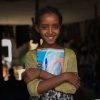
Education Cannot Wait Expands First Emergency Response in Northern Ethiopia with Additional US$2 Million Grant, Bringing ECW Ongoing Investments in Ethiopia to over $30 Million
Conflicts in Northern Ethiopia’s regions of Afar, Amhara and Tigray, have pushed children and adolescents out of school and are fueling humanitarian needs in the region. In response to this crisis, Education Cannot Wait (ECW) announced today a US$2 million First Emergency Response Grant that will reach more than 20,000 refugee and displaced, as well as host community children and adolescents. This brings ECW ongoing investments in Ethiopia to over $30 million.« Previous Page — Next Page »





The Week with IPS

NEXT STOP - SDGs
Tracking global progress towards a sustainable world
Tracking global progress towards a sustainable world
