Languages
Monday, October 19, 2026



News and Views from the Global South
Other Voices
News and Views from our Content Partners
Bangladesh moves to stop siphoning off money by multinational companies
(UNB/IPS) - Bangladesh is collecting data on international transactions of multinational companies to stop them from siphoning off money from the country.
”As global citizens, we cannot turn a blind eye to the increasing spread of hatred and intolerance”
(Geneva Centre) - The 2019 International Day for the Elimination of Racial Discrimination and this year’s theme devoted to tolerance, empathy towards the Other and celebration of diversity, comes at a timely moment. Religions, Creeds and Value Systems: Joining Forces to Enhance Equal Citizenship Rights.” The conference sought to capitalize on the fundamental convergence of religions, creeds and value systems to mitigate the marginalization of communities worldwide with the goal of eliminating xenophobia and all forms of intolerance. The conference produced an outcome declaration aimed at moving towards greater spiritual convergence to support equal citizenship rights and resulted in a consensual global vision to promote this goal. The Geneva Centre will shortly be issuing a two-volume publication on the world conference. The Geneva Centre wishes on this International Day for the Elimination of Racial Discrimination to join hands with all those involved in such a noble endeavor.Statement by HRH Prince El Hassan bin Talal and Idriss Jazairy* following the terrorist attacks in New Zealand, March 15th 2019
Words cannot express adequately the pain and anguish we feel at the heinous attacks in New Zealand. We share the anguish of our fellow Muslims at those who have orchestrated such diabolical carnage in a place of prayer. As husbands, fathers and grandfathers, both of us can only imagine the pain and suffering felt by the families affected by this tragedy. In the weeks and months ahead, we must all stand together and raise aloft those values that must form the core of Islamic belief that we share with People of the Book– compassion, respect and dignity. If we fail in this, then terror is victorious.The Geneva Centre strongly condemns New Zealand terrorist attacks
(Geneva Centre) - The Executive Director of the Geneva Centre Ambassador Idriss Jazairy has strongly condemned the two terrorist attacks killing at least 40 people today in Christchurch, New Zealand.The Geneva Centre presents oral statements on the UPR outcomes of Saudi Arabia and Jordan
(Geneva Centre) – At the 40th regular session of the UN Human Rights Council, the Geneva Centre presented on 14 March statements with regard to Saudi Arabia and Jordan.
HER LOST LAND
(The Daily Star) - I do not usually write very easily. As someone working mostly with people with little or no literacy, my forte, as I would like to call it, is the oral tradition. I speak, I talk, I converse. I write today based on my perceptions from my work with rural women with whom I have lived and learnt from over the last four decades.The Geneva Centre co-organizes a UN Library Event on Leadership in Modern Multilateralism
(Geneva Centre) - Multilateralism must be people-driven. The current rise of populism around the world is inextricably linked to a feeling of being excluded and kept out of decision-making processes broadly shared by ordinary people. These were the main conclusions of a joint event between the Geneva Centre for Human Rights Advancement and Global Dialogue and the UNOG Library entitled Leadership in Modern Multilateralism. The debate was held on 12 March 2019 at the United Nations Office in Geneva in the Library Events Room at Palais Des Nations.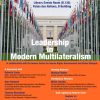
The Geneva Centre is co-organizing with the UNOG Library a discussion on Leadership in Modern Multilateralism
The Geneva Centre for Human Rights Advancement and Global Dialogue has partnered with the UNOG Library in the organization of the upcoming Library event entitled Leadership in Modern Multilateralism.The Geneva Centre reiterates the importance of fully including women in the labour market and in all spheres of society on the occasion of International Women’s Day
On the occasion of the observance of the 2019 International Women’s Day, the Geneva Centre for Human Rights Advancement and Global Dialogue reiterated the urgent need to intensify efforts towards achieving gender equality in all spheres of society, eliminating all forms of violence against women and girls, and promoting women’s political and economic empowerment.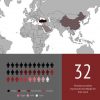
On International Women’s Day, CPJ highlights jailed female journalists
On International Women's Day, CPJ has highlighted the cases of female journalists jailed around the world in retaliation for their work. At least 33 of the 251 journalists in jail at the time of CPJ's prison census are women. At least one of those--Turkish reporter and artist Zehra Dogan--was released in February after serving a sentence on anti-state charges. The four female journalists jailed in Saudi Arabia were detained over their criticism of the kingdom's ban on women driving.
The Geneva Centre celebrated International Women’s Day with a debate and book presentation on Muslim women between stereotypes and reality: an objective narrative
No country in the world has a perfect record on women’s rights and gender equality and there is a felt need for cooperation and joint endeavours in order to reach the common goal of empowering women and putting an end to gender inequality. Muslim women must be given the right to freely choose what to wear and what not to wear, and fully included in society, be it through insertion on the labour market or simply through the practice of sports.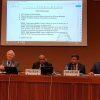
Geneva Centre’s Executive Director presents the agenda of the 21 March “Celebration of diversity: beyond tolerance the path towards empathy” conference to African Group Ambassadors
On 7 March, the Geneva Centre’s Executive Director Ambassador Idriss Jazairy was invited by the Permanent Delegation of the African Union to an official meeting of all African Group Ambassadors in Geneva to present the rationale and purpose of the Geneva Centre’s forthcoming conference on “Celebration of diversity: beyond tolerance the path towards empathy.”
South Africa elections 2019: Journalist safety kit
South Africa, one of the media freedom beacons in sub-Saharan Africa, will hold national and provincial elections on May 8. As the country celebrates 25 years of democracy, the press in South Africa faces old and new challenges, including physical harassment and cyber bullying. The press freedom environment, including the safety of journalists, will be one of the key indicators for the health of the country's democracy and the freeness and fairness of its polls.
We Are the Invisible. We Are the Invincible. We Will Overcome.
(Tricontinental) – The mood in Caracas (Venezuela) is sombre. It appears that the attempted coup against the government that began on 23 January is now substantially over (as the Venezuelan Foreign Minister Jorge Arreaza tells me). The Lima Cartel is divided. The Europeans have cold feet. On the one-month anniversary of that attempt, a massive crowd of the poor gathered in the centre of Caracas to demonstrate their support for the Bolivarian Revolution. An elderly couple carried a sign which captured the mood – Somos los Invisibles. Somos los Invensibles. Venceremos (We are the Invisible. We are the Invincible. We will Overcome).Bangladesh Needs Intensive Surveys to Gauge Potential of Its ‘Blue Economy’
(UNB/IPS) - Bangladesh needs intensive surveys in the Bay of Bengal, complemented by proper interpretation of the findings and appropriate research to gauge the potential of its ‘blue economy’ as the country largely depends on the stocks of living and non-living marine resources falling within its Exclusive Economic Zone, experts said.« Previous Page — Next Page »





The Week with IPS

NEXT STOP - SDGs
Tracking global progress towards a sustainable world
Tracking global progress towards a sustainable world
