Languages
Monday, October 19, 2026



News and Views from the Global South
Other Voices
News and Views from our Content Partners
Why Land Matters with Ede Ijjasz-Vasquez

Land rights are fundamental for three things. One: economic development. No country in the world has gone from low income to Middle income to high income without clear land and property rights and markets. It is a core part of the economy.

Learning for a Lasting Peace
Education is the bedrock of peace, the foundation of strong societies, and the building block for a better world. This year, as we celebrate the Sixth International Day of Education under the theme of ‘learning for a lasting peace’, we call on world leaders to end wars and armed conflicts and focus on our common humanity to embrace the vast potential learning offers in uniting our world.
Why Should Climate Change and Biodiversity Loss Be Tackled Together?
Find the answer in this interview with Frédéric Castell, Senior Natural Resources Officer at FAO
How Much Does the UN Really Cost?
UN Spokesperson Farhan Haq answers common questions about the UN’s budget, including how the UN gets its money, how it prevents fraud and waste, what is spent on humanitarian operations, and how the cost of peace compares to the price of war.
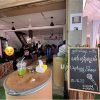
Myanmar Refugees Build Schools, Cafes and Hope in Mae Sot
The typical image of a refugee is a poor person with their hands out asking for aid. The Burmese refugees in Mae Sot on the Thai-Myanmar border defy that stereotype. Many are middle-class, educated urbanites with skills and plenty of initiative. After standing up to the Burmese military and suffering for it, they left everything and fled for their lives to Mae Sot where they continued their struggle. Despite intimidation, exploitation by some Thai authorities, and living in fear without documentation, they have achieved a lot in under two years. Their purpose is to support their community and the revolution in a variety of ways through their resilience, commitment, ability and innovation. Some refugees have set up businesses such as cafes, restaurants, bars, shops, hairdressers, a farm and cross-border trade. While they are for-profit, they also provide employment for other refugees and donate to the most vulnerable. One café owner said, “If I am lucky, I break even but the café gives refugees employment, keeps them occupied and is a place where Burmese can meet and relax.” [caption id="attachment_183577" align="alignleft" width="630"]Paul Greening is an ex-UN senior staff officer with over 20 years of experience in six Asian countries working for six UN agencies and four INGOs. He worked in Sittwe, Rakhine State for the International Organization for Migration (IOM) from 2017 to 2020 and has been living in Mae Sot for two years. First published by Myanmar news outlet Irrawady

COP28 Confronts Fossil Fuels During Hottest Year in Recorded History
2023 is going to be the hotest year recorded on Earth for some 125,000 years.
September and October set shocking records for monthly global temperature highs.

A Crisis of Humanity
The UN Secretary-General has defined the crisis in Gaza not just as a humanitarian crisis, but rather as a crisis of humanity. According to UN Secretary-General António Guterres: “Gaza is becoming a graveyard for children. Hundreds of girls and boys are reportedly being killed or injured every day.” This continued trend of violence and disregard for international humanitarian law and human life has enveloped our world.
ECW Interviews France’s Minister of State for Development and International Partnerships Chrysoula Zacharopoulou
Chrysoula Zacharopoulou is a medical doctor. Born in Sparta (Greece) in 1976, she holds both French and Greek nationalities and is a graduate of Sapienza University in Rome, as well as holding a PhD on endometriosis. She arrived in France in 2007, practicing as a gynaecological surgeon at Bégin Military Hospital.

The Power of Humanity
Today, as we commemorate United Nations Day, more than 224 million children and adolescents are in need of quality education, and the hope, protection and opportunity it provides. Their numbers are increasing by the day. From Afghanistan and Sudan to Ukraine; from South Sudan, Latin America and across sub-Saharan Africa; and in Gaza, where 50% of the total population of 2.2 million are children under siege.
WORLD FOOD DAY 2023
Water is essential for life on Earth. It makes up 50% of our human bodies. It covers about 70% of the planet’s surface.

Turning Trash into Education: Lagos Children Benefit from Plastic Waste School
Ijora Badia, a slum in Lagos, was swimming in plastic waste. Now children pay their school fees in plastic bottles, and these are used to build classrooms. 
With Hope and Courage, They Inspire Us
“My dream is to become a teacher,” says 13-year-old Alia. A small glimmer of hope can be traced in her beautiful, almond-shaped, brown eyes. Together with her mother, siblings and aunt, Alia has fled the conflict in Sudan to Chad. With extraordinary courage to survive, she made the harrowing journey at night across checkpoints, threatened by guns and militia roaming around in the dark. While her eyes are still hollow from the flight, I see that sparkle for a split second: she still has hope.
The Taliban Can Reverse the Unacceptable Ban on Girls’ Education
Today, we mark the second anniversary of the ban on secondary school girls’ education in Afghanistan and join the world in calling for it to be lifted now.
Education Cannot Wait Interviews High-Level Steering Group Youth Representative Mutesi Hadijah and Executive Committee Youth Representative Hector Ulloa
Youth offer a powerful voice in ECW’s global movement to ensure crisis-impacted children worldwide are offered the safety, hope and opportunity of a quality education. As a global multilateral fund, ECW offers a rare opportunity for youth to participate in its governance structure. In this sweeping two-part interview, ECW connects with Mutesi Hadijah and Hector Ulloa who were recently elected to represent the youth constituency on ECW’s High-Level Steering Group and Executive Committee, respectively.

Climate Action Needs Arts
Environmental issues have been my life’s career. But music has also been important.
Arts can shift societal perspectives on tough topics.
« Previous Page — Next Page »





The Week with IPS

NEXT STOP - SDGs
Tracking global progress towards a sustainable world
Tracking global progress towards a sustainable world
