Languages
Monday, July 13, 2026



News and Views from the Global South
Europe
MOLDOVA: Opposition Steps Ahead of Communists
After eight years of communist rule, four Moldovan opposition parties won a majority percentage of parliamentary seats during Wednesday's nationwide elections.
RIGHTS-BULGARIA: Two Women Take on Defence Ministry
Two young women are suing Bulgaria's Ministry of Defence over gender discrimination in the mainly ceremonial, National Guard - a case that could go a long way in changing patriarchal social norms.BOSNIA: Get to be a Country First…
Sooner or later Bosnians will have to abandon their status of quasi-protectorate, and take control of their own state if they ever want to join the European Union.BALKANS: Visas Eased, Except in Muslim Areas
Almost two decades after the break-up of former Yugoslavia, people from some of the new states that emerged have been granted visa-free travel to the European Union (EU) from the beginning of next year.EDUCATION: Not This Romanian Way
One of three students in Romania studies at Spiru Haret University, the largest private university in the country. But more than 100,000 students, recent and older graduates, could be left without their diplomas because the authorities dispute the quality of education provided by the institution.EUROPE: Not the Language to Speak
A controversial new law on foreign languages in Slovakia branded discriminatory and totalitarian by critics is fuelling tensions and destroying trust between Slovaks and ethnic Hungarians, political analysts have warned.BALKANS: Media Could Be in the Dock Over War Crimes
Journalists are in the dock now for their role in provoking the wars of the 1990s across former Yugoslavia that left more than 100,000 dead.BOSNIA: Not at Peace With Itself
Apart from sporadic civil society initiatives, Bosnia has attempted little by way of inter-ethnic reconciliation.ENERGY: Germany Gets Some Nuclear Jolts
The faults at the nuclear plant at Kruemmel near Hamburg surfaced just three days after Chancellor Angela Merkel declared nuclear energy "indispensable" to Germany.ALBANIA: Short on Homework for Joining EU
Membership of the EU will be the principal target of the re-elected government in Albania.EUROPE: Bringing Up a ‘Lost Generation’
A "lost generation" of children vulnerable to crime and exploitation is growing up in Eastern Europe as their parents migrate abroad for work and leave them behind, migration watchdogs warn.HUNGARY: Slipping Further to the Right
The rise of the anti-gypsy Hungarian far right has revealed deep failures in the country's political system and its civil society.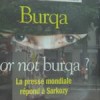
FRANCE: ‘Where Is the Burqa They Want to Ban?’
There was not a burqa in sight. On the bustling streets around Boulevard de Belleville, in one of the most diverse neighbourhoods here, women wore a variety of clothing, including summer dresses, jeans, chadors, headscarves and traditional African dress, but no burqas.EUROPE: Croatia on Uncertain Course for EU Membership
The Swedish government, which now holds the rotating presidency of the European Union for the second half of this year, says plans to bring Croatia into the EU have not been derailed despite recent political events in the country. Croatia is officially set to join the Union as its 28th member in 2011.AUSTRIA: Racism on a Sharp Rise
Mainstream political parties in Austria must change their approach if a growing anti-immigrant sentiment stoked by far-right politicians is to be curbed, racism watchdogs and political analysts say.ENVIRONMENT: ‘Slow Down Living’
A group of Christian environmentalists met in Pistoia in central Italy over the weekend to call for an end to mass consumption and a return to family values.BALKANS: Church Hands Out Shock Treatment
The torture of drug addicts who had turned to the Serbian Orthodox Church for help has sent shock waves across the country.FRANCE: Ambiguous on Nuclear Disarmament
As the international war of words over nuclear programmes heats up, with North Korea threatening to strengthen its "nuclear deterrence" against the United States, countries such as France are taking a position that some analysts describe as ambiguous and hypocritical.
WOMEN: Dubai, New Destination on Trafficking Map
On May 26, the U.S.-based Center for Investigative Reporting published ‘The Price of Sex’, a vast multi-media project by photojournalist Mimi Chakarova who spent nearly seven years doggedly unraveling the web of sex trafficking.HUMAN RIGHTS-SLOVAKIA: Barriers Go Up For Abortion
Rights groups in Slovakia have attacked new abortion legislation they say not only breaches women's rights to privacy and regulations on medical confidentiality but could force some women into undergoing risky, illegal abortions.
WOMEN-MEDIA: Who Is the Editor?
For the first time in 15 years, an organisation, the International Women's Media Foundation (IWMF), is attempting to measure the progress, or lack of progress, of women in media organisations globally.« Previous Page — Next Page »


The Week with IPS

NEXT STOP - SDGs
Tracking global progress towards a sustainable world
Tracking global progress towards a sustainable world
