Languages
Tuesday, November 10, 2026



News and Views from the Global South
Global

Right-Wing Nationalism Threatens Democratic Norms, Human Rights & Press Freedom
The steady decline in multilateralism—accompanied by a rise in unilateralism-- is beginning to threaten democratic norms, including press freedom, global governance, civic participation and human rights across Asia, Africa, South America and the Middle East.
Billions of Dollars Available for Reducing and Reversing Land Degradation
The United Nations Convention to Combat Desertification (UNCCD) has debunked the notion that there is no funding available for countries to prevent, reduce or reverse land degradation.
Ethics for artificial intelligence
Owing to our varied circumstances and experiences, there are contradictory tendencies to either exaggerate or underestimate the power and importance of artificial intelligence (AI) in contemporary society.
The Marrakech Compact on Migration: Myths & Realities
When 164 UN member states adopted the Global Compact for Safe, Orderly, and Regular Migration (the Marrakech Compact on Migration) on 10 December last year, I read on social media that they had decided to give up control over migration to the UN.
The Silent, Invisible Crisis Destabilising Communities Could be a Subject of Hope
New data show that globally two billion hectares of land—roughly twice the size of China—have been degraded. And of this amount, 500 million hectares are abandoned agricultural lands.
Ending Poverty is Possible, but it Means Facing up to Inequality – Within & Between Countries
World leaders have committed to ending poverty everywhere for all people by 2030. Achieving this aim means facing up to the need for dramatic declines in inequalities – in income, in opportunity, in exposure to risk, across gender, between countries and within countries – over the next decade.
Desertification, Land Degradation and Climate Change Go Hand in Hand
The link between desertification, land degradation and climate change is among several issues occupying the attention of the 197 Parties to the United Nations Convention to Combat Desertification (UNCCD) for the next three days.
Is the UN Being Undermined by a Demagogic Trump Administration?
The United Nations, which embodies the core principles of multilateralism since its creation more than 74 years ago, is being steadily and systematically undermined by a reactionary and demagogic Trump administration recklessly flaunting American imperialism at its worst.
A Pragmatic Shift Needed, to Deliver the Potential of Blue Economy
It's estimated that 70% of the Earth’s surface is covered by water. Unfortunately, our water resources are under serious threats attributable to uncontrolled human activities that are severely impacting livelihoods and the ecosystem.
Bullying is an “Infringement” on Children’s Rights
While rates have decreased, school violence and bullying is still a major global issue, contributing to lasting impacts on youth, a United Nations agency found.
Electronic Devices Outnumber Humans & Trigger a Surge in E-Waste
The widespread innovations in modern digital technology have a devastating downside to it: the accumulation of over 50 million tonnes of electronics waste (e-waste) globally every year.
COP24: Sum and Substance of Climate Diplomacy
As I was attending the 24th Conference of Parties to the United Nations Framework Convention on Climate Change—to create a rulebook to operationalise the Paris Agreement—in Katowice, Poland, it dawned on me, like never before, that the negotiations were taking place in a make-believe world.
Protecting Your Security and Rights Online
On December 6, the Australian parliament rushed to pass a bill that could weaken security on the phones and software people rely on every day, in Australia and worldwide. The sweeping law could force tech companies to take vaguely described actions to access encrypted data.
Hospital PPPs Undermine Healthcare
Despite all the evidence to the contrary, and substantial opposition from community groups, public-private partnerships (PPPs) are still being promoted to deliver sustainable development. Public-private hospital partnerships are supposed to ensure that the private sector will offer much needed efficiency in healthcare provision.
Why Are so Many Humanitarian Crises Under-reported?
According to a recent poll of aid agencies by the Thomson Reuters Foundation, the most under-reported crisis of 2018 was the conflict in the Democratic Republic of Congo (DRC).
Never Been a Worse Time to be a Journalist
“I’ve never known a time when it was as bad as it is now,” says Beata Balogova, the Vice-Chair of the International Press Institute (IPI) and Editor in Chief of the Slovak publication Sme. “In terms of what’s going on with journalists, we’re in a very unique period,” she adds.
Bringing Greener Pastures Back Home
One month on since the Global Compact for Migration was approved, civil society has highlighted the need to turn words into action, supporting those who have been displaced or forced to migrate as a result of environmental degradation.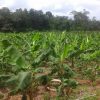
Eat Plants, Save the Planet
While the modern agricultural system has helped stave off famines and feed the world’s 7 billion residents, the way we eat and produce food is posing a threat to future populations’ food security.
Quenching Humanity’s Freshwater Thirst Creates a Salty Threat
Starting from a few, mostly Middle Eastern facilities in the 1960s, today almost 16,000 desalination plants are in operation in 177 countries, producing 95 million cubic meters of freshwater every day - equal to about half the flow over Niagara Falls.
Davos, Inequality & the Climate Emergency
Four of the top five most impactful threats in this year’s World Economic Forum´s Global Risks report are related to climate change. The report warns that we are “sleepwalking to disaster” . But that is not true. The disaster is already here, it´s not something we are still walking towards. Climate change is no future threat, it´s a current one. We have entered a new phase, one in which the impacts are coming faster, with greater intensity.
Q&A: 17 Percent of the Problem, but 30 Percent of the Solution
From expansive evergreen forests to lush tropical forests, the Earth’s forests are disappearing on a massive scale. While deforestation poses a significant problem to the environment and climate, trees also offer a solution.« Previous Page — Next Page »





The Week with IPS

NEXT STOP - SDGs
Tracking global progress towards a sustainable world
Tracking global progress towards a sustainable world
