Languages
Monday, November 9, 2026



News and Views from the Global South
Middle East & North Africa
MIDEAST: Israel Threatens to Outlaw Palestinian Memory
Israel is set to approve a radical new bill which threatens to legalise discrimination against its sizeable Arab minority for the first time.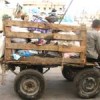
MIDEAST: Gaza Collects So Much Rubbish
Suliman Khodari begins his shift at 5am on one of Gaza City's busiest streets. With his horse-drawn cart, Suliman spends seven hours every morning hauling away the rubbish left by residents and shop owners of the neighbourhood. But he is not a scavenger.YEMEN: Qat Cultivation Draining Water Reserves
The tall green shrubs on Yehia Abdullah's farm in the Haraz mountains produce the bitter-tasting leaves that feed the nation's number one addiction. More than seven million Yemenis chew qat, the mildly narcotic leaf of the Catha edulis tree. Expanding cultivation of qat to meet growing national demand is rapidly depleting Yemen's limited groundwater resources, experts warn.
POLITICS-LEBANON: Family History Counts for Women in Race to Parliament
In Lebanon’s Jun. 7 parliamentary poll, women represent only two percent of the candidates, many of them with family names that have been appearing on ballots for generations.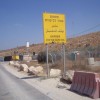
MIDEAST: Humanitarian Crisis Deepens in West Bank
"I heard voices, I turned around to look, and saw a group of Israeli settlers assaulting my brother Hammad," says Abdallah Wahadin, 82, a Palestinian farmer from Beit Ummar near the southern West Bank city of Hebron.MIDEAST: Israel Prepares for North Korean Fallout
The tremors of Monday's North Korean nuclear test have been felt all around the world, no more so in a country seemingly not directly affected by whether or not North Korea is a full-fledged nuclear power. In Israel, there is deep concern, an existential fear even - over the implications that Iran will be next in the nuclear line.MIDEAST: Egyptians Too Hit by Israeli Strikes
Residents along Egypt's border with the Gaza Strip are still awaiting compensation for property damaged by air strikes during Israel's recent onslaught against the Hamas-run enclave.MIDEAST: Palestinians Scoring Own Goals
While the U.S. appears to be optimistic about Israeli-Palestinian peace talks, inter-Palestinian rivalry, a recalcitrant Israeli government, and an international community with its own agenda could well scuttle a settlement.
Q&A: 'More Women Need to Judge'
Thuraya Judi Alwazir is one of few women judges sitting on the Palestinian Authority's Judicial Authority. Alwazir speaks here to IPS about her experiences in a largely male-dominated environment, on the rights of women in regard to honour killings and domestic violence, and on the death penalty as applied in the West Bank.MIDEAST: Power Struggle Killing Patients
The lives of hundreds of critically ill Gazans continue to be jeopardised by the power struggle between rival Palestinian factions Hamas and Fatah, and political blackmail by Israel.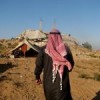
MIDEAST: Rising Again After the Assault
Khuza'a is a small farming village perched on a gentle slope east of Khan Younis. Its fertile farmland once produced fruit and vegetables for export to Israel, whose own lush plains are just 500 metres from Khuza'a's centre, and are visible through the town's narrow streets.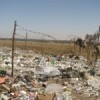
ENVIRONMENT: West Bank Becomes Waste Land
Israel has found a cheap and easy way to get rid of its waste, much of it hazardous: dump it into the West Bank. A few Palestinians can be bought, the rest are in no position to complain.
EGYPT: Thanks to Facebook, Young Women Take to Political Activism
In recent years, Egypt has witnessed increasing participation by women in grassroots political activism. Local civil rights advocates attribute the phenomenon to novel means of communication and organisation, especially the social networking website Facebook.MIDEAST: ‘Hamas Against Zionist Ideology, Not Judaism’
A founding member of Hamas says he hates all weapons and insists that his organisation is not anti-Jewish.MIDEAST: Israel Expanding ‘Beautifully’ In Jerusalem
Even as Pope Benedict XVI tries his best during his current Holy Land visit to pay reverence to the attachment of all three monotheistic faiths to Jerusalem, on the ground a less lofty imprint is already furthering Israeli control over the Holy City in a way that could threaten the claims of all but Jews to Jerusalem.MIDEAST: Families Down to a Meal a Day
Um Abdullah cannot remember the last time she was able to feed meat to her eight children. She does know that for the past week the single meal she cooked for them each day consisted only of lentils. And that on one day, she had received aid coupons from the United Nations, which she subsequently sold to buy tomatoes and eggplant at the local market.MIDEAST: Who Does Not Target the Media
Palestinian journalists in the West Bank and the Gaza Strip continue to be arrested and harassed by the respective security forces of the divided Palestinian leadership. And from Israel, a belated freedom has come to cover Gaza, but amidst other concerns.MIDEAST: Pope Failing the ‘Test of Pain’
Before stepping into Jerusalem's interfaith and inter-political Middle East minefields, Pope Benedict XVI had posited himself as a "pilgrim of peace". But, only hours into his spiritual mission, the Pope found himself crashing up against the walls erected by pain - Jewish pain and Muslim pain, the memory of the Holocaust, and Palestinian pain of the continued Israeli occupation.
MIDEAST: Abbas Standing Takes a Fall
Yet another sign of the growing unpopularity of the Western-backed Palestinian Authority (PA) was evident on the streets of Ramallah last weekend.MIDEAST: Assault Leaves Debris in the Mind
Gazans have a colloquial term to describe the buzzing of Israeli warplanes that is an ever-present feature of their lives: zanana.MIDEAST: Fatah-Hamas Reconciliation Looking Distant
Doubts have arisen about a Fatah-Hamas reconciliation ahead of a new round of talks. The last talks between the two Palestinian factions failed to bridge outstanding differences.« Previous Page — Next Page »





The Week with IPS

NEXT STOP - SDGs
Tracking global progress towards a sustainable world
Tracking global progress towards a sustainable world
