Languages
Sunday, November 8, 2026



News and Views from the Global South
Barack Obama
POLITICS-US: Pledging Allegiance to AIPAC
With the Iranian nuclear "threat" in the crosshairs, discussion of Palestinians or a Syrian-Israeli detente was virtually non-existent. But then again, one should not expect many overtures for peace when attending the annual policy conference for the American Israel Public Affairs Committee (AIPAC).POLITICS-US: McCain’s Judicial Plans in Lockstep with Bush
While it isn't as eye-catching as the latest reports from Iraq and Afghanistan, or as headline-grabbing as rapidly escalating gas prices and the growing number of housing foreclosures, and few voters cast their ballot based on it, the judicial appointments of whomever wins the U.S. presidency in November will have long-lasting ramifications for the country.EUROPE: No Tearful Farewell for Bush
It is a safe bet that there will be no mass shedding of tears when U.S. President George W. Bush visits Slovenia to attend the final summit of his presidency between the European Union and the United States Jun. 10.
POLITICS-US: Obama Walks Fine Line at Major Pro-Israel Meet
Speaking last year at the same forum, he received scattered boos. But as Senator Barack Obama strode towards the podium Wednesday morning at the annual policy conference of the American Israel Public Affairs Committee (AIPAC), he was greeted with a standing ovation.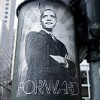
POLITICS: Obama Victory Resonates in Race-Conscious U.S.
"Tonight I can stand here and say that I will be the Democratic nominee for the president of the United States of America," Sen. Barack Obama told a crowd of supporters in St. Paul, Minnesota Tuesday, bringing an effective close to a 16-month Democratic primary process.
POLITICS-US: On Middle East, McCain Vows to Stay the Course
In a major address on Middle East policy Monday, Sen. John McCain, the presumptive Republican candidate for president, pledged to maintain the Bush administration's hard line against Iran and expressed strong scepticism about the ability of the current Palestinian leadership to reach a peace accord with Israel.POLITICS-US: Florida Could Be Back in the Delegates Game
With just three relatively small primaries left in the protracted Democratic nominating race, the party's national leadership and the Florida Democratic Party (FDP) are still debating whether or not to count votes cast in that state's presidential primary in January.POLITICS-US: McCain’s “Agents of Inconvenience”
As John McCain launched his presidential bid in 2007, he faced a considerable challenge to mobilise support among social conservatives within the Republican Party.POLITICS-US: Obama Draws Line on Cuba, Latin America Policy
In a major policy address on U.S.-Latin American relations, the leading Democratic presidential candidate, Sen. Barack Obama, pledged Friday to immediately roll back key sanctions imposed by President George W. Bush against Cuba over the last several years and called for a "new alliance of the Americas" in which Washington's southern neighbours would no longer be treated "as a junior partner".POLITICS-US: Republicans Fear Democratic Rout in November
The deeply unpopular legacy of U.S. Pres. George W. Bush hangs like a cloud over the election prospects of the Republican Party, raising fears of sweeping Democratic victories in the fall.POLITICS-US: Same-Sex Marriage Making a Comeback?
Still not fully embraced by the religious right, Sen. John McCain, the Republican Party's presumptive presidential nominee, has been handed an opportunity to prove his loyalty to the party's most influential and powerful grassroots force.POLITICS-US: Bush Comments Rally Dems Behind Obama
U.S. President George W. Bush's comments in Israel Thursday ignited a political campaign row back home as Democratic leaders decried his comparison of engaging enemies to Nazi appeasement.POLITICS-US: An Ocean Apart, Bush, McCain Play to Neo-Con Dreams
In separate speeches delivered an ocean apart, the two standard bearers of the Republican Party Thursday offered rosy visions of a future designed to gladden the hearts of Israel-centred neo-conservatives without offering any details about how their dreams will be achieved.POLITICS-US: New Approach Awaited on Latin America, Cuba
More than 150 years after the United States promulgated the Monroe Doctrine, Washington should recognise that its dominance over the Americas has ended and that it must "engage Latin America on its own terms", according to a new report released here Wednesday by the Council on Foreign Relations (CFR), one of the nation's most influential think tanks.POLITICS-US: Not With a Bang, But With a Whimper…
After the final votes were counted in the two largest remaining primaries for the Democratic nomination for the presidency, the long battle may finally be drawing to a close as Sen. Barack Obama has emerged as a clear frontrunner over Sen. Hillary Clinton with only six primaries remaining.POLITICS-US: Is Immigration Off the Table in Election 2008?
These days, while you can still pick up a newspaper or turn on a radio or television gabfest and read, hear and see the issue of immigration batted around, it has become less of a hot-button political issue in the United States.POLITICS-US: Supreme Court Gives Republicans a Boost
In a decision with major implications for the November national elections, the U.S. Supreme Court Monday upheld a controversial state law that Democrats and a number of national civil rights groups believe could undermine the right of tens of thousands of poor and minority voters to cast ballots.POLITICS-US: Right Puts Obama in Media Crosshairs
The unveiling this week of a new campaign advertisement by the North Carolina Republican Party - using video of controversial remarks made by Senator Barack Obama's former pastor, the Rev. Jeremiah Wright, and attacking two North Carolina Democratic candidates for governor - is a reminder that the race for the presidency will likely only get uglier as the summer goes on.ENVIRONMENT-US: Poll Finds Deep Concern Among Hispanics
Hispanic voters in the United States show a high degree of awareness and concern about environmental issues, particularly global warming, according to an unprecedented national survey on Latino opinion and the environment released here Wednesday by the Sierra Club.
POLITICS-US: Taking on the Two-Party Monopoly
"Politics in the U.S. is at a crisis level," Green Party presidential hopeful Cynthia McKinney told IPS during a rare sit-down interview. "Disillusionment, lack of participation, and establishment of false choice - what is one to do? For me, I can't give up hope. I said yes when the Green Party said 'okay, now you want to do it?'."POLITICS-US: Primary Win Keeps Clinton Alive
The six weeks since the last actual vote was cast in the battle for the Democratic nomination have been filled with speculation, but Tuesday's primary in Pennsylvania finally settled something: this election is far from over.« Previous Page — Next Page »





The Week with IPS

NEXT STOP - SDGs
Tracking global progress towards a sustainable world
Tracking global progress towards a sustainable world
