Languages
Friday, September 4, 2026



News and Views from the Global South
East Africa
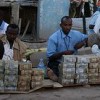
SOMALIA: Rising Food Prices Add to Woes
Ali Yusuf is a porter at Mogadishu's main Bakara market. He works as much as 12 hours a day, ferrying people's shopping from the market to their homes to earn a living and support his family of eight. But soaring food prices are hitting him hard.
DEVELOPMENT-KENYA: Water Studies – But Where Are the Water Supplies?
The road leading to the informal settlement of Korogocho is narrow and winding. Here, in Nairobi's third largest slum, up to 150,000 people are crammed into an area of just over one square kilometre, their shanties made of cardboard, wood or metal.POLITICS-AFRICA: Critics Target U.S. Military Command
In just a few months, the United States Africa Command (AFRICOM) - Washington's latest military oversight structure for the continent - is expected to be fully operational.
Q&A: "But They Never Killed My Spirit"
On Sep. 7 last year, as she walked to her home, parliamentary candidate Flora Igoki Terah was attacked and tortured by a gang of five men. Terah's case is one of several case studies highlighted in Amnesty International's 2008 report on the state of the world's human rights, released on May 28.
Q&A: 'Development Aid Is No Panacea'
Celine Tan is a Lecturer in Law at the University of Birmingham. Her doctoral research has focussed on development financing, in particular its impact on global governance and international relations.RIGHTS-AFRICA: Security Council Urged to Protect Civilians
As diplomats prepare to leave for Africa where the U.N. Security Council is due to meet next week, calls from activists are growing for strong international action to address the worsening human rights situation in many parts of the continent.PAKISTAN: Quake Orphans Still Dependent on Charity, NGOs
Thousands of children orphaned by the earthquake that hit northern Pakistan in October 2005, leaving 85,000 people dead, continue to be dependent on charity and support provide by donors and non-government organisations (NGOs).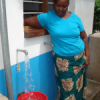
TANZANIA: Running Water Remains a Pipe Dream for Many
Juma Membe is a doorstep salesman with a commodity no one in his poor Dar es Salaam neighbourhood can refuse. Every inch of space in his handcart is occupied with canary yellow jerry cans of safe drinking water ready for home delivery.Q&A: "We Are Certainly Making Progress, But It's Slow"
When it comes to getting water supplies in Dar es Salaam, it's too expensive to be poor.RIGHTS-ETHIOPIA: Press Freedom Still Under Attack
The May edition of popular Ethiopian entertainment magazine Enku did not appear on newsstands as scheduled this month. Ethiopian police impounded all 10,000 copies before they could be distributed; Alemayehu Mahtemework, the magazine's publisher and deputy editor, was charged with threatening public order and spent five days in detention, along with three of his staff.KENYA: Teenage Mothers Denied Education
At 17, Julia Metito* (*not her real name) should be in her final year in secondary school in the Kenyan capital, Nairobi, but three years ago she had to leave school to give birth and then nurse a child. Today, she finds herself in Class Seven with 13-year-olds. 13,000 girls leave school every year in Kenya due to pregnancy, according to research released at the beginning of May by the Centre for the Study of Adolescence, a non-governmental organisation that works on reproductive health, gender and social policy for teenagers.RIGHTS-KENYA: Home Is Where the Fear Is
The Kenyan government has begun transporting certain internally displaced persons (IDPs) from the camps they have occupied for the last four months back to their homes. The IDPs have been assured of support by government once back on their farms.HEALTH-KENYA: Months After Dump Scare, Problems Persist
Every day, the Dandora dumpsite in the eastern part of Nairobi receives 2,000 tonnes of rubbish - about half of the waste generated daily by the capital's 4.5 million people. The 12-hectare site is a low mountain of smouldering trash. Vultures and marabou storks circle overhead in anticipation of a meal.Q&A: "Literally, This Is Energy From Dirt"
You've heard of solar power, and also wind power. Now, you might start hearing about soil power as well.DEVELOPMENT-AFRICA: "Political Will" Needed To Address Food Crisis
The need to give agriculture top billing on governmental "to do" lists has been highlighted at a telephone briefing to discuss the current food crisis as it affects Africa.ENERGY-AFRICA: From Kerosene to the LED, O-HUB and O-BOX
In many of Africa's towns and villages, smoky kerosene lamps are all that keeps the darkness at bay after sunset. However, kerosene is a dangerous and increasingly expensive source of light for Africans who do not have access to electricity - about three-quarters of those living on the continent, according to the World Bank.DR CONGO: With Rebel Leader's Indictment, a Tentative Step to Accountability
The indictment against a militia leader whose alleged abuses span the Democratic Republic of Congo's war-ravaged east was finally made public at the end of April, almost two years after being delivered under seal to war crimes prosecutors.Q&A: Circumcision an “Opportunity To Take Great Strides Forward” Against HIV
Results from trials in South Africa, Kenya and Uganda in 2006 showed that male circumcision reduced the transmission of HIV from women to men by up to 60 percent. On the basis of these results, the Joint United Nations Programme on HIV/AIDS and the World Health Organisation have recommended that countries encourage men to be circumcised.HEALTH-SOUTH AFRICA: Where Have the Piglets Gone?
Each psychiatric patient leaving Tower Hospital in the Eastern Cape Province under a new project to integrate patients into the community is sent home with two piglets. While at the hospital, patients are trained to raise pigs, the hope being that they will use the piglets for breeding to develop a sustainable source of income once discharged.KENYA: Relocation of Traders in Nairobi Still Beset With Problems
Jackson Gitonga’s business has suffered during the recent post-election violence. He could not leave his house to sell his wares - second-hand shoes which, he says, are of high quality. He recorded a loss for the first time since he had started working as an informal trader three years ago.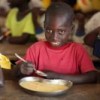
AFRICA: Agricultural Extension Work Both Important and Under-valued
At a time of international concern about the future of the world's food supply, it's a comment that gives pause for thought: "I teach university students agriculture and extension but many of them opt for other professions, especially in ICTs, because agriculture is 'for those who haven't gone to school'."« Previous Page — Next Page »


The Week with IPS

NEXT STOP - SDGs
Tracking global progress towards a sustainable world
Tracking global progress towards a sustainable world
