Languages
Tuesday, October 27, 2026



News and Views from the Global South
Election Watch - Africa
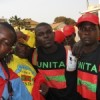
POLITICS-ANGOLA: Test of Lasting Peace – Campaigning Begins
Angola may not have had an election for 16 years, but it certainly knows how to campaign.POLITICS-ZIMBABWE: Transition Not Yet Taking Shape
There is a general consensus in Zimbabwe that the only way out of the current crisis is dialogue between the two main political parties, the Movement for Democratic Change (MDC) and the Zimbabwe African National Union Patriotic Front (ZANU PF).RIGHTS-ZIMBABWE: Women Bear Brunt of Violence
"We are too familiar with the violence that was meted upon numerous of us from 1890 when the colonialists came into our country right up to the most recent elections. Chief among these forms of violence is sexual violence, and it concomitant implication, HIV infection. Zimbabwean women now have the lowest life expectancy world wide because of HIV & AIDS - 34 years."POLITICS-ZIMBABWE: Media Blackout for Female Candidates
For activists campaigning to put more women into Africa's parliaments, the media has become a key battleground. All too often, female candidates are sidelined in election coverage, or reported on in a way that entrenches stereotypes of women rather than analysing the strength of their political and economic policies.POLITICS-ZIMBABWE: Knockout or Standing Eight for Democracy?
The decision this week by Zimbabwe's opposition Movement for Democratic Change (MDC) party to pull out of Friday's presidential run off election will not have surprised many people in Zimbabwe. A growing chorus of doubt regarding the legitimacy of the poll has been raised, which came amid mounting political violence in the country.
RIGHTS-ZIMBABWE: Government Blocks Aid for Six Million In Need
Sixty-six year old Gogo Lethiwe Ncube gazes at a distant truck cruising towards the Avoca Shopping Centre in Insiza, Matabeleland South Province and starts smiling.
RIGHTS-ZIMBABWE: Ruling Party Terrorises Voters
"It’s a very traumatized community. Their crime on the 29th March election, at that polling station called Chaona, there were about 80 votes for the MDC and 15 votes for ZANU-PF. So that is the offence they committed. This is the price they are paying. And that is what Retired Major Mhandu was saying. ‘You will have to learn’. Not only were the victims killed, their parents were also beaten, their wives were also beaten, their children were also beaten, so it was a very frightening operation. The community is still traumatized. It’s very sad."
Q&A: "I Will Give the Big Boys a Run For Their Money"
She's made her mark in the history books by becoming one of only three women to contest the presidency in Kenya; but, Nazlin Umar won't be taking up residence in State House, at least not during the current political term.
Q&A: "I Don't Consider Myself a Loser in Any Way"
In the run-up to Kenya's Dec. 27 general elections, IPS touched base with legislative candidate Pamela Mburia on several occasions to discuss the challenges she was facing in her campaign. Ultimately, Mburia did not win the Eastern Province seat of Nithi that she contested, so this week we decided to join her again to look back on lessons learned.
POLITICS-ZIMBABWE: Hopes for a Move "From Opposition to Proposition"
A leading commentator in Zimbabwe has sounded a note of caution - this after the country passed a political milestone that saw the opposition win control over the lower house of parliament in weekend elections.
/UPDATE/POLITICS: Zimbabwe Holds Its Breath Over Election Results
With more than a day having passed since polling stations for Zimbabwe's general elections closed their doors, complete official results for the ballot have yet to be released.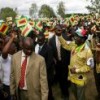
POLITICS-ZIMBABWE: "The Election Will Not Be Free and Fair"
Where to begin with listing the concerns that surround Saturday's general elections in Zimbabwe?
POLITICS-KENYA: From Suspension of Talks to Fragile Success
The signing of a power-sharing agreement to end the political crisis in Kenya has elicited a variety of reactions.
POLITICS-KENYA: "It Will Not Be Machetes and Arrows Any More, But Firearms"
Political analyst Kwamchetsi Makhokha has warned that failure of talks to address Kenya's political crisis could prove explosive. The East African country is trying to resolve a disputed presidential election that has already cost more than 1,000 lives - and displaced up to 600,000 people.
POLITICS-KENYA: Hopes of a Breakthrough in the Post-Election Crisis
Negotiations to bring an end to the political chaos in Kenya that was sparked by disputed presidential elections entered their third week, Monday, in the capital of Nairobi, amidst reports that an agreement may finally be in sight.
RIGHTS-SOUTH AFRICA: “We Are Just Helping Desperate People Here”
A police raid on a Methodist church which provides shelter to hundreds of refugees in the South African financial centre of Johannesburg is continuing to draw angry responses.POLITICS-KENYA: State Overpowering People
Post-election politics in Kenya has become a war of attrition, and President Mwai Kibaki seems to be winning it, the cost to the image and economy of the country notwithstanding.KENYA: Senior Women Editors Campaign For Peace
The story of a 12-year-old girl stabbed by her 14-year-old neighbour just because their parents supported different presidential candidates in the Dec. 27 elections will hardly make headlines here. Neither will the story of a woman in President Mwai Kibaki’s backyard sheltering about 100 workers who have fled the post-election violence.
Q&A: ‘We Want to Prepare Voters For the Election and the Post-Election Scenario’
"If you run an inherently unfair election it will lead to political unrest in a post- election scenario," Lovemore Madhuku, chairman of the National Constitutional Assembly (NCA) told IPS.POLITICS-ZIMBABWE: Mbeki Attempting to Jumpstart Talks
The Southern African Development Community (SADC)-brokered talks to end the political stalemate between the ruling ZANU PF party and the opposition Movement Democratic Change (MDC) are hanging by the thread.POLITICS-KENYA: Annan's Weighty Terms of Engagement
Former U.N. chief Kofi Annan has his work cut out for him as Kenya 's tenth parliament is due to convene Tuesday amid calls from the opposition Orange Democratic Movement (ODM) for a 3-day mass protest beginning Wednesday.« Previous Page — Next Page »





The Week with IPS

NEXT STOP - SDGs
Tracking global progress towards a sustainable world
Tracking global progress towards a sustainable world
