Languages
Monday, September 14, 2026



News and Views from the Global South
Iraq
POLITICS-US: Bush Signs Vets Bill, Won't Ban Permanent Bases
President George W. Bush signed a 696-billion-dollar Pentagon spending bill immediately before his State of the Union address Monday night, which funds all Defence Department programmes not directly tied to the wars in Iraq and Afghanistan, expands health care for injured veterans and gives U.S. soldiers a pay raise.U.S./IRAQ: Critics Fear Pact Will Tie Next President’s Hands
As President George W. Bush seeks to deeply entrench U.S. military forces in Iraq, the Congress and foreign policy pundits are looking beyond his term and debating the future of U.S. foreign policy there.POLITICS-US: Religious Leaders Assail Bush Agenda
Describing George W. Bush as "an explicitly evangelical president" with a "sadly truncated" moral vision, a group of religious leaders is calling on the U.S. president to use his State of the Union message to Congress Monday evening to salvage his legacy by "changing course on the most pressing moral issues of our time".IRAQ: Al Qaeda Records Shed Light on Foreign Recruits
Twenty-six-year-old Muhammad 'Abd-al-Qadir bil-Qasim began his journey in Darnah, Libya. He traveled to Egypt and arrived in Syria, where he paid a man named Abu Umar 2,000 Syrian pounds to smuggle him across the Iraqi border.IRAQ: ‘US the Biggest Producer of Terror’
Broken promises have brought a dramatic increase in anti-U.S. sentiment across the capital city of Iraq's Diyala province.IRAQ: Under Curfew, This Is No Life
Continuing curfew has brought normal life to a standstill in Baquba, capital of the restive Diyala province north of Baghdad.POLITICS: Canadian General Takes Senior Command Role in Iraq
Despite the government's official position abstaining from combat in Iraq, Canada has dispatched yet another top general to the command group overseeing day-to-day operations for the U.S.-led occupation and counterinsurgency war.
Q&A: “We Are Haunted By a War Begun Under False Pretences”
Eight key players in the George W. Bush administration, including the president himself, made at least 935 false statements in the run-up to and aftermath of the invasion of Iraq in 2003.POLITICS-US: Contractor Abuses Rarely Punished, Groups Say
Out of the dozens upon dozens of reports of abuses by private contractors as part of the U.S. wars in Iraq and Afghanistan, only one prosecution of a contractor has taken place.IRAQ: Police and Army Getting Sidelined
New military operations in Diyala province north of Baghdad have exacerbated a growing conflict between U.S.-backed Sunni fighters on the one hand and Iraqi army and police forces on the other.LEBANON: For Iraqis, Treatment for Trauma Is Luxury
The young woman was walking with her husband along a Baghdad street when she was abducted, held captive and raped repeatedly by five militia men for several days.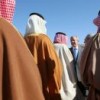
MIDEAST: Bush Sent Home Empty-Handed
It is not often that a president of the United States tours the Gulf Cooperation Council (GCC) countries with a long wish-list. And less so when the ‘world’s most powerful leader’ returns home with just a few symbolic gains.
CHALLENGES 2007-2008: Wounded Vets Trade One Hell for Another
Last year, the United States woke up to the reality of hundreds of thousands of soldiers wounded in Iraq and Afghanistan - and began to grapple with what to do about it.IRAQ: Awoken to a New Danger
The newly formed 'Awakening' forces set up by the U.S. military are bringing new conflict among people.IRAQ: Less Violent But Not Less Hellish
U.S. and Iraqi officials claim that security is improving across al-Anbar province and much of Iraq. Security during the last half of 2007 was indeed better than in the period between February 2006 and mid-2007. But this has brought little solace to many Iraqis, because violence is still worse than in 2005 and early 2006.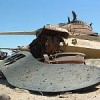
IRAQ: Civilian Deaths Massive by Any Measure
How many Iraqi civilians have lost their lives as a result of gunshots and bombings since the U.S. military invaded that oil-rich Arab nation nearly five years ago?POLITICS-US: On Anniversary, Views of Surge Diverge
Exactly one year after U.S. President George W. Bush announced that he would significantly increase the number of troops deployed to Iraq, the wisdom of his so-called "surge" strategy remains very much in dispute here.MIDEAST: U.S. Seen in Policy Retreat
Recent months have witnessed several notable political reorientations in the Middle East, involving Iran, the Gulf states, Egypt and Lebanon. Several experts say the changes reflect a shift in Washington's regional strategy following recent U.S. policy setbacks.IRAQ: Fuel Crisis Freezes Life
It's turning out to be about the hardest winter Abu Muslih has known. Too often it's a choice between buying food and medicines, and buying kerosene to keep his children warm.IRAQ: Killer of U.S. Soldiers Becomes a Hero
The recent killing of two U.S. soldiers by their Iraqi colleague has raised disturbing questions about U.S. military relations with the Iraqis they work with.MEDIA-US: Foreign TV News Fell to Pre-9/11 Levels in 2007
With the exception of the Iraq war, foreign news coverage by the three major U.S. television networks declined significantly in 2007, according to the latest annual review by the authoritative Tyndall Report.« Previous Page — Next Page »


The Week with IPS

NEXT STOP - SDGs
Tracking global progress towards a sustainable world
Tracking global progress towards a sustainable world
