Languages
Tuesday, November 10, 2026



News and Views from the Global South
Israel - Palestine
MIDEAST: Egypt Renews Ceasefire Attempt
In the wake of a series of deadly Israeli military operations in the Gaza Strip early this month, Egypt has stepped up efforts aimed at brokering a ceasefire between Palestinian resistance groups and Tel Aviv.MIDEAST: Germany Backs Israel All The Way
It was a show of unbridled support that Israelis, used to being criticised for their treatment of the Palestinians, especially by European leaders, are not accustomed to.
MIDEAST: The Son Who Did Not Die, The One Who Did
The family had been mourning for 16-year-old Ahmed Abu Salamah. What was left of what was thought to be his body had been buried. After two weeks of mourning, they found Ahmed alive in the intensive care unit at Gaza City's al-Shifa Hospital.
MIDEAST: In Prison, Who Knows Why
You would think the baby boy named Yousef has his life ahead of him. But who knows, with a child born to Palestinian parents from Gaza. What's more, Yousef was born in an Israeli prison.LEBANON: Farmers Struggle to Stay on Their Land
"I think the biggest challenge is to stay in the village," says Ibrahim Sayyed, a 28-year-old municipality accountant from the beleaguered farming town of Aitaroun, situated barely a mile from the heavily patrolled Blue Line and Israel beyond.EGYPT: Opposition Squeezed in Local Elections
Last week, the time period for registering candidates in Egypt's upcoming local council elections officially came to an end. But while spokesmen for the ruling National Democratic Party (NDP) have lauded the electoral process as a paragon of political plurality, opposition groups are crying foul.POLITICS-MIDEAST: Opening the Door to Hamas
Undermined by recent violence, the U.S.-brokered Palestinian-Israeli peace process laid out in Annapolis, Maryland is in critical condition. And bringing the militant Islamic group Hamas into the fold could be the only way to save the faltering plan - an idea that even the George W. Bush administration may be reluctantly conceding is a necessary step.MIDEAST: More Settlements, More Unsettled
The decision this week by Israeli Prime Minister Ehud Olmert to allow resumption of the construction of hundreds of housing units in a West Bank settlement is yet another blow to already faltering Israeli-Palestinian peace talks.LEBANON: Time to Step Back From the Brink
Describing the current Lebanese political impasse as a moment "pregnant with incredible danger", a U.S. expert Tuesday urged rival factions and their international patrons to adopt of a formula of "no victim, no vanquished" in order to mitigate a possible descent into civil war.LEBANON: Political Crisis Set to Worsen
Soon after the U.S. destroyer USS Cole was deployed off Lebanon's shore Feb. 28 to "preserve political stability", a group of young men gathered around in the embattled agricultural town Qana in south Lebanon, and voiced their fears.EGYPT: U.S. Sends Mixed Signals Over Rights
While in Egypt last week, U.S. Secretary of State Condoleezza Rice announced the release of 100 million dollars in suspended financial assistance to Egypt. The monies - part of an annual U.S. foreign aid package - were frozen in December following Israeli claims that Cairo had failed to secure its border with the Gaza Strip.MIDEAST: An Uneasy Calm Descends
Israeli troops and tanks have left Gaza and are poised on the border of the coastal strip. Hamas militants have largely ceased bombarding southern Israel with their rockets.LEBANON: The Lights Are Going Out in Beirut
Sporadic gunfire erupts, breaking the silence of the night. A few police cars speed up, heading east. Their lights flashing in the dark and their sirens echoing across the shanty neighbourhoods, they rapidly cross the run down metallic Basta bridge in the direction of the shootout.
MIDEAST: No Day Is a Woman's Day in Gaza
Mahasen Darduna suffers in ways the world recognises; her suffering comes at the hands of the Israelis. But there are many Palestinian women whose suffering the world does not see, because their hell is inflicted on them by Palestinians.EGYPT: Anger Over Israel ‘Approaching Boiling Point’
Fury erupted on the streets and in parliament this week following violent Israeli military operations in the Gaza Strip. But as protests were held nationwide in support of besieged Palestinians next door, Cairo continued to keep the volatile Rafah border crossing - the only means out of the strip not under direct Israeli control - tightly sealed.
MIDEAST: Nowhere To Run To
An ambulance races through Jabalyia refugee camp to pick up the critically injured – and the body parts strewn across the street. A normal day's job these days.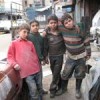
LEBANON: Children Get to Work Early
Walid is a wide-eyed boy of 10. His frail figure, of the kind common in such poverty-stricken areas, seems smaller than for a child his age. His hands are covered in dirt and paint. Here, in Ard Jalloul (the land of Jalloul), located in the populous Tarik Jdideh neighbourhood of Beirut, he works as a painter from 8am to 6pm for 7 dollars a day.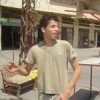
LEBANON: Peace Brings No Joy to Children
Over the years, Lebanese children have faced war and bombings enough to make violence a staple in their lives. With the situation becoming increasingly volatile as Lebanese factions are gripped by a lasting and deadly discord, this vulnerable population is left at greater risk.
LABOUR-MIDEAST: Missile Goes Down a Union's Throat
Two F-16 missiles were all it took to bring down the five-storey headquarters of the Palestinian General Federation of Trade Unions (PGFTU).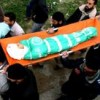
MIDEAST: Israel Kills Some More Children
Tamer was nine, and no child soldier. He did not live in the area from where home-made rockets are launched into Israeli territory. The day he was killed, he was at least two kilometres from the place Israeli troops had entered Gaza, and met with return fire by Palestinian resistance.LEBANON: This Amputation Won’t Be the Last
Rasha Zayoun sits quietly in the bustling doctor's office, a small figure hunched in her chair, while her mother recounts the terrible accident.« Previous Page — Next Page »





The Week with IPS

NEXT STOP - SDGs
Tracking global progress towards a sustainable world
Tracking global progress towards a sustainable world
