Languages
Wednesday, November 11, 2026



News and Views from the Global South
Israel - Palestine
MIDEAST: A Village Makes Its Own Protest
Amidst acres of twisting olive trees in front of the Israeli apartheid fence, eight protesters in a weekly non-violent demonstration were injured and three arrested on Friday when Israeli occupation soldiers fired rounds of tear gas, smoke bombs, sound grenades and rubber bullets at the crowd in the West Bank village of Bili'in.BOOKS-MIDEAST: Beneath Superheated Rhetoric, Pragmatism Rules
The last few years have produced an enormous trove of literature about conflict and violence in the Middle East, no doubt because there appears to be so much of it.
LEBANON: Women in the Frontline for Clearing Cluster Bombs
"Mine action is a male dominated sector, but it doesn't have to be," declares Christina Bennike, the dynamic head of Danish charity Dan Church Aid (DCA) in south Lebanon. "I really felt it would be important to address this from the beginning, then it would be natural instead of something different or unique."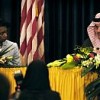
MIDEAST: Bush Revs Up Lemon of a Peace Policy
Political factions Fatah and Hamas must reconcile in order to pursue a sustainable peace in the Palestinian territories, and if and when a power-sharing agreement is brokered, the international community must be willing to accept it, according to a recent report by the International Crisis Group (ICG).POLITICS: US Evangelicals at Odds on Embracing Israel
It was business as usual during Christians United for Israel's recent "Israel Summit," its highly-publicised second summer sojourn to Washington.EGYPT: ‘Al-Qaeda Plot’ Raises Required Fear
Earlier this month, scattered reports of an al-Qaeda plot to stage terrorist attacks in Cairo was followed by a series of security clampdowns countrywide. While the government has subsequently downplayed the threat, some local observers have come to question al-Qaeda's very existence as a cohesive entity.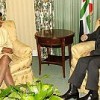
POLITICS: Arms for Arab Authoritarians, As U.S. Turns Back Clock
Just 25 months after Secretary of State Condoleezza Rice denounced 60 years of U.S. support for authoritarian governments in Arab world, she and Pentagon chief Robert Gates are on their way to the Middle East bearing arms and an uncannily familiar strategic vision to the same regimes.MIDEAST: A Divisive Word Surfaces
Right-wing lawmakers in Israel are fuming over a decision by Israel's education minister to permit use of a textbook in state-run Arab schools that includes the word "nakba" - Arabic for "catastrophe", the term Palestinians use to describe the founding of the Jewish state.RELIGION: U.S. Evangelicals Approach Muslim Envoys
That it happened at all was a major feat. That not much was resolved was not surprising. That those involved are determined to meet again is fascinating. That it was organised by a controversial faith healer has made it that much more noteworthy.MIDEAST: Dubious EU Support to U.S. Challenged
The European Union's foreign policy supremo Javier Solana this week declared himself "fully behind" the call for an international conference on the Middle East made recently by U.S. President George W. Bush. But is it time for the EU to cease being guided on the Israeli-Palestinian question by the United States, which as the main supplier of weapons to the Israeli military is partisan by definition?EGYPT: Opposition Protests Plans for Bank Sell-Off
Earlier this month, the government announced its intention to sell a majority stake of Banque du Caire (BDC), Egypt's third largest state-owned bank, to a strategic investor. But the planned sell-off, which comes as part of the technocratic government's much-vaunted privatisation programme, has come under heavy criticism by the political opposition.EGYPT: One Pope Takes On Another
A recent statement by Pope Benedict XVI in which he declared the Roman Catholic Church to be the only "complete" Christian faith met with angry responses from the heads of several western, Protestant denominations. In Egypt, meanwhile, Benedict's assertion about Eastern Orthodox churches - that they "lacked something" in their capacities as churches - prompted no less of an angry reaction from the Orthodox Coptic Christian community.MIDEAST: Prisoners Released – to Abbas
In all 255 shackled Palestinian security prisoners boarded buses with windows darkened at the Ketziot prison in southern Israel Friday morning and began their ride northward to the West Bank town of Ramallah - and to freedom.EGYPT: Palestinians Become Hostage to Border Politics
Ever since the closure of the Rafah border crossing between Egypt and the Gaza Strip more than a month ago, thousands of Palestinians have been marooned on the Egyptian side of the frontier.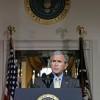
MIDEAST: New Bush Initiative Met with Scepticism
A major policy address Monday by U.S. President George W. Bush promoting a two-state solution for Israel and Palestine has been greeted with considerable scepticism by Middle East specialists here.EGYPT: Cairo Changes Tack on Gaza
In the immediate wake of last month's takeover of the Gaza Strip by Palestinian resistance faction Hamas, Egyptian President Hosni Mubarak condemned the action, describing it as "the overthrow of Palestinian legitimacy." Since then, however, Cairo appears to have tempered its position, reiterating the need for peaceful dialogue between Hamas and its U.S.-backed rival Fatah.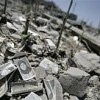
ISRAEL-LEBANON: Groups Call for Action on "War Crimes"
Allegations of unpunished war crimes and a general lack of accountability still plague Israeli-Lebanese relations one year after the Israel-Hezbollah war erupted, Amnesty International and Human Rights Watch charged in separate statements Thursday.ISRAEL-SYRIA: Peace or Another “Accidental” Summer War?
Nearly a year has passed since the Islamist resistance group Hezbollah launched a cross-border raid into Israel, igniting a 34-day summer war that killed more than 1,200 Lebanese and 160 Israelis, and destroyed much of Lebanon's infrastructure.EGYPT: Fearing Border Protests, Cairo Meets Bedouin Demands
Two months after the Bedouin, an indigenous people of Egypt's Sinai Peninsula began holding angry demonstrations against what they call a policy of official harassment by police, the authorities last week released dozens of tribesmen detained in mass arrests over the last three years.EGYPT: Mubarak Party Faces Fraud Allegations
Doubts are being raised now over the landslide victory of the ruling National Democratic Party (NDP) of President Hosni Mubarak in mid-term elections for the Shura Council last month.
LEBANON: Crisis Persists Despite Beefed Up Peacekeeping
Despite a massive boost in its peacekeeping force in Lebanon - from about 2,200 in July last year to some 13,700 last week - the United Nations has little good news to report regarding the politically-troubled country.« Previous Page — Next Page »





The Week with IPS

NEXT STOP - SDGs
Tracking global progress towards a sustainable world
Tracking global progress towards a sustainable world
