Languages
Wednesday, November 11, 2026



News and Views from the Global South
Israel - Palestine
MIDEAST: Hamas Has Hopes from Release of BBC Reporter
It was the achievement Hamas had been waiting for ever since it vanquished the Fatah movement in Gaza and seized control of the coastal strip last month. Now, the Islamic movement is hoping that the release Wednesday of BBC reporter Alan Johnston, held captive in Gaza for almost four months, will convince the international community that it is a serious partner and is able to impose order on the chaos-ridden, lawless streets of the densely populated strip.MIDEAST: After Sharm Talks, More of Nothing
Israeli Prime Minister Ehud Olmert's announcement earlier this week at a summit in the Egyptian Red Sea resort of Sharm el-Sheikh that he plans to release 250 Fatah prisoners in Israeli jails took the leaders attending and the media by surprise. But will this unexpected gesture, aimed at bolstering Palestinian President Mahmoud Abbas, be enough to produce a different outcome to that of all previous Sharm summits, which have turned out to be little more than elaborate photo opportunities.MIDEAST: Egypt Loses Diplomatic Ground with Hamas
Almost two weeks after the takeover of the Gaza Strip by Palestinian faction Hamas, attempts by Cairo to resolve the crisis have so far come to naught. But while government officials say mediation efforts are still under way, some commentators question the ability of Egypt - a longtime supporter of Hamas rival Fatah - to mediate impartially.POLITICS-US: Congress to Curb Bush Enthusiasm for Abbas
U.S. President George W. Bush threw his full support behind President Mahmoud Abbas of the Palestinian Authority (PA) last week, declaring the Fatah leader "the president of all the Palestinians."MIDEAST: Empty Talk Begins Over New Talks
Israel and Syria are again feeling each other out about the possibility of renewing peace talks, as they did last year. But, again, it's not clear both sides really want to get to the negotiating table. The United States, it seems, would prefer they didn't.EGYPT: Iranian Overtures Turned Down
Iranian President Mahmoud Ahmedinejad surprised many last month when he announced his country's readiness to re-establish diplomatic relations with Egypt. But last week the Egyptian foreign ministry appeared to dash hopes for rapprochement, describing Iran's regional policies as a "danger to Egypt's national security."MIDEAST: Hamas Finding the Governance Seat Hot
Khaled Mashaal sounded anxious. Almost panic-stricken. The exiled Hamas leader insisted his Islamic movement had no intention of taking over the Palestinian Authority, that they recognised Mahmoud Abbas as their President, and that they wanted to work with his Fatah movement.EGYPT: Clashes Could Bring Sectarian Conflict
After a year of relative tranquility, recent clashes between Muslims and Christians have again raised the spectre of sectarian discord in Egypt.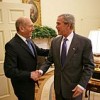
MIDEAST: Will Bush/Blair Intensify Peace Efforts?
Reports that U.S. President George W. Bush has asked outgoing British Prime Minister Tony Blair to act as the Quartet's special envoy for Middle East peace are adding to speculation that Washington plans to intensify peace efforts between Israel and the Palestinians, despite last week's takeover of Gaza by Hamas.EGYPT: Bedouin Take On the Govt
Last month saw a wave of angry sit-in demonstrations held by the Bedouin of Egypt's Sinai Peninsula, triggered by the killing of two tribesmen by police in April. And last week, Bedouin leaders again reiterated their long list of grievances, claiming that state representatives had so far failed to meet their basic demands.MIDEAST: Israel Offers Dubious Backing to Fatah
As Hamas forces seized control of the Gaza Strip this week, Israeli leaders sat on the sidelines, watching with dismay but not intervening.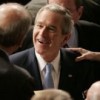
POLITICS-US: Bush Faces Crises from Palestine to Pakistan
Four years after the emergence of the first signs of a serious insurgency in Iraq, U.S. President George W. Bush finds himself beset with major crises stretching from Palestine to Pakistan.
POLITICS: U.N. Accused of Undermining Palestinian State
When Ban Ki-moon was asked about the scathing remarks by his former Middle East envoy denouncing the strongly partisan U.N. role in the ongoing peace talks, the U.N. secretary-general appeared more distressed with the public revelation of a confidential document than with the strong views articulated by his Under-Secretary-General Alvaro de Soto.MIDEAST: Barak Springs a Comeback
Ehud Barak seemed a spent force. Languishing a distant third in the opinion polls three months ago, his chances of recapturing the leadership of Israel's centre-left Labour Party seemed, at best, remote. But the former prime minister, a long maligned figure both among Israelis and within his own party, pulled off a dramatic comeback, snatching back the party leadership in a tight race on Wednesday.MIDEAST: ‘EU Placing Palestinians in Debt’
The European Union's freeze on direct aid to the Palestinian Authority has led to sharp increases in debts owed by families in the West Bank and Gaza, the relief agency Oxfam has alleged.POLITICS-US: A New General for God’s Army?
In recent appearances on two U.S. cable news networks, he was slinging and zinging - the well-rehearsed pitchman for the Biblical "End Times" was dead certain that "Iran is going to have to be attacked" before 2008.MIDEAST: U.S. Peace Plans Limp Toward Bethlehem
Four decades ago, as the United States was embroiled in a cold war battle in Southeast Asia, Israel fought its Arab neighbours in a six-day clash that helped shape the modern Middle East.POLITICS-US: Arab, Jewish Communities Share Peace Goals
Almost exactly 40 years after the 1967 Arab-Israeli war, the Arab and Jewish communities of the United States appear largely agreed on the general outlines of a final settlement and the importance of Washington playing a stronger role in bringing it about.LEBANON: Refugee Resentment Simmers as Fighting Escalates
Fighting escalated Sunday and Monday in Lebanon as the Sunni Islamic group Jund al Asham attacked army positions outside Lebanon's largest Palestinian refugee camp, Ain al-Hilweh, in the south.MIDEAST: Barak Seeks Redemption in Run-Off Vote
When Ehud Barak announced earlier this year that he was returning to politics and planned to recapture the leadership of Israel's centre-left Labour Party, he was greeted with a mixture of scorn and distaste.LABOUR: Plight of Workers in Palestinian Territories Has “Worsened Dramatically”
Workers in the Palestinian territories occupied by Israel have suffered another year of drastic decline in living standards and rising poverty, unemployment, social disintegration and political chaos, the ILO said in a new report.« Previous Page — Next Page »





The Week with IPS

NEXT STOP - SDGs
Tracking global progress towards a sustainable world
Tracking global progress towards a sustainable world
