Languages
Thursday, October 29, 2026



News and Views from the Global South
Pakistan
PAKISTAN/US: Elected Gov’t Wants War On Terror Reviewed
With a democratically-elected government firmly in place, the United States is anxious to see that its ‘war-on-terror’, which depended heavily on cooperation from the erstwhile military regime run by President Pervez Musharraf, does not get derailed.
RIGHTS-PAKISTAN: Refugees Fear Return to Afghanistan
The countdown has begun for Afghan refugees to vacate the Jalozai camp, 35 km east of this border city in Pakistan.SOUTH ASIA: Indian Films Back On Pakistan’s Big Screens
Domestic worker Naziran Begum has only one passion in life - watching Indian films. After a hard day’s work, she settles down before her cheap 14-inch TV set to flick through a myriad of movie channels for a mere 150 rupees (3.75 US dollars) per month.POLITICS-PAKISTAN: New Gov’t to Resume Dialogue With India
The installation of a democratically-elected government in Pakistan promises a new chapter in Indo-Pakistan relations, likely after the stalled bilateral dialogue process between New Delhi and Islamabad resumes in April.DEATH PENALTY-PAKISTAN: Reprieve For Indian ‘Spy’ Raises Wider Hopes
"While I am against the death penalty, given Pakistan’s flawed judicial system, I won’t be able to request a reprieve for Sarabjit Singh as he was involved in terrorism and was proved guilty in court," Ansar Burney, Pakistan’s minister for human rights, told IPS in a telephone interview from Islamabad.PAKISTAN: Cafe Bombing – Fallout of Musharraf’s Pro-US Policy
As Pakistan's new parliament meets for its inaugural session on Monday legislators must ponder over a wave of bomb attacks, the latest of which killed one weekend diner and injured 12 others at an Italian eatery in the capital, frequented by Westerners.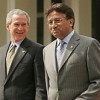
POLITICS-US: Swan Song of “Stand By Your Pakistan”?
Late last month, when Pakistani President Pervez Musharraf's party was vanquished in parliamentary elections, the administration of U.S. president George W. Bush declared that it would be sticking with its man.POLITICS-PAKISTAN: End Game For Musharraf?
Throwing a serious challenge to Pakistani President Pervez Musharraf the two main victorious parties in the Feb.18 general elections have jointly pledged to reinstate all 63 senior judges, sacked for refusing to recognise his Nov.3 emergency order.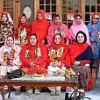
RIGHTS-PAKISTAN: Women Push For Political Space In Patriarchy
Saeeda Anwar is a 38-year-old Pakistani schoolteacher. She works in a school here in the capital of the North West Frontier Province (NWFP), but she is not allowed to exercise her franchise.PAKISTAN: Musharraf Stalling Gov’t Formation – Political Parties
The leaders of Pakistan’s two main political parties, that emerged victorious in the Feb. 18 general elections, are accusing President Pervez Musharraf of trying to subvert the formation of a coalition government.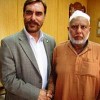
DEATH PENALTY-PAKISTAN: Condemned Indian 'Discovered' After 35 Years
"I am convinced I became a minister just for him," Ansar Burney, Pakistan’s recently-appointed minister of human rights, said in a telephone interview from Islamabad with IPS.PAKISTAN: Suicide Bombers – Chickens Coming Home to Roost
The assassination on Monday of the surgeon-general of Pakistan’s armed forces in the garrison town of Rawalpindi has brought home the enormity of the threat posed by suicide bombers - once nurtured by the establishment to fight the enemies of Islam in Afghanistan and Kashmir.POLITICS-PAKISTAN: Bhutto Murder Suspect Arrested – Or Protected?
The arrest of top militant leader Qari Saifullah Akhtar may have brought Pakistani intelligence agencies closer to discovering any conspiracy behind the Dec. 27 assassination of former prime minister Benazir Bhutto. But many believe the opposite to be true.POLITICS-PAKISTAN: Moderates' Poll Victory Can Brake Extremism
Is the landslide election victory of liberal political parties likely to stem the tide of religious extremism and ‘Talibanisation’ that has engulfed Pakistan’s frontier areas bordering Afghanistan?POLITICS-PAKISTAN: New Gov't Must Tackle Sacked Judges Issue First
While the hung verdict thrown up by this month’s general elections has forced bitter political rivals to try forming a coalition government, the pressing issue remains that of reinstating members of the higher judiciary "who ceased to be judges" after President Pervez Musharraf imposed emergency rule on Nov. 3.POLITICS-PAKISTAN: 'Inter Services Intelligence Interferes in Polls'
A former top official of Pakistan's shadowy but powerful Inter Services Intelligence (ISI) has called for the political cell of the agency to be shut down and 'confessed' to having manipulated the 2002 general elections at the behest of Pakistan President Pervez Musharraf.PAKISTAN: U.S. Reactions To Election Results Mixed
Forty-eight hours after Pakistani voters overwhelmingly repudiated the Bush administration’s "man in Islamabad", President Pervez Musharraf, Washington seemed uncertain about whether the election results marked a setback to U.S. strategic interests or an advance.
POLITICS-PAKISTAN: Voting For Change
With unofficial results for Pakistan’s general elections heralding major upsets for President Pervez Musharraf’s allies, the message was loud and clear: despite the pre-poll manipulations and irregularities voters have rejected the politics of hate and religious extremism.
POLITICS-PAKISTAN: Voters Get Carrots, Sticks in Lacklustre Polls
Voter apathy marked Monday’s general elections that were accompanied by allegations of massive manipulations and violence on the one hand and lofty promises of development and cash gifts by some candidates on the other.POLITICS-PAKISTAN: Massive Manipulation Of Poll Process Alleged
Although many Pakistanis see Monday’s polls as an opportunity to move forward, away from military interference in politics, the pre-poll process has taken place amid allegations of massive rigging and manipulation.POLITICS-PAKISTAN: 'AG Tape Confirms Vote Rigging Fears'
"The Attorney General is famous for saying things that somehow get 'providentially' taped," said Wajihuddin Ahmed, a former supreme court judge, commenting on the tape that has Malik Qayyum predicting that the Feb. 18 elections are going to be ''massively rigged''.« Previous Page — Next Page »





The Week with IPS

NEXT STOP - SDGs
Tracking global progress towards a sustainable world
Tracking global progress towards a sustainable world
