Languages
Wednesday, November 25, 2026



News and Views from the Global South
Politics
RIGHTS: U.S. State Department Found Little to Cheer in 2007
The global human rights panorama offered a decidedly mixed - if not mostly negative - picture in 2007, according to the latest edition of the State Department's annual human rights "Country Reports" released here Tuesday.MEXICO: Questions Raised by Deaths of Students at Rebel Camp
"There is solidarity with the FARC, nothing else. Don’t spread nonsense, our ‘compañeros’ are not guerrillas," said a spokesman for a student group at the National Autonomous University of Mexico (UNAM), referring to several Mexicans who were wounded or killed in the bombing of a Colombian rebel camp in Ecuador.RIGHTS: ‘UN Must Respond to Zimbabwe Crackdown’
Zimbabwe's crackdown on political dissent may need to be discussed by the United Nations Security Council, a prominent southern African human rights activist declared Mar. 11.HUNGARY: Right Steps Ahead with Referendum Victory
In an opposition-initiated referendum, Hungarians have overwhelmingly voted against present healthcare and tuition fees, sending a strong message to the country's weakened socialist-liberal coalition.BALKANS: Serbia Goes to Polls over Kosovo Independence
The coalition government of Serbia has become the first political victim of the independence declared by Kosovo, once the southern region of Serbia.
RIGHTS-US: Former Gitmo Prosecutor to Testify for Defence
At a pretrial hearing at Guantanamo Bay, Cuba next month, the Pentagon will take its first public step toward a Military Commission trial for Osama bin Laden's alleged driver and bodyguard. And one of the witnesses for the defence will be the military's former chief prosecutor.RIGHTS-GUATEMALA: Trial on Disappearances Marks a ‘Before’ and ‘After’
"My husband had taken a cow out to pasture when an army platoon took him away. He was missing for 25 years, until his corpse was exhumed two years ago," María Magdalena C., an indigenous woman from the village of Choatalum in the central Guatemalan region of Chimaltenango, told IPS.ECONOMY: Globalisation 'Localises' Inequality
Is the big North-South-divide finally diminishing? It seems to be, though slowly.ECONOMY: Market Heating Up the Globe
One way to look at the climate problem is through the lens of the market. If you do, only one conclusion is possible - the climate change problem is a massive market failure, a failure of market mechanisms to factor in future costs of a change in climate in real time prices.ECONOMY: Save the Market from Market Forces
Neo-liberalism is slowly fading away. That is, if we define neo-liberalism as an ideology that steadily wants to reduce and belittle the role of government, and promote ever freer markets.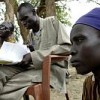
AFRICA: Caught Between Peacekeeping and Development
The beleaguered U.N. peacekeeping mission in Sudan, handicapped by lack of troops and helicopters, has come under fire for its unusually high costs.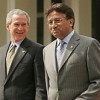
POLITICS-US: Swan Song of “Stand By Your Pakistan”?
Late last month, when Pakistani President Pervez Musharraf's party was vanquished in parliamentary elections, the administration of U.S. president George W. Bush declared that it would be sticking with its man.POLITICS-BURMA: Junta Untroubled by EU Sanctions
Economic sanctions imposed by the European Union on Burma are unlikely to have any effect on its military junta, a former Singaporean diplomat has said.RIGHTS-IRAN: Int’l Women’s Day Celebrations on Mute
Suppression of women’s movements and refusal to allow women to rally in public places by Iran’s hard line rulers kept celebrations of this year’s International Women’s Day confined to small gatherings in private residences.EGYPT: U.S. Sends Mixed Signals Over Rights
While in Egypt last week, U.S. Secretary of State Condoleezza Rice announced the release of 100 million dollars in suspended financial assistance to Egypt. The monies - part of an annual U.S. foreign aid package - were frozen in December following Israeli claims that Cairo had failed to secure its border with the Gaza Strip.CHINA: ‘Reshuffling the Mandarins Won’t Stem Corruption’
China’s leaders are poised to unveil a proposal for creating super-ministries in the hope that centralised power can help overcome regional and industrial opposition to their plans for more moderate growth and better environmental protection.BURMA: U.N. Envoy Gambari Gets The Snub
United Nations special envoy Ibrahim Gambari’s third visit to Burma has ended in failure, an outcome expected after he was informed on arrival that the junta was in no mood to change its political battle plans.CUBA-EU: Hopes for Change?
The visit to Cuba by EU Aid Commissioner Louis Michel, invited by Foreign Minister Felipe Pérez Roque for "exploratory" talks, gave rise to mild hopes of an eventual normalisation of relations between Cuba and the EU.IRAN: Int’l Support Ebbs for West’s Nuclear Hard Line
Public support for stronger measures, including possible military strikes, to curb or destroy Iran's nuclear programme has declined significantly in most countries around the world compared to 18 months ago, according to a new survey of public opinion released Tuesday by the British Broadcasting Corporation (BBC).
POLITICS-US: We Don't Do Torture – Especially in Debates
Media critics, foreign policy experts and human rights advocates are charging that questions asked by the moderators of the televised debates among U.S. presidential hopefuls have frequently been trivial and designed to produce conflict to boost ratings, while ignoring many of the most pressing issues facing the United States.CHILE: Emerging Party Seeks Self-Government for Mapuche People
Wallmapuwen, which means "people of the Mapuche land" in the language of that indigenous group, aims to formally become a political party in July this year in the southern Chilean regions of Araucanía, Los Ríos and Los Lagos. One of its main goals is to achieve self-government for the Mapuche people.« Previous Page — Next Page »


The Week with IPS

NEXT STOP - SDGs
Tracking global progress towards a sustainable world
