Languages
Sunday, November 15, 2026



News and Views from the Global South
Poverty & MDGs
BIODIVERSITY: Good Intentions Eclipse New Funding at U.N. Meet
The world community took some ever-so-careful steps towards slowing the biodiversity crisis at a major U.N. meeting in Bonn, while emphasising the need for urgency and action.DEVELOPMENT: Japan-Africa Outcome ‘Inadequate’
A key document emerging from the fourth round of the Tokyo International Conference on African Development (TICAD) has failed to address HIV/AIDS in the region, says a non-governmental organisation.CARIBBEAN: Mega-Farms Could Ease Food Import Bill
Early next month, Caribbean governments will host a global forum in Caricom's regional trade bloc headquarters Guyana in hopes of attracting international investors to the languishing agriculture sector.CUBA: Urban Farming, More Necessary Than Ever
In spite of its soil being hard to plough, saline, shallow and stony, this Cuban municipality, the location of the largest and best preserved wetland in the Caribbean, has more than 140 farmers working in urban agriculture, a phenomenon that is important for the country’s food security.BIODIVERSITY: The Dollars and Sense of Conservation
The global biodiversity crisis that threatens life on Earth is driven by economic policies that fail to value nature, a new report finds.
HEALTH-AFRICA: UNICEF Reports Five Million Child Deaths Every Year
When four-year-old Alice Were suddenly developed a fever, her mother Miriam took her to the local medicine woman close to her house in Kangemi, a poor, cramped settlement on the outskirts of the Kenyan capital, Nairobi. Two days later, Alice was unconscious. Her frantic mother rushed to hospital with the child in her arms. But it was too late. Alice died of malaria.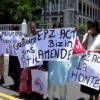
RIGHTS-MAURITIUS: ‘‘We Are Not Animals,’’ Say Foreign Workers
Officially, everything is fine in the export processing zones (EPZs) in Mauritius. But, in reality, many foreign workers suffer dismal working conditions. Those who organise to improve their lot do so under the constant threat of intimidation and deportation.PERU: Upbeat Poverty Stats Questioned
The Peruvian government has announced that poverty fell by 5.2 percent in a year and forecasts that by 2015, less than 10 percent of the population will be below the poverty line. But experts and provincial governors cast doubt on these figures, given the unmet basic needs of peasant families.DEVELOPMENT-BOTSWANA: Of Tourists, Bushmen – and a Borehole
A planned lodge development at the settlement of Molapo in Botswana's Central Kalahari Game Reserve (CKGR) has become a source of controversy.DEVELOPMENT: NGOs Marginalised at Japan-Africa Meet
If the fourth round of the Tokyo International Conference on African Development (TICAD IV) concluding Friday is seriously flawed, it is because non-governmental organisations have at best been allowed to influence the policy dialogue between Japan and the African governments only from the margins.PERU: Indigenous Groups Challenge Private Investment Decree
More than 5,000 indigenous and peasant communities in Peru launched a petition drive this week with the aim of getting President Alan García’s decree promoting private investment in communally owned land declared unconstitutional.
Q&A: "But They Never Killed My Spirit"
On Sep. 7 last year, as she walked to her home, parliamentary candidate Flora Igoki Terah was attacked and tortured by a gang of five men. Terah's case is one of several case studies highlighted in Amnesty International's 2008 report on the state of the world's human rights, released on May 28.
Q&A: 'Development Aid Is No Panacea'
Celine Tan is a Lecturer in Law at the University of Birmingham. Her doctoral research has focussed on development financing, in particular its impact on global governance and international relations.DEVELOPMENT: Japan's More Is Not Enough
Japan is receiving kudos for what UN Deputy Secretary General Asha-Rose Migiro has called the country's "strong commitment to Africa's development."DEVELOPMENT: Japan Makes a New Push Towards Africa
African leaders are seeking an increase in official development assistance (ODA) and a boost to trade and investment.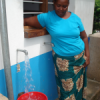
TANZANIA: Running Water Remains a Pipe Dream for Many
Juma Membe is a doorstep salesman with a commodity no one in his poor Dar es Salaam neighbourhood can refuse. Every inch of space in his handcart is occupied with canary yellow jerry cans of safe drinking water ready for home delivery.Q&A: "We Are Certainly Making Progress, But It's Slow"
When it comes to getting water supplies in Dar es Salaam, it's too expensive to be poor.DEVELOPMENT: Faith-based Groups Fight for a Better World
The World Health Organisation (WHO) has estimated that nearly 30 to 70 percent of the sprawling health infrastructure in the African continent is owned or run by faith-based organisations.TRADE: NGO Keeping An Eye on Malawi’s New Best Friend, China
China continues to grow its presence in Africa, having just roped in the small southern African country of Malawi as another one of many trading partners on the continent. But some Malawians have adopted a cautious attitude towards their government’s new ally.RIGHTS: Despite Landmark Treaty, Children Still Under Siege
The U.N. Convention on the Rights of the Child (UNCRC), which came into force in September 1990, has been described as a landmark treaty ensuring the human rights of the world's 2.2 billion children.HEALTH-SOUTH AFRICA: Suffer the Little Children
Located high in the Drakensburg Mountains of the Eastern Cape Province in South Africa, Sterkspruit is a picturesque rural area that includes several tribal villages. In the midst of this natural beauty, however, a tragedy has been unfolding over recent months.« Previous Page — Next Page »


