Languages
Thursday, September 3, 2026



News and Views from the Global South
SADC
MALAWI: Crocodiles Make Fetching Water a Life Threatening Experience
Many communities around the world may take water for granted; but for those living along Malawi’s longest river, the Shire, water is something to die for. The 400 kilometre long river is the main outlet of Lake Malawi as it flows south into the Zambezi River.POLITICS-SOUTH AFRICA: Mbeki – 1,505 Votes. Zuma – 2,329 Votes
It was, metaphorically speaking, dirty and very bloody. But the campaign leading up to the national conference of the ruling African National Congress (ANC) in Polekwane, north-east South Africa - where Jacob Zuma was elected president of the party, Tuesday - was democracy in its rawest form.ENERGY-SOUTH AFRICA: Food Security Hobbles Biofuel Strategy
Worried that it may be seen as insensitive to the food needs of Africa, the South African government, which is facing a general election in 2009, has chosen food security in framing a biofuel policy.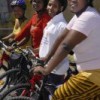
TRANSPORT-SOUTH AFRICA: Culture Puts the Brakes on Women's Mobility
The bicycle has been hailed as having done "more than anything else in the world...to emancipate women" - the words of 19th century American feminist Susan B. Anthony. But for many women in South Africa, culture and tradition make it difficult to take advantage of the increased mobility and access to social and economic opportunities, not to mention the reduced carbon footprint, offered by bicycles.AFRICA: Money, Media and Tradition Complicate Women's Political Aspirations
The challenges confronting women politicians in Africa were given an airing recently during a press conference in South Africa's commercial hub, Johannesburg.DEVELOPMENT-SOUTHERN AFRICA: Local is Essential
Local communities in Southern Africa should be given a greater opportunity to participate in initiatives for the management and conservation of natural resources such as water. This was one of the main conclusions of the third Zambezi Basinwide Stakeholders Forum, held recently in Victoria Falls, Zimbabwe.SOUTHERN AFRICA: The Indispensable Role of Mud Flats, Marshes and Swamps
The need for greater urgency in addressing loss of wetlands in the Zambezi River Basin has been highlighted at a recent meeting in northern Zimbabwe.SOUTHERN AFRICA: Co-operation and Investment a Defence Against Floods
To prevent, monitor and manage floods in the Zambezi River Basin - and reduce the number of flood victims - regional governments and parties involved in the water sector urgently need to adopt a more proactive approach, experts said during the third Zambezi Basinwide Stakeholders Forum, held recently in Victoria Falls, northern Zimbabwe.
ENVIRONMENT-SOUTH AFRICA: Radioactive Water, the Price of Gold
Large gold-mining companies operating to the west of South Africa's commercial centre, Johannesburg, stand accused of contaminating a number of water sources with radioactive pollutants.ENVIRONMENT-ZAMBIA: An Unwelcome Guest Has Taken Root
An invasive shrub has colonised a corner of the Lochinvar National Park, upsetting the balance of one of Zambia’s most diverse ecosystems. Mimosa pigra, originally from Mexico, is now threatening wildlife and pastoralists who depend on grazing lands in and around the park.SOUTHERN AFRICA: “Make the Issue of Water Attractive to the Authorities”
To tackle droughts in Southern Africa, one needs to think out of the box instead of pointing fingers at obvious causes such as lack of rainfall, experts said this week during the third Zambezi Basinwide Stakeholders Forum, held in Victoria Falls, Zimbabwe.SOUTH AFRICA: A Tale of Ongoing Water and Sanitation Woes
When the number of people reported with diarrhoea began to increase alarmingly in the town of Delmas in Mpumalanga Province towards the end of October, residents had flashbacks to an outbreak of diarrhoea and typhoid that took place in August and September, 2005. They feared the worst as the number of cases grew in the community of about 45,000 people - 60 kilometres east of South Africa's financial centre, Johannesburg.
MOZAMBIQUE: Committees for Water – But Sometimes in Name Only
Impoverished residents in the suburb of Carrupeia in Nampula, Mozambique's third largest city, do not have access to potable water because their water committee has effectively ceased to function.
Q&A: "TB and XDR-TB Are Not an African Problem Only"
In a world where countless humanitarian causes clamour for action and funding, raising money to combat tuberculosis (TB) can prove a challenge.HEALTH-AFRICA: TB and AIDS Campaigns Urged to Co-operate
Tuberculosis (TB) in Africa cannot be dealt with while TB and HIV/AIDS organisations refuse to set aside their differences, health experts said Friday during the 38th Union World Conference on Lung Health, underway in Cape Town, South Africa.HEALTH-AFRICA: Prevalence of Extensive Drug-Resistant TB Unclear
What is known so far about the scope and prevalence of extensive drug-resistant tuberculosis (XDR-TB) in sub-Saharan Africa may only be the tip of the iceberg, said TB experts Thursday during the 38th Union World Conference on Lung Health, in the South African coastal city of Cape Town.
Q&A: "Wetlands Have Had a Pretty Raw Deal, Historically"
Environmental organisations can work with developers to manage wetlands in urban areas, says John Dini: programme manager at Working for Wetlands, a state organisation that tries to ensure the long term viability of wetlands in South Africa.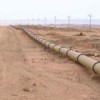
DEVELOPMENT-NAMIBIA: Interest in Uranium Powers Desalination Plans
Efforts to build Namibia's first large-scale desalination plant are gaining momentum. The project is a joint undertaking of the Namibian Water Corporation (NamWater), a government owned utility, and mining company UraMin Inc.DEVELOPMENT-SOUTH AFRICA: Power Cuts Lead to Sewage Spills
Sewage plants in South Africa’s northern Gauteng Province poured millions of litres of untreated waste into three rivers between the capital, Pretoria, and the commercial centre of Johannesburg earlier this month. National power utility Eskom cut electricity to the treatment plants, which were then unable to process the waste water before it was released into the rivers.SOUTH AFRICA: Flush Still Considered Flash When it Comes to Toilets
Waterless or composting toilets are being touted as a promising solution to many of South Africa's sanitation woes.RIGHTS-ZIMBABWE: Activists Outmanoeuvred – But Undeterred
Anti-death penalty activists in Zimbabwe are keeping up their campaign, despite a police clampdown on their meetings and ever-lengthening food queues, power cuts and the relentless rise in prices of many essential items.« Previous Page — Next Page »


The Week with IPS

NEXT STOP - SDGs
Tracking global progress towards a sustainable world
Tracking global progress towards a sustainable world
