Languages
Friday, September 4, 2026



News and Views from the Global South
SADC
DEVELOPMENT-SWAZILAND: Water – "Just a Matter of Delivery"?
The main religious ceremony of the Swazi people is the "Incwala" or ‘Festival of the First Fruits’, held in late December. Dressed in traditional attire, tens of thousands of Swazi men and women dance and chant prayers to their ancestors. They seek good rains that will ensure abundant crops.DEVELOPMENT: IBSA Summit a “Political Endorsement” for Future Plans
A slew of co-operation agreements emerged from the second IBSA (India, Brazil and South Africa) summit in Pretoria, South Africa, this week.Q&A: “It Was Not Your Typical ‘Complaining’ Environment”
The second IBSA (India, Brazil and South Africa) heads of state summit took place Wednesday in the South African capital, Pretoria, with the aim of deepening South-South co-operation. But, the gathering hasn't only been about talks between country leaders.
TRADE: Possibilities and Pitfalls for India, Brazil and S. Africa
Enthusiasm tempered with notes of caution has characterised the IBSA (India, Brazil and South Africa) Business Forum, held in Johannesburg in the run up to the latest heads of state summit of the three countries.DEVELOPMENT: India, Brazil, South Africa – the Power of Three
Brazil, India and South Africa will intensify their campaign for permanent seats on the United Nations Security Council when their leaders meet in the South African capital, Pretoria, on Oct. 17. President Luiz Inácio da Silva of Brazil, President Thabo Mbeki of South Africa and Indian Prime Minister Manmohan Singh will discuss U.N. reforms and other issues of common interest at the second IBSA (India, Brazil, South Africa) summit later this week.
ENERGY-SOUTH AFRICA: The Poor Fly Under the Solar Water Heating Radar
Earlier this year, IPS reported that the South African coastal city of Cape Town was debating a "first of a kind" bylaw that would make solar water heating compulsory for relatively costly new buildings, and certain renovations. This got us thinking: what of solar water heating for less expensive structures - especially homes being built under the country's extensive low cost housing programme...Are any initiatives on the drawing board in this regard?HEALTH-SWAZILAND: Septic Tanks Preferred to the Latest in Sewage Treatment
Located on the outskirts of Swaziland's commercial hub, the state of the art Manzini Waste Treatment Centre was built to end the city's sewage disposal problems. A World Bank loan was secured by the Ministry of Housing and Urban Development to construct the 16 million dollar facility: a spotless, landscaped plant which has a lifespan of 25 years.
SOUTH AFRICA: High Stakes Battle Between Mining and Environment
Environmentalists and tour operators appear to be losing the battle against mining companies in Mpumalanga, a province in the east of South Africa. This confrontation - which also pits two ministries against each other - will determine the future of hundreds of lakes and rivers, and has implications for the economic sustainability of the province.ZIMBABWE: A Water and Sewerage Crisis That Goes "Straight to the Grave"
A young Zimbabwean couple glances furtively around before settling on a bench in a bare patch of ground that used to be a recreational park in Glen View, a sprawling, high-density suburb of the capital, Harare. It’s a Monday morning, and the two of them are struggling to come to terms with a strange sickness that has gripped their family. Every move they make in the direction of the Glen View One Satellite Clinic shows they are in great pain.SOUTH AFRICA: A National Health Controversy Takes on Regional Dimensions
The Treatment Action Campaign (TAC), one of South Africa’s largest AIDS lobby groups, says it has obtained evidence indicating that government was implicated in illegal medical experiments on people living with HIV/AIDS in Tanzania, involving the discredited product Virodene.ENERGY-AFRICA: Big Potential and Challenges for Biofuels
Biofuels offer Africa the chance to supply itself with alternative energy sources, and also to become a major supplier of these sources for developed markets. Yet, challenges - from creating the relevant infrastructure to competition for biofuel crops from food markets - remain.
DEVELOPMENT-MALAWI: Lack of Running Water Puts Girls' Education at Risk
Rita Kalikokha of Dowa, a rural district in central Malawi, thinks about abandoning school every time she menstruates.DEVELOPMENT-SOUTH AFRICA: “We Drink Condoms and Panties”
Police arrested ten people who were part of a large group of protesters blocking the N4 highway linking South Africa and Botswana earlier this month. Residents of the tiny village of Ntsweletsoku were so angry about the persistent water shortages in their area that they resorted to violent demonstrations to attract the attention of the authorities.ENVIRONMENT: 21st Century May Belong to the Shrub
As atmospheric carbon dioxide levels continue to climb shrubs and other woody plants will likely dominate grasslands, altering pastoral lifestyles around the world, a U.S. study has found.SOUTHERN AFRICA: Plans to Dam the Cunene River Are Shelved Again
Political interests and specialist lobby groups appear once again to have stalled plans to dam the Cunene River where it forms the border between Angola and Namibia. After years of negotiations, several expensive feasibility studies and considerable political rhetoric, the proposed Epupa Dam on the Cunene River is not even close to the beginning of a construction phase.
ENVIRONMENT-ZAMBIA: Efforts to Halt the Strangulation of Kafue
The World Wide Fund for Nature (WWF), an international conservation organisation, has launched an initiative to protect Zambia's Kafue River from pollution: the 'Save the Kafue River Campaign'. At present, the river provides potable water to over 40 percent of people in the Southern African country.POLITICS-MALAWI: Budget Held Hostage to Squabbling Parliamentarians
Malawi's national budget, scheduled to pass in June, is in limbo following a parliamentary impasse - and there are fears that government services may be halted through lack of funding.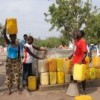
MOZAMBIQUE: Water Supplies Still a Pipe Dream at Certain Health Facilities
A swelling crowd of people has gathered at the rural health centre at Monte Xiluvo in Nhamatanda district, in the central Mozambican province of Sofala. Most are mothers with young children who try to protect themselves from the gusty winds as they wait for their consultation with Caetano Mendosa, the nurse responsible for the centre.
SOUTH AFRICA: Copper Thieves, an Abattoir and Coal Mining Threaten Lake District
Raw sewage flowing into Lake Chrissie is threatening to turn South Africa’s largest natural freshwater body into a massive cesspool. Environmentalists claim that for seven years, local authorities ignored their pleas to upgrade water treatment facilities; officials only took action, they say, when local revenue was affected by the closure of tourism routes such as biking trails, as a result of pollution.DEVELOPMENT-ZIMBABWE: The City of “Passport Size” Ablutions
The City Council of Bulawayo, Zimbabwe’s second largest city, has issued a warning to residents of a possible outbreak of disease following a massive cut in the city’s water supply. This is the first time in Bulawayo's history such a health warning has been issued.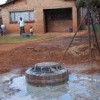
DEVELOPMENT-ZIMBABWE: Water Shortages in Capital Leave Residents Desperate
Taps in the Zimbabwean capital, Harare, are running dry even though the city’s main supply dams are more than 60 percent full, according to figures from the Zimbabwe National Water Authority (ZINWA). With more than half of Harare's three million inhabitants now experiencing water shortages, residents are resorting to desperate measures to find supplies.« Previous Page — Next Page »


The Week with IPS

NEXT STOP - SDGs
Tracking global progress towards a sustainable world
Tracking global progress towards a sustainable world
