Languages
Monday, October 19, 2026



News and Views from the Global South
Women Leaders - Africa
RIGHTS-KENYA: Ensuring that “X” Marks the Gender-Friendly Spot
On the face of it, women in Kenya have a powerful tool at their disposal for dealing with politicians who fumble over the Millennium Development Goals (MDGs), an international set of objectives that tackle gender inequality, amongst other issues.RIGHTS-RWANDA: A Life Spanning Continents, Genocide – And an Orphanage
Petite, soft-spoken and all of 93 years old, Rosamond Carr might not - at first glance - appear a likely candidate for heading up an orphanage in an especially poor and strife-torn corner of Africa.HEALTH: A Wind of Hope in Kenya’s Desert
Madonna's 1980s hit song 'Like a Virgin' blasts incongruously from a giant silver speaker in the corner of a bar deep inside Isiolo - a dusty town on the edge of Kenya's northern Kaisut desert, filled with tough nomads and their herds of emaciated animals.ARTS-ZIMBABWE: Secrets and Silence Around AIDS
As AIDS affects a growing number of women and girls in sub-Saharan Africa, a timely novel has been released by first time Zimbabwean author Lutanga Shaba which tackles the factors underpinning women’s vulnerability to HIV.RIGHTS: South African Girls Bend it Like Beckham
When a small piece of South African history was made recently in the coastal city of Cape Town, it looked as if the boys would have the last laugh.HEALTH: Shame Cloaks This Suffering
The suffering of millions of these women, no one is sure even how many million, is cloaked with shame and silence. They suffer from a condition known as obstetric fistula.WORLD AIDS DAY: African Women’s Rights Protocol a Weapon Against HIV
"When you look at the larger picture of HIV/AIDS, the leadership is mainly men. We need to train and have more women leaders," says Prudence Mabele, an AIDS campaigner in South Africa.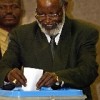
POLITICS-NAMIBIA: A Milestone Election Gets Underway
A two-day general election got underway in Namibia Monday. The poll marks the end of an era in the Southern African country, as it will see President Sam Nujoma step down after 14 years as head of state. Nujoma has governed Namibia since its independence in 1990.POLITICS-KENYA: Women Hail Nobel Peace Prize Winner
More than 140 environmentalists from 60 countries have showed accolades on Wangari Maathai, Kenya’s assistant minister for environment, for scooping this year’s Nobel Peace Prize.RIGHTS-LIBERIA: Women Demand Greater Participation in Politics
With general elections slated for next year, Liberian women - staunch advocates for peace in their homeland - are demanding greater participation in their country’s male-dominated politics.POLITICS-SOMALIA: Women’s Representation in New Parliament at Issue
Women from Somalia have expressed concern at the fact that they risk being under-represented in their country's new transitional parliament, which was sworn in Sunday, Aug. 22.HEALTH-MALI: Women Clock Up Success With Maternal Mortality MDG
The small Malian town of Zegoua - population 22,000 - doesn't have a great many "claims to fame". In one respect, however, it has achieved something remarkable.POLITICS-AFRICA: Women Legislators Lobby for Peace
In a bid to promote peace in Africa's conflict-ridden Great Lakes region, women parliamentarians from the area say they intend taking a more prominent role in talks to end fighting.POLITICS-DRC: Pantheon of National History Expands to Include Women
For those largely unfamiliar with Congolese history, a list of people who have shaped the country's past might include no more than two or three names. Patrice Lumumba and Mobutu Sese Seko would certainly feature; perhaps Laurent Kabila as well.POLITICS-AFRICA: Women Charting the Continent’s Future
"We must congratulate Rwanda for achieving 48.8 percent of women representation in parliament. This is the highest in the world. It means gender parity is no longer a dream but a reality in Africa," said Lulu Xingwana, South Africa's Deputy Minister of Minerals and Energy, to thunderous applause from over a thousand women who gathered in the capital, Pretoria, this week.POLITICS-MALAWI: Inching Towards That 30 Percent Target
Slowly but surely, Malawi’s women are making their presence felt in the country’s traditionally male-dominated political arena.HEALTH-AFRICA: Religious Leaders Focus on AIDS
A meeting of over 187 church leaders from across Africa has highlighted the role of female clergy in fighting the AIDS pandemic that has swept the continent.ECONOMY-GABON: Women Business Managers Few and Far Between
Marie-Julie Nse Ndzime has made a success of her printing company located in Gabon's capital, Libreville - no thanks to anyone else.RIGHTS-SUDAN: Women Demand a Place at the Negotiating Table
Strategic Initiatives for the Horn of Africa, a regional organisation that promotes women's participation in politics, has called for gender issues to be addressed in the Sudanese peace negotiations.DEVELOPMENT-AFRICA: Women Hold the Key to Food Security
Women’s right to land ownership could change the face of Africa and speed up efforts to achieve food and nutrition security.RIGHTS-UGANDA: An Equal Hearing for Women in Divorce Cases
The ideal of gender equality in Uganda was brought closer to realisation recently with a Constitutional Court ruling on the country's Divorce Act.« Previous Page — Next Page »





The Week with IPS

NEXT STOP - SDGs
Tracking global progress towards a sustainable world
Tracking global progress towards a sustainable world
