Languages
Saturday, June 6, 2026



News and Views from the Global South
Video
World Environment Day, 2026

2025 was one of the three hottest years ever recorded. The years from 2015 to 2025 were the hottest eleven years on record.
World Press Freedom Day, 2026
On May 3rd, the world marks World Press Freedom Day - a United Nations observance dedicated to the fundamental principles of press freedom.

Feminist Governance and Democratic Change in Armenia
The period after Armenia's 2018 "Velvet Revolution" maintains a fragile status which presents both substantial democratic and feminist achievements and rising internal and external international pressures.
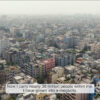
My Name is Dhaka
My Name is Dhaka is a one-minute experimental film portraying Dhaka as a living, breathing entity with a 400-year history. Through a reflective voice, the city recounts its transformations, crises, and resilience. It captures contrasts between pollution and celebration, hardship and hope, revealing a megacity shaped by climate change, migration, and human survival.
International Women’s Day, 2026
Women and girls have never been closer to equality. And never closer to losing it.
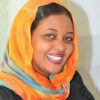
Sudan: World’s Worst Humanitarian Crisis
The ordinary sounds of Nahid Ali's home in Khartoum were completely drowned out by the sound of war which began on April 15 2023. Her baby was just 21 days old. The morning started as any typical day for a mother who had just given birth to her baby and needed to nurse her newborn while she took care of her other children. The gunfire began to erupt. The fighting began when two groups started to battle each other in the streets. The fighting which began in her area developed into a destructive countrywide war in Sudan which spread to her street within moments.

Karatoya
Once a lifeline of northern Bengal, Bangladesh’s Karatoya River now drifts through Bogura as a fragmented, polluted channel, where climate change and human neglect quietly reshape livelihoods, memory, and everyday life.
Natural Restoration Recovers Lagoon and Environmental Justice in Brazil: VIDEO
"We moved from a context of socio-environmental exclusion to one of environmental justice," said Dionê Castro, coordinator of the Sustainable Oceanic Region Program which led Brazil's largest nature-based solutions project. 
End of Year Video 2025
Multiple shocks defined 2025: conflict, climate breakdown and shrinking democracy.
Multilateral institutions were tested as never before.
Human Rights Day 2025
In a world of turbulence and doubt, one promise remains.
In 1948, nations adopted the Universal Declaration of Human Rights.
Rainwater Harvesting Mitigates Drought in Eastern Guatemala – VIDEO
Plagued by drought, farming families living within the boundaries of the Dry Corridor in eastern Guatemala have resorted to rainwater harvesting, an effective technique that has allowed them to cope. 
Pope Leo XIV Greetings to the Churches of the Global South Gathered at the Amazonian Museum of Belém
I greet the particular Churches of the Global South gathered at the Amazonian Museum of Belém, joining the prophetic voice of my brother Cardinals who have taken part in COP 30, telling the world with words and gestures that the Amazon region remains a living symbol of creation with an urgent need for care.
International Day for the Elimination of Violence Against Women, 2025
Violence against women is a human rights emergency in every country. One in three women worldwide experience physical and/or sexual violence in their lifetime.
COP30 Belém: Turning Promises into Action
From the 10th to the 21st of November 2025, the 30th session of the Conference of the Parties (COP30) will be hosted in Belém, Brazil. 
International Day for Climate Action, 2025
We are in a climate emergency. The Earth is already over 1.3 °C warmer than pre-industrial times. 2024 was the hottest year ever recorded.

Chile Aims for Sustainable Port Expansion – VIDEO
Maritime transport is key for Chile, which has 34 free trade agreements with countries and blocs of nations, one of the broadest trade networks in the world with access to over 86% of the global gross domestic product (GDP). 
International Day for the Eradication of Poverty
Poverty is not just scarcity. It is exclusion, stigma, and invisibility. Poverty is not a personal failure. It is a systemic failure. A denial of dignity and human rights.

UNGA80: Lies Spread Faster Than Facts
DANGER – WARNING – ALARM: Nobel Peace Prize Laureate Maria Ressa is warning that lies are being weaponized deliberately to manipulate people around the world. Big, profit-oriented, and technology-enabled companies are now disregarding or trampling over the sanctity and veracity of facts and information to speed up disinformation, (using AI) in ways that quickly erase truth and leave people manipulated.

Why Collective Healing is Central to Peacebuilding
Wars and oppression leave behind not just rubble and graves. They leave behind invisible wounds, profound trauma carried by survivors. And most often, women carry the largest burden. They are targeted not only because of their gender, but because surviving and leading threaten structures based on patriarchy and domination.

50 Years On: Lebanon’s Civil War, Feminist Peacebuilding, and the Fight Against Silence
This year marks half a century since the start of Lebanon’s civil war in 1975 - a conflict that lasted 15 years, killed over 150,000 lives, and resulted in as many as 17,000 missing. Decades later, the legacy of that war is still everywhere: in the silence of classrooms without history books, in families who never knew what happened to their missing loved ones, and in violence made mundane in all parts of society.

International Day of the World’s Indigenous Peoples 2025
Artificial Intelligence is changing how we live, learn, work - and who gets heard. It holds promise for humanity but, without safeguards, it risks becoming a new tool of domination.
Next Page »


The Week with IPS

NEXT STOP - SDGs
Tracking global progress towards a sustainable world
Tracking global progress towards a sustainable world
